

According to Al Jazeera Net: Burhan Expected to Deliver a Statement on Launching of Sudanese Dialogue and Amnesty for Opponents
Khartoum – Sudanhorizon
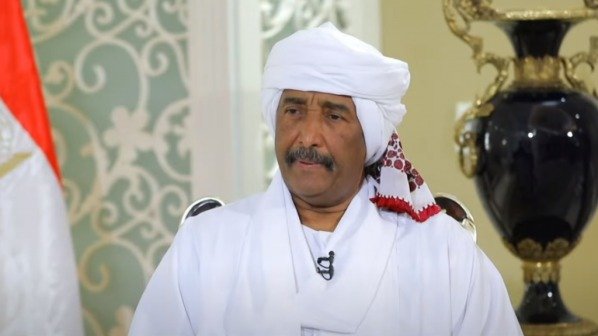
Al Jazeera Net’s correspondent to the Sudan, Al-Nur Ahmed Al-Nur, has recently reported that sources close to the Sudanese Transitional Sovereign Council revealed to him that “Council Chairman Abdel Fattah al-Burhan will address the nation within the coming couple of days to launch a call for Sudanese-Sudanese dialogue, announce measures to create a conducive environment for the process, and establish a national committee to this end.”
According to the sources – who requested anonymity – Burhan has completed extensive consultations with political, civil, and youth groups, community leaders, tribal figures, religious scholars, and national figures. They explained that he will announce practical steps to create a conducive environment for dialogue during his anticipated speech, particularly regarding the arrest warrants issued against dozens of opposition members.
The Al Jazeera Net report added that, according to the same sources, Burhan will announce the establishment of a national committee to manage dialogue and communication with Sudanese parties and international and regional powers. This committee will define the role of these parties, determine the dialogue’s agenda, venue, participating parties, and all related arrangements for its success.
The report predicts that the national committee will comprise 10 members. Among the most prominent names nominated for membership are Qasim Badri, Nabil Adib, Nour El-Din Sati, Al-Wathiq Kameir, Madawi Ibrahim, Mohamed Jalal Hashim, Nour El-Din Shalqami, Othman Mirghani, and Aisha Al-Barir.
The Sudanhorizon website quoted Qarib Allah Al-Samani, Secretary-General of the Federal Gathering, and Mohamed Sayed Ahmed Al-Jakoumi, head of the National Bloc Alliance, as saying that the Chairman of the Transitional Sovereign Council informed political forces he recently met that the said dialogue will exclude both the National Congress Party and the Tassis Alliance.
According to a Facebook post by Al-Wathiq Kameir, a candidate for the National Dialogue Committee, the state is required to provide legal and political guarantees to create a conducive environment for dialogue. These guarantees, he clarified, do not imply that the state owns the dialogue, determines its participants, sets its agenda, or controls its outcomes.
Kameir stated in his post: “We need guarantees from the state, not a mandate from it; and we need legal and logistical support, not political sponsorship of the dialogue.”
In Kameir’s view, Sudan does not need a political process separate from the priority of ending the fighting and addressing the humanitarian catastrophe. However, it does need a serious, independent, comprehensive, and credible Sudanese-led process that begins with ending the war but does not stop there, “but rather addresses the root causes of the crisis that made the war possible in the first place.”
He added that the criterion put forward by some leaders of the “Sumud” movement—that the goal of any political process should be ending the war, not adapting to its reality—is correct and should not be overlooked, according to him. “However, it needs practical implementation: how do we ensure that ending the war is at the heart of any dialogue agenda, and how do we prevent the dialogue from becoming a political arrangement based on the reality created by the war, instead of being a gateway to changing it?”
Political sources speaking to Sudanhorizon expect a delegation from the international quintet to visit Khartoum after Burhan’s anticipated speech, to gain a detailed understanding of the state’s vision regarding the Sudanese-Sudanese dialogue process and to hold discussions with a number of officials and political actors.
The quintet mechanism concerned with the Sudanese crisis had previously faltered in achieving a convergence of positions among the Sudanese parties regarding arrangements for holding a Sudanese conference, after some political blocs and forces boycotted its last meeting in Addis Ababa at the end of last week.
The mechanism includes the United Nations, the African Union, the European Union, the Intergovernmental Authority on Development (IGAD), and the League of Arab States. It held a meeting of Sudanese forces in early June, and another that concluded last week
Shortlink: https://sudanhorizon.com/?p=16981