

Sudanese Dialogue: Why Do We Not Look to America?
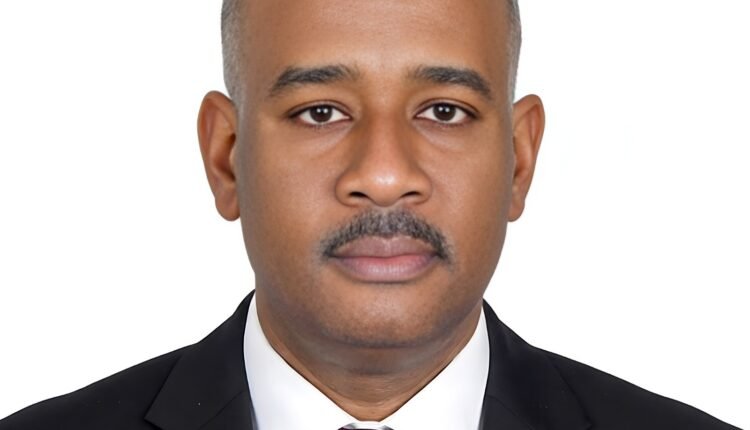
Muhannad Awad Mahmoud
When we talk about dialogue and the reconciliation we seek, we often turn to the experiences of South Africa and Rwanda. I believe, however, that the American experience also deserves a place in our discussions. Alongside asking how an agreement can be reached, we must ask what guarantees that it will endure when its signatories fall out with one another.
In South Africa, negotiations produced binding constitutional principles, most notably the unity of the state, equal citizenship, the prohibition of discrimination, the protection of rights and freedoms, the supremacy of the Constitution, judicial independence, and democratic pluralism. Here lies an important lesson: those who disagree can agree on rules that safeguard everyone’s rights, then compete for power within that framework.
In Rwanda, the challenge was to restore coexistence after the genocide against the Tutsi, during which Hutus who opposed the extremists were also killed. Rwanda’s experience merits study for its efforts to address the consequences of identity-based violence and rebuild community relations, while taking account of its particular circumstances and limitations.
The American experience, meanwhile, highlights power distribution and the creation of institutions that can manage conflicting interests. Perhaps geography has kept it at a distance from us, or perhaps its image in our discourse as the “evil West” has obscured it. Yet disagreement with American policies should not prevent us from studying the country’s history. Learning from a nation’s experience does not mean endorsing its governments.
The American constitutional system was built on the distribution and restraint of power: a separation between the legislative, executive and judicial branches; checks and balances; judicial independence; and the division of powers between the federal government and the states. The House of Representatives represented the population, while the Senate gave the states equal representation. This compromise thus balanced population size with the states’ standing within the Union.
These arrangements matter because they do not merely call on a ruler to exercise moderation; they limit their authority and equip other institutions to review and hold them accountable. This question deserves our attention: what safeguards protect the state and its citizens when those in power fail to honour their commitments?
Constitutional provisions alone, however, did not make American institutions strong. They evolved through practice, rights struggles, and traditions of peaceful transfers of power. The American experience also carries serious failures: the founding compromises preserved slavery and excluded broad sections of society, while the Constitution did not prevent the Civil War. Even after rights were formally recognised, their implementation required a long struggle. The lesson is that a settlement that postpones justice keeps the causes of conflict alive.
We can learn from South Africa, particularly in negotiating shared principles; from America, in distributing power and establishing checks and balances; and from Rwanda, in rebuilding relationships after atrocities. The lessons overlap, and our task is to choose those that address our own problems and devise safeguards suited to our circumstances.
Sudan needs clear answers to several questions: How can the regions participate in decision-making? Who will oversee the exercise of power and the management of public funds? And how can rights be safeguarded when governments and political alliances change? The answers to these questions will determine whether an agreement lays the foundations for stability or merely postpones another round of conflict.
How can we turn an agreement between opposing parties into institutions that outlast them? In my view, this is one of the most important questions facing Sudanese dialogue. Distributing positions may satisfy the negotiators, but it is not enough to reassure the citizens.
The success of dialogue lies in building a state in which Sudanese people do not need their tribe to secure their rights, nor weapons to make their voices heard.
Shortlink: https://sudanhorizon.com/?p=19136