

Don’t Mourn the University of Khartoum — Let’s Rebuild It from the Rubble
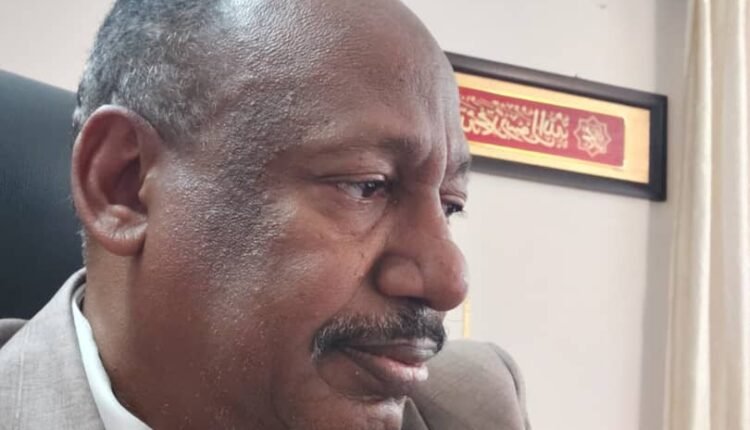
Dr Al-Sadiq Ali Haj Al-Sheikh
There are places inhabited not only by walls, but by memory. There are buildings which, when they collapse, do not lose stones alone; something of a nation’s collective consciousness falls with them. And there are institutions whose value cannot be measured by the number of their lecture halls, the size of their grounds, or the number of their laboratories, offices and libraries, because with time they become part of the story and memory of the nation.
The University of Khartoum is one of those places.
When a person passes through its gates, they do not merely enter a university; they enter a long chapter in Sudan’s history. Generations have passed through here. Dreams have taken shape here. Young Sudanese men and women, at the beginning of their lives, have sat before professors who opened the doors of knowledge to them, before going out into the world carrying their degrees, their ambitions and something of the spirit of the place.
From the University of Khartoum came doctors, engineers, lawyers, professors, researchers, diplomats, economists, scientists and thinkers. Many of them carried Sudan’s name into institutions, universities, hospitals and laboratories across the world.
That is why what happened to the university during the war is not simply the destruction of buildings. Something of Sudan’s national memory has also been wounded.
Lecture halls have been damaged. Administrative offices have been devastated. Laboratories, libraries and courtyards have not escaped the effects of war. For anyone who knew and loved the university, the scene is painful enough to raise a question that goes far beyond bricks and mortar:
Do we leave the University of Khartoum buried beneath the rubble?
Or do we reach out our hands to it and say:
Come back — Sudan still needs you.
People of Sudan — This Is Your University
This appeal is not addressed only to graduates of the University of Khartoum.
It is, first and foremost, addressed to all the people of Sudan.
To Sudanese of every political, intellectual, social and cultural persuasion.
To those who belong to political parties and those who belong to none. To the right, the left and the centre. To people with different ideas and divergent positions. To those who disagreed in their reading of the past and those who disagree today over the road to the future.
And to every Sudanese person who believes that education is not a luxury, that knowledge is not the privilege of a particular group, and that national renewal begins with the human being.
The University of Khartoum is larger than our political disagreements, broader than our ideological affiliations, and older than many of the disputes that have divided Sudanese people.
We do not have to agree politically in order to agree on rebuilding it. Nor are we required to abandon our convictions. We need only agree on one simple truth:
Sudan needs knowledge, and the University of Khartoum is part of its capacity to rise again.
We may disagree over politics, the state, the economy and society. We may differ in how we interpret what happened and what ought to happen next. But can we really disagree that a Sudanese student deserves a strong university?
Can we disagree that the library should reopen its doors?
That the laboratory should return to work?
That the professor should have an environment worthy of scholarship?
And that scientific research should regain its proper place in Sudan’s national project?
Here, the nation must come before disagreement.
Has the University Already Received Its Share of Love?
Some may say that the University of Khartoum has already received enough affection and support, and that the generations it produced did not all live up to what the nation expected of them. Perhaps some of its graduates, when they reached positions of responsibility, became part of the country’s crises or remained distant from the concerns of ordinary people.
This is a legitimate criticism, and we should not be afraid of it. The university is not infallible, and its graduates are not angels.
It produced great generations that served Sudan. But it also produced some who failed, some who distanced themselves, and some who became preoccupied with their own interests.
But do we punish the university for the mistakes of some of its children?
Do we demolish the library because some of its readers did not become scholars?
Do we close the laboratory because some of those who studied there did not use their knowledge as they should have?
A university provides knowledge, but it cannot by itself determine how a person will use what they have learnt.
In any case, today’s issue is not about putting the past on trial. It is a question about the future.
Perhaps the university received its share of love in the past. Perhaps that love was not always sufficient. Perhaps some of its children were less loyal to it than they should have been. But the question we should ask today is not:
What did we receive from the university?
Rather:
What can we give it so that a generation not yet born may benefit from it?
True loyalty is not about glorifying the past.
True loyalty is about building the future.
University Graduates — Your Turn Has Come
After saying, “People of Sudan, this is your university”, we have a special appeal to its graduates.
Graduates of the University of Khartoum — you understand the meaning of this university better than most.
You remember the first day you entered its gates, the first lecture, the first examination, the first book, the first friend, and perhaps a professor who changed something in your life.
You remember the courtyards, lecture theatres and libraries. You remember youthful dreams that were greater than all the available resources.
And today, the university needs you.
Not because you alone are responsible for it — our appeal began with all the people of Sudan — but because you have a relationship with it that only those who spent years within its walls can fully understand.
Let every graduating class have a project.
Let every faculty launch an initiative.
Let every alumni association contribute its share.
Those who can give money should contribute.
Those who possess expertise should offer it.
Those who can mobilise support should do so.
Those who can open doors to universities or international institutions should open them.
And those who can do nothing more than raise their voices in support should become a voice for the university.
Let all of this take place within a clear and transparent framework, so that every contributor knows where their support has gone and how it has been transformed into a lecture hall, laboratory, library, scholarship, piece of equipment or academic programme.
We Do Not Want to Restore the Past — We Want to Build Something Better
Rebuilding the University of Khartoum should not mean merely recreating what existed before.
We want the university that emerges from the rubble to be better than the one that stood there before.
We want modern laboratories, digital libraries, advanced technological infrastructure, research centres capable of addressing Sudan’s problems, and extensive partnerships with universities around the world.
We want a university more closely connected to society, more engaged with health, agriculture, water, energy, the economy and the environment.
A university that puts knowledge at the service of the people, scientific research at the service of development, and education at the service of state-building.
If there were mistakes in the past, let rebuilding be an opportunity to correct them.
If there was a gap between the university and society, let us close it.
If some of its graduates became detached from the nation, let us create a new generation that understands that a degree is not a personal privilege, but a trust and a responsibility.
The Beautiful and the Impossible
The task may appear enormous.
Rebuilding the University of Khartoum under present circumstances may seem almost impossible.
But Sudan itself stands today before the impossible.
So why should we not try?
Why should we not turn the rubble into a beginning?
Why should we not make the university one of the first signs that this country, despite everything that has happened to it, is still capable of dreaming?
Let the mobilisation for the University of Khartoum become an open national mobilisation.
It should belong to no political party.
It should have no political colour.
No group should monopolise it.
Above all, it should be a call to the Sudanese human being.
We may disagree in politics, but agree that knowledge deserves to survive.
We may disagree in thought, but agree that our children deserve a future.
We may disagree over how to read the past, but agree not to leave the future buried beneath the rubble.
The University of Khartoum does not belong to a generation that has passed.
It is a trust held by the present generation, and a right belonging to generations yet to come.
And when its lecture halls begin to pulse with life again, when its libraries reopen their doors, when its laboratories return to experimentation and its courtyards once more fill with students, it will not be the university alone that has returned.
Something of Sudan will return with it.
Perhaps the story will begin with a small window in a broken wall.
Then a lecture hall.
Then a library.
Then a laboratory.
Then the voice of a professor.
Then the footsteps of a student on a Khartoum morning.
And between one step and the next, we may discover that the Sudan we thought had been lost was merely waiting for someone to awaken within it the ability to begin again.
So do not mourn the University of Khartoum.
Do not turn its memory into a picture hanging on the wall of the past.
Reach out your hands to it.
Restore its light.
Restore its books.
Restore its laboratories.
Restore its students.
Restore its life.
We may not be able to turn back time, but we can give the future another chance.
People of Sudan — this is your university.
Graduates of the University of Khartoum — this is the university that gave you so much, and the time has come to give something back.
Let us turn this destruction into the beginning of another story: the story of a university rising from the ashes, not to recreate the past, but to build a future worthy of Sudan.
And when the university opens its doors one morning and the first student enters a rebuilt lecture hall, perhaps no one will hear the sound of the stones being put back into place.
But all of Sudan will hear something else:
the sound of life returning.
The University of Khartoum — the beautiful and the impossible.
Let us make the impossible possible.
Shortlink: https://sudanhorizon.com/?p=16924