

Does Sudan Lack Capable Men… or Has Politics Corrupted the Criteria of Selection?
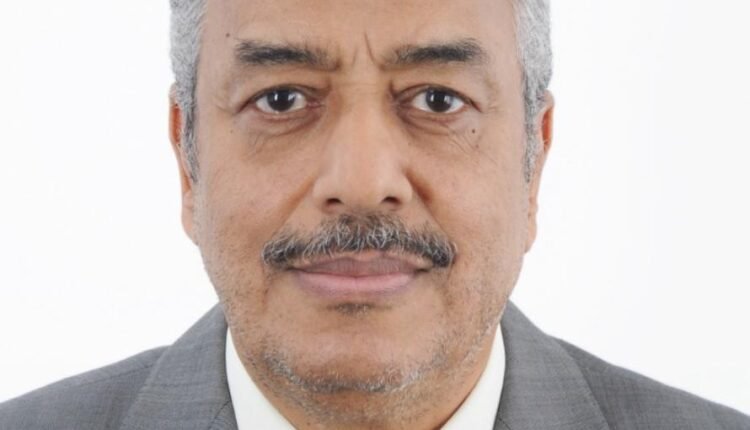
Dr Ismail Satti
One of the greatest falsehoods promoted within Sudanese political life is the claim that our crisis is fundamentally a crisis of “scarcity of competence”, or that Sudan is somehow poor in capable, honest, and effective leaders.
The truth, however, is that Sudan — from independence until today — has never lacked brilliant minds and highly accomplished professionals. On the contrary, the country has often possessed them in astonishing abundance.
The real problem has always lain elsewhere — in something far more dangerous:
In the way we choose our people.
Unfortunately, Sudan has lived for decades under the dominance of a diseased political mentality that placed loyalty above competence, political or tribal affiliation above integrity and expertise, and obedience above independence. It became entirely normal for the weak to be advanced because they were dependable, while the capable were excluded because they did not belong to the “correct” circle.
Thus, public office in many cases ceased to be a national responsibility and instead became a political or tribal reward.
Anyone examining the history of the Sudanese state since 1956 will notice that successive governments — civilian and military alike — fell, to varying degrees, into the same trap: politicising the civil service and subordinating state institutions to the logic of loyalties and quotas rather than the logic of merit itself.
After independence, Sudan inherited a relatively respectable administrative apparatus. The civil service functioned, to a considerable extent, according to discipline, qualification, and experience. Sudan possessed judges, administrators, diplomats, and economists who were highly respected throughout the region.
But over time, political parties increasingly treated the state as political spoils, and eventually this mentality expanded to encompass tribal and regional balances as well.
At that point, the state gradually lost its neutrality. Instead of asking, “Who is the most competent?”, the question increasingly became: “Which party does he belong to?” or “Which tribe does he come from?”
This transformation was catastrophic because it shifted Sudan from a state supposedly founded upon citizenship and competence into one infiltrated by the mentality of quotas and narrow affiliations.
During the long rule of the National Congress Party and the so-called “Salvation” era — the longest ruling period since independence — this disease persisted through the policy of “public interest”, which in many cases amounted to a vast political purge through which thousands of experienced civil servants and professionals were dismissed from state institutions, not because they lacked competence, but because they were suspected of insufficient political or ideological loyalty.
The natural result was that the Sudanese state lost expertise accumulated over decades, often replacing it with less experienced individuals who were simply closer to power.
Yet the tragedy did not stop there. Some of those who later opposed these practices went on to reproduce them under new slogans and different tools.
After the 2018–2019 uprising, Sudanese citizens took to the streets, dreaming of a state governed by law rather than loyalty, and institutions rather than patronage. But many soon discovered that some of the forces that rose to prominence in the name of the revolution fell into precisely the same trap they had condemned: using the state as an instrument to eliminate political opponents and to reshape institutions according to standards of loyalty and affiliation rather than competence and professional neutrality.
Here emerged the Committee for Dismantling the 30 June 1989 Regime and Removing Its Presence in Government. The Committee’s legal spokesman, Wagdi Saleh, became associated with one of the most controversial experiences in modern Sudanese history.
While some regarded the Committee as a necessary mechanism for dismantling the legacy of the Salvation regime and combating corruption, others viewed it as an instrument of mass dismissal and exclusion that lacked fair legal standards and merely reproduced the same “public interest” mentality under a new banner.
What is painful is that Sudan appears trapped within a closed cycle: every new authority condemns exclusion, then practises it; denounces political empowerment, then replaces it with a new form of empowerment.
A more dangerous and complicated phase followed the expansion of political and regional quotas after the Juba Peace Agreement, which many came to view not as a project of justice but as a broad gateway for dividing power and offices along armed, tribal, and regional affiliations.
In principle, no one opposes redressing the grievances of areas that suffered war or developmental marginalisation — that is a legitimate right. But disaster begins when the concept of “lifting marginalisation” becomes a justification for bypassing competence, or when an entire region is reduced to the members of specific tribes or armed movements, as though the rest of Sudan had never known hardship.
How many villages in northern, eastern, central Sudan, Al-Jazirah, White Nile, and Kordofan endured the same deprivation?
How many Sudanese from every region emigrated and lost their lives escaping the burden of collective political failure?
Yet modern Sudanese political discourse sometimes treats certain positions as though they were “tribal entitlements” rather than national responsibilities.
Here lies the real danger.
When the state begins distributing positions according to tribal or regional affiliation, it does not solve marginalisation — it creates a new form of marginalisation. It plants within society the dangerous feeling that the nation no longer belongs to competence, but to whoever possesses weapons, the loudest voice, or the strongest tribal card.
More dangerously still, this approach harms even the very communities it claims to support, because it often selects from among them those who are politically or tribally connected rather than those most qualified by knowledge, experience, and integrity.
Then came another astonishing scene when Kamil Idris, having assumed the office of Prime Minister, launched televised advertisements inviting anyone “who considered himself competent” to apply for senior government positions.
To many observers, this appeared naïve — closer to media spectacle than serious institutional practice. In functioning states, senior leadership positions are not filled through open public calls resembling commercial recruitment advertisements, but through rigorous professional mechanisms involving deep evaluation of integrity, experience, leadership capacity, and cumulative achievement.
Administratively advanced states do not search for leaders through television advertisements. They rely on specialised assessment institutions, high-level professional committees, talent databases, and carefully studied nominations grounded in established professional records.
Such open invitations created the impression — even unintentionally — that the state lacked even the most basic institutional knowledge of its own national competencies, or that it suffered from severe institutional weakness.
Many observers, therefore, viewed the initiative as reflecting a confused understanding of state administration and of one of its most sensitive responsibilities: selecting leadership.
And what, ultimately, was the actual outcome of those advertisements?
Did they produce a genuine transformation in the philosophy of selection?
Did they reveal extraordinary leaders previously unknown?
Or were they, in essence, merely a public-relations exercise designed to create an impression of transparency and openness more than a serious mechanism for building a professional state apparatus?
Indeed, many believe that the appointments eventually made were not truly based on those public applications at all, but rather — as has long been customary in Sudan — shaped by political balances, personal relationships, appeasement, and quota arrangements, while the advertisements themselves remained merely an elegant media performance for the cameras.
Here the deep intellectual crisis of Sudanese governance becomes clear: the confusion between “appearance” and “institution”.
We often produce scenes that appear modern and sophisticated, yet without building genuine professional and fair mechanisms for selecting competence.
The most dangerous corruption affecting any state is not financial corruption alone, but corruption in the معيار of selection itself.
A state may survive one corrupt official here or there, but it cannot survive when the entire system is built upon privileging loyalty and affiliation over competence.
The weak politician is often afraid of the strong and independent individual. He prefers the obedient subordinate over the competent professional because genuine competence possesses an independent opinion, whereas blind loyalty possesses only applause.
This is why capable Sudanese professionals so often find themselves sidelined while individuals of limited capacity occupy highly sensitive positions. Meanwhile, true experts remain on the margins, in exile, or crushed beneath exclusion and frustration.
And afterwards we ask:
Why did our institutions fail?
Why did the economy collapse?
Why did the administration deteriorate?
Why did citizens lose trust in the state?
In many cases, the answer is painfully obvious:
Because we failed to respect the principle of competence as we should have.
Nations do not rise through slogans, quotas, or the appeasement of tribes, parties, and armed movements. They rise when appointments become a sacred national responsibility rather than a political or tribal reward.
Sudan does not lack capable men and women. Perhaps its greatest tragedy is that it so often excludes its very best people — excluding them because they are independent, because they do not belong to the correct party. After all, they are not from the desired tribe, or because they refuse to master the art of political hypocrisy.
For that reason, Sudan’s true battle is not merely changing governments, but changing the mentality through which the state itself is managed: the mentality that views institutions as spoils, positions as rewards, and tribe and party as substitutes for competence.
No future exists for a state in which the weak are advanced because they are obedient, while the capable are delayed because they are free.
And no nation can progress while it wages war against expertise and then mourns the failure of its institutions.
Sudan does not suffer from a shortage of capable people.
It suffers from choosing them badly.
Shortlink: https://sudanhorizon.com/?p=13890