

Reflections on the Experiences of Revolutions
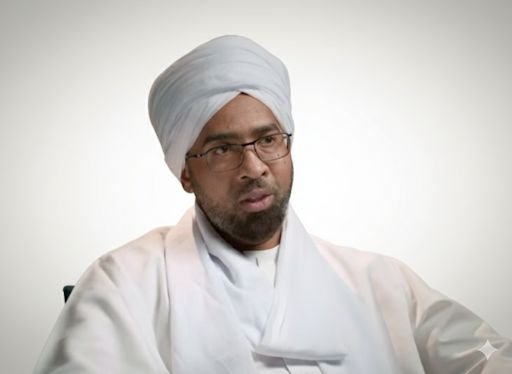
Abdulrahman Abdullah Mohammed
When we examine the outcomes of some of history’s great revolutions—the French, Russian and Iranian Revolutions—we encounter a recurring paradox: at some point, revolutionary leaders slip from the position of “leader” into that of “sycophant”, seeking the legitimacy that serves as their passport to power. Robespierre, who began as an advocate of virtue and reason, ended up captive to the Committee of Public Safety and the demands of the mobs in the streets of Paris, until the guillotine finally consumed him. The Bolsheviks, who raised the slogan “All power to the Soviets”, soon confiscated the authority of those very Soviets when it conflicted with the “supreme interest” as Lenin and Trotsky understood it. The Iranian Revolution, which carried within it a broad coalition of liberals, leftists and religious groups, ended by excluding yesterday’s ally, Mehdi Bazargan, and his colleagues, once Khomeini had consolidated his position by mobilising the religious seminaries and their followers at the expense of some of the liberal forces that had helped overthrow the Shah.
What these examples have in common is that “revolutionary legitimacy” proved to be a commodity with a short shelf life. The leader was therefore compelled to renew it time and again, often at the price of sacrificing wisdom for applause.
According to the social contract literature, a leader’s responsibility requires a sober assessment of available options and the selection of whatever best serves the public interest and averts harm to the nation—what is known in contemporary Western terminology as “due diligence”. History, however, tells us that one of the most dangerous manifestations of the negative consequences of revolution lies in the tendency of revolutionary leaders to prioritise the immediate demands of the revolutionaries over the broader interests of the nation. The debt the leader owes to those who brought him to power then becomes a constraint that obstructs sound decision-making.
Long ago, Ibn Khaldun warned that the asabiyyah—group solidarity or social cohesion—that creates a state may ultimately turn against it if the ruler fails to restrain and manage it after attaining power. The very force that built the state can then become an instrument of its destruction.
This recurring dilemma led Socrates to question the masses’ ability to choose the most suitable leaders and advance the best candidates. He is reported to have argued that the corruption of the democratic model and its inability to govern effectively might drive the people themselves to embrace a “strongman”, even a tyrant, in the hope of bringing order to the chaos produced by a defective democracy.
Socrates did not hate freedom. Rather, as Plato would later do, he distinguished between the freedom to choose what is best and the freedom merely to follow one’s desires. In Plato’s famous analogy, the skilled captain of a ship is not chosen by popular vote, but by knowledge and experience. Handing the helm to the person who is best at flattering the passengers, rather than the person who knows how to read the stars, is the shortest route to shipwreck.
Socrates paid with his life for some of these uncompromising positions when democratic Athens itself put him on trial.
Plato, his most daring disciple in embracing this line of thought, devoted considerable space in The Republic to criticising democratic government. He portrayed its gradual decline from oligarchy to mob rule and ultimately to tyranny in a cycle resembling what we might today call “the revolution turning against itself”.
Fairness, however, requires us to make an important observation. The democracy witnessed by Socrates and Plato was a direct democracy devoid of intermediary institutions such as an independent judiciary, the separation of powers, a free press and opposition parties. Successful modern democracies, by contrast, have not relied solely upon the “wisdom of the public”, but upon an institutional system capable of absorbing popular anger while simultaneously restraining those in power.
This is precisely what Tocqueville warned about when he spoke of the “tyranny of the majority”. He believed that the remedy was not to abolish democracy, but to fortify it through a vibrant civil society and an independent judiciary.
The outcomes of revolutions trouble me deeply and make me anxious about the future of the Sudanese revolution. This is not because democracy itself is in doubt, but because a revolution is not completed merely by overthrowing a regime. It is completed by building institutions that protect sound decision-making from pandering to revolutionaries and prevent the repetition of the lesson for which Socrates paid with his life.
These concerns are not merely abstract theoretical assumptions. Several Sudanese examples reveal a tendency within the governing mentality to court popular approval at the expense of the higher national interest.
The decision to revoke the appointment of Ambassador Idris as Undersecretary of the Ministry of Foreign Affairs, following a social-media campaign that challenged neither his competence nor his professionalism but rather his political affiliation during his university years, is a stark example of prioritising immediate appeasement over merit.
Competence was not exchanged for superior competence; it was sacrificed to transient digital clamour that was allowed to substitute for sober professional assessment.
Likewise, the Commander-in-Chief’s decision to retire a number of the finest officers from the army, police and security services in response to domestic and international pressure demanding the removal of Islamists from state institutions repeats the same pattern in an even more dangerous institutional form. It strikes at the heart of military and security professionalism in a country fighting an existential war, trading combat experience for short-term political calculations.
The hollowing-out of the civil service under the banner of “dismantling empowerment” left the state bureaucracy with a fragile layer of personnel that, remarkably, extended all the way to the summit of the executive branch under the government of Mr Kamil Idris.
One need only recall the flimsy arguments advanced by the Minister of Information during an interview with Al Jazeera to appreciate the extent of this institutional weakness.
Worse still are the reports concerning the obscure circumstances under which the Central Bank of Sudan granted the company “Asjad” a money-transfer licence, only to revoke it later without any public explanation and without holding the official responsible for the mistake accountable.
Accountability—not rapid capitulation to public noise—is what distinguishes an institutional state from one governed through reactions and improvisation.
When these patterns recur—appointment and dismissal, purging and hollowing-out, granting and withdrawing licences—without declared criteria or subsequent accountability, what we are witnessing is not reform. It is merely the replacement of one form of sycophancy with another, while postponing confrontation with the more difficult questions: Who governs? For what purpose? And according to what standards?
There is also something resembling black comedy in the Sudanese situation, as any perceptive analyst can recognise.
After 15 April 2023 and the devastation it brought, many thoughtful people realised that what the collapsing state needed at that particular moment was to prioritise the “strength of the ruler”, embodied in the army and the security services, over deferred democratic aspirations.
It was precisely what Socrates had anticipated more than two thousand years ago: the chaos produced by a defective political system drives people to accept the strongman as an immediate alternative to a faltering electoral process.
According to the same logic, the army leadership should have seized that moment to repair the disorder that had engulfed the machinery of the state. It should have become the “captain” who reclaimed the helm through knowledge rather than flattery.
The unfortunate paradox, however, is that the army leadership itself remained captive to the same obsession with pandering to the revolutionaries. It failed to make use of the legitimacy of “strength” that circumstances had compelled the public to grant it.
More troubling still, corruption networks that tightened their grip over government contracts succeeded where the political opposition had failed: they subdued and domesticated the state leadership until it became incapable of achieving either objective.
It could neither deliver the democracy promised to the revolutionaries nor impose the order whose restoration had been used to justify postponing democracy.
Here the irony is complete. A situation that might have served as a practical refutation of Socrates’ pessimism instead became a double confirmation of it, demonstrating that the “strongman” may himself become a prisoner of both sycophancy and corruption, leaving the nation to lose both wagers at once.
This reflection occurred to me as I was reading the messages congratulating me on my birthday. Between one message offering congratulations and another offering prayers and good wishes, I found myself comparing a fleeting moment of personal happiness with an enduring anxiety about my country.
Perhaps this is the destiny of a generation that opened its eyes to revolution: even one’s birthday becomes an annual occasion for taking stock of the nation before taking stock of one’s age.
My thanks to the loved ones who filled my day with affection, fellowship and kindness, and my apologies for this concern that never leaves me, even on a day that is supposed to be devoted entirely to happiness.
O Allah, all praise is Yours for Your countless blessings and favours. We ask You to grant relief and victory to our Sudan and to the lands of the Muslims.
I can also produce a sharper, more publication-ready opinion version in British English, with tighter prose and stronger transitions while preserving the author’s argument and political position.
Shortlink: https://sudanhorizon.com/?p=15673