

Towards a New Sudan: Visions for Building a Developmental State and a Productive Economy (1)
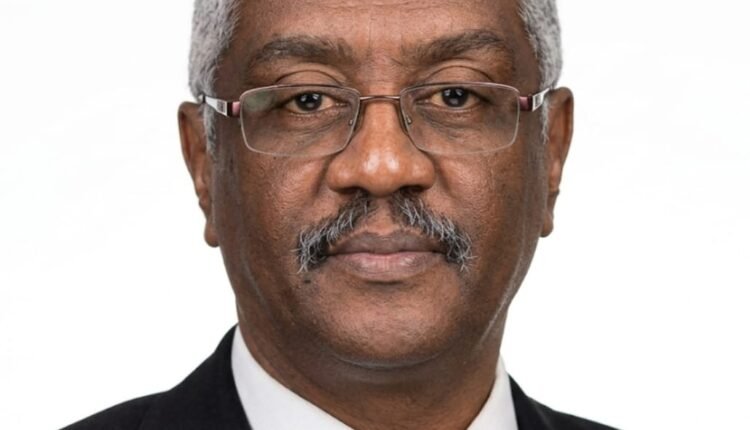
Nu’man Yousif Mohamed
Sudan’s post-war phase can no longer afford to recycle old questions or replicate tools that have already demonstrated their limitations. The real challenge is not merely to restart what has ceased to function or to repair what has been destroyed, but to redesign the economic and institutional model upon which the state will be built over the coming decades.
Recovery does not mean returning to the starting point. Rather, it means making a deliberate transition towards a new phase characterised by greater resilience, productivity and competitiveness. The greatest danger, therefore, is that we become preoccupied with repairing fractured structures while leaving unchanged the philosophy that created them, without review, reform or development.
In this context, the controversy surrounding the granting and subsequent cancellation of what became known as the “National Switch” licences should not be viewed merely as an administrative dispute or competition between companies. Rather, it should be seen as an indication of a deeper challenge regarding how the Sudanese economy is managed. When public attention is focused on who holds the licence while the economic value the licence is expected to generate is overlooked, we remain trapped in the mindset of a rentier economy rather than one geared towards development.
Modern economies are not measured by the number of licences their governments issue, but by their ability to build integrated productive ecosystems through which information, finance, services and goods flow efficiently and transparently. Real value is not created by retaining privileges, but by the efficiency of the system that connects producers with financiers, factories with farmers, and domestic markets with the wider world.
From this perspective, the telecommunications sector, digital payment systems and financial infrastructure become instruments of economic development rather than ends in themselves. These sectors should serve agriculture, industry, trade and services by increasing productivity, reducing costs and expanding citizens’ access to economic opportunities and essential services. They should not become arenas for struggles over privileges and vested interests.
The experiences of countries that have successfully recovered from conflict demonstrate that reconstruction begins with building institutions before buildings, and with reforming governance frameworks before injecting capital. Investment seeks a stable environment, clear rules, fair competition and institutions capable of enforcing the law independently of political considerations and narrow interests.
Sustainable development, moreover, cannot be achieved through isolated projects. It requires the construction of interconnected systems. When telecommunications are linked to digital payments, digital payments to finance, finance to production, and production chains to manufacturing and exports, technology becomes a driver of genuine economic growth rather than merely an isolated technical service.
From this standpoint, Sudan’s reconstruction requires a redesign of the architecture of recovery around a number of fundamental pillars:
First: Transitioning from a rentier economy to a value-creating economy
Public policies must be directed towards maximising productivity, increasing value added and promoting innovation, rather than focusing on the distribution of privileges or the conventional management of resources.
Second: Building a resilient institutional ecosystem
This ecosystem should be founded on good governance, transparency, digitalisation and institutional integration, enabling it to adapt to crises, absorb shocks and transform challenges into opportunities for growth.
Third: Connecting digital infrastructure to the real economy
Every investment in telecommunications, payment systems, or digital services should be assessed according to the extent to which it supports agricultural, industrial, and service-sector production, creates jobs, and improves citizens’ lives.
Fourth: Entrenching fair competition
Serious investors require a stable regulatory environment, clear procedures and equal opportunities. These conditions strengthen confidence and help attract both domestic and foreign capital.
Fifth: Making value chains the cornerstone of economic planning
Producing raw materials is no longer sufficient. What is required is the construction of integrated systems that begin with production, extend through processing, logistics, finance and marketing, and ultimately provide access to domestic, regional and global markets.
Sudan today stands at a rare historic moment. Wars, despite their brutality, can sometimes open a window for rethinking the future of the state beyond the legacy of the past. Yet this opportunity may be squandered if the country becomes consumed by disputes over licences, the redistribution of influence, or the reproduction of old institutions with the same outdated mindset.
The sheer number of decisions made will not shape the future, but by the quality of the systems that produce them. Nor will the success of the post-war phase be measured by the number of projects inaugurated, but by the Sudanese economy’s ability to create sustainable value, strengthen production, expand employment opportunities and ensure equitable access to services.
The reconstruction of Sudan does not begin with cement and steel. It begins with rebuilding economic thinking, designing modern institutions and creating national systems that place citizens, production and value chains at the centre of all public policy.
Only then can recovery be transformed from a political slogan into a national project, and sustainable development become a reality built day by day rather than a promise repeated with every crisis.
This article is part of the series “Towards a New Sudan: Visions for Building a Developmental State and a Productive Economy”, which seeks to present practical visions for rebuilding Sudan on the foundations of production, governance, innovation and value chains, thereby laying the groundwork for a modern developmental state and an economy that is more competitive, resilient and sustainable.
“The future is not inherited… it is built.”
I can also edit the entire series into a consistent British English publication style, ensuring uniform terminology, headings, author names, and policy language across all instalments.
Shortlink: https://sudanhorizon.com/?p=15647