

Talking Points for a Conversation with Mr Dollar
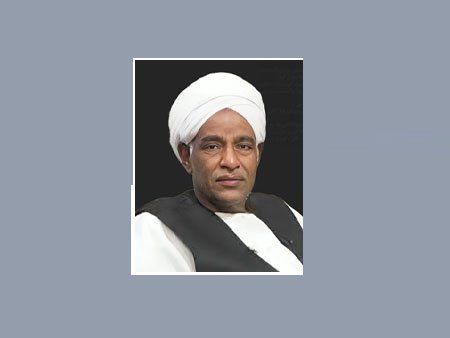
Mahjoub Fadl Badri
My grandmother, may Allah have mercy on her, belonged to a generation whose education was largely oral, as was the case with most grandmothers of her time. May Allah have mercy on them all, and on those bygone days. For her, the radio was the primary source of knowledge and entertainment.
She was particularly fond of the legendary Sudanese singer Abu Dawood. One day, however, while waiting impatiently for the death announcements on the radio, she found herself reluctantly listening to the live commentary of a football match.
Suddenly she exclaimed:
“Good heavens! Who are these devils you’ve brought onto the radio at sunset?”
She had repeatedly heard the commentator mention Shawateen, the nickname of a Hilal player, but never imagined it was a footballer’s name. In her mind, they were literally “devils”.
There was no point arguing with her. As far as she was concerned, football was simply an idle amusement, hardly worth wasting precious torch-battery power listening to.
In fairness, my grandmother’s thinking was perfectly logical—at least from her perspective. Conserving battery life for something more worthwhile made far more sense than the endless attempts by successive governments to curb the rise of the US dollar against the Sudanese pound.
Governments have tried everything: security crackdowns, economic measures, technical interventions, and even outright coercion.
The late Babikir Wad Al-Jabal once recounted that President Jaafar Nimeiri summoned him one day and declared:
“See to it that the dollar comes down tomorrow—or I’ll have your head. Off you go!”
Whether the story is entirely accurate or not, the narrator insisted that the dollar fell the following day.
At that time, one commercial bank manager reportedly provided foreign exchange dealers with substantial sums of money for limited periods to enable them to purchase US dollars. Back then, the familiar street refrain echoed through Khartoum’s Arab and European markets and at the airport:
“Dollar… Riyal… Traveller’s cheque…”
How many committees have been formed over the years—only for them to establish more committees, which in turn produced yet more committees—without ever solving the problem of the soaring dollar?
Perhaps the most famous was the committee headed by the Janjaweed commander Hemeti, who dramatically declared war on the dollar in characteristically colourful language:
“We’ll wrestle this dollar—either it throws us, or we throw it!”
If my grandmother were still alive, we might have asked her how that wrestling match ended.
Sadly, she has long since returned to her Creator.
The public knows as much about these committees—which appear and disappear before the exchange rate ever improves—as my grandmother knew about Nicaragua’s Sandinista movement, how it overthrew the Somoza regime, or how Daniel Ortega eventually came to power.
At various times, the government has blamed instant noodles, banning their importation. At other times, it has blamed currency speculators and arrested a handful of them.
Meanwhile, the dollar has continued its relentless ascent, with the government watching helplessly as it climbed ever higher.
The inevitable consequence has been the collapse of the Sudanese pound to historic lows.
Anyone forced by the war to live in Egypt while depending on remittances sent in Sudanese pounds needs no explanation of what this means.
Receiving the equivalent of only one thousand Egyptian pounds in exchange for one hundred thousand Sudanese pounds is enough to deepen the despair of refugees already burdened by war, displacement and silent suffering—hardships that have become so constant they now seem as natural as the changing seasons.
Every bird in the sky and every shepherd in the open fields knows that Sudan’s currency will recover only through sustained production, higher productivity, strict enforcement of import and export regulations, moderation in consumption, restraint in the purchase of non-essential goods, and genuine patriotism in commercial dealings.
We must also recognise the methods our enemies employ in their campaign against us.
They do not wage war solely with weapons.
They also fight through the media, through economic warfare, and through agents drawn, regrettably, from among our own people.
But this is no time for endless sermons.
Time is no longer on the side of either the nation or its citizens.
May Allah have mercy on my grandmother.
Shortlink: https://sudanhorizon.com/?p=15233