

How Malaysians Perform the Hajj: Between the Jurisprudence of Rectification and the Jurisprudence of Anticipation
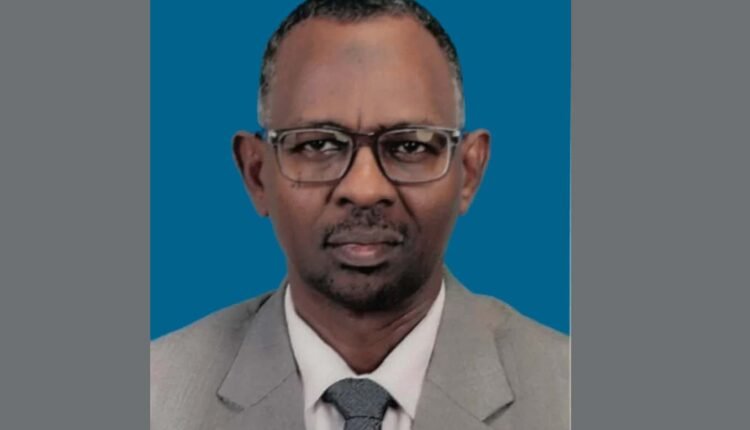
Dr Ahmed Abdel Bagi
One of the most remarkable contributions Malaysian Muslims have made to the Islamic world is the creation of an investment-based savings fund, established in accordance with Islamic law, which enables every Malaysian Muslim who wishes to perform the Hajj to do so. The fund supports pilgrims throughout the entire journey—from savings and financial preparation, to logistical arrangements, practical religious training using replicas of the Kaaba and the Jamarat, accommodation and subsistence in Makkah and Madinah, and finally their return to Malaysia.
During the twentieth century, Malaysian pilgrims generally performed the Hajj individually or through limited organised groups. Because conventional interest-based financial institutions dominated Malaysia at the time, many prospective pilgrims avoided dealing with them to ensure the funds used for the pilgrimage were free of usury and fully halal. Consequently, those wishing to perform the Hajj often invested their wealth in fixed assets, such as land, property, farms, and livestock, which they later sold to finance the journey. Upon their return, however, many faced financial hardship.
This situation prompted the search for a savings mechanism specifically designed to facilitate the performance of the Hajj. As a result, the Malaysian government established the Pilgrims Fund Board, commonly known as Tabung Haji, in 1963. It became the first non-banking Islamic institution dedicated to assisting pilgrims.
The fund was subsequently developed further through legislation enacted in 1995, transforming it into an independent financial investment authority operating in the field of Islamic banking and Sharia-compliant investments. Profits are distributed among depositors, many of whom use their returns to finance their pilgrimage. The institution expanded rapidly, and by 2025 it had more than 8.7 million depositors and assets exceeding US$56 billion. It has since become an independent authority with exclusive responsibility for Hajj services under Malaysian law.
How Does the Fund Operate?
A Malaysian Muslim may begin investing in Tabung Haji from birth. Parents can open an account for a newborn with a modest deposit of no more than US$2.50. Once the savings balance reaches approximately US$500, the depositor becomes eligible to register for the Hajj waiting list. A pilgrimage year is then allocated according to the date of registration and the level of savings. Depending on these factors, the waiting period may extend to thirty or even forty years.
Preparation Before Hajj
Preparations begin long before departure. Immediately after the conclusion of each Hajj season, planning for the following year commences. Reports and assessments are collected from mission staff, evaluations are conducted, and shortcomings are identified to avoid repeating mistakes.
Training programmes begin each year in the month of Muharram. Those selected for Hajj attend weekly two-hour courses that progress from introductory to advanced levels. As the pilgrimage season approaches, practical training is conducted in mosques. Shortly before departure, replicas of the Kaaba and the holy sites are constructed for simulation exercises. Prospective pilgrims wear ihram garments and rehearse the rituals under the supervision of guides and Tabung Haji officials.
Before travelling to Saudi Arabia, pilgrims stay in camps operated by the fund until they are transported to the Holy Lands.
The Function of Tabung Haji
Tabung Haji manages all Hajj operations in Malaysia under what is known as the “Muassasah Programme”, the official framework approved by the Saudi Government for receiving pilgrims from Muslim-majority countries.
For example, in the 1447 AH (2026) Hajj season, Malaysia was allocated its original quota of 31,600 pilgrims. The Saudi Ministry of Hajj and Umrah subsequently granted an additional 1,000 places, all of which were distributed through the Tabung Haji waiting list.
More than one million Malaysians are currently registered on the waiting list, resulting in average waiting periods of between thirty and forty years for newly registered applicants, depending on their state of residence and age group. Priority is generally given to elderly applicants, those who registered earlier, and first-time pilgrims.
Hajj Costs and Financial Assistance by Income Group
For the third consecutive year, Tabung Haji maintained the cost of the 1447 AH / 2026 Hajj package at RM33,300 (approximately US$8,440), despite rising costs in the Holy Lands. This was achieved through early reservations, long-term accommodation contracts, and a five-year aviation services agreement.
Pilgrims are classified into three income categories according to the Malaysian Government’s income classification system:
B40 – Lower-income group
M40 – Middle-income group
T20 – Higher-income group
The fund provides varying levels of financial support across categories.
Pilgrims in the B40 category pay RM15,000 (approximately US$3,770) and receive support worth around US$4,635, including a government subsidy of RM1,000 (approximately US$254) per pilgrim.
Pilgrims in the M40 category pay RM23,500 (approximately US$5,950) and receive support worth RM9,800 (approximately US$2,482).
Meanwhile, pilgrims in the T20 category bear the full cost of RM33,300 (approximately US$8,440) and receive no subsidy, as they are deemed financially capable based on their income levels.
As a result, the total financial assistance provided by the fund during the 2026 Hajj season is expected to reach approximately RM210 million.
Jurisprudential Rectification and Anticipation
Malaysian Muslims demonstrated considerable jurisprudential foresight when they transformed the Hajj experience into a system that makes pilgrimage accessible through savings, investment, and targeted financial support.
A Malaysian Muslim can only perform the Hajj through Tabung Haji. This ensures unified service delivery, effective oversight, and lower costs through economies of scale.
As a consequence, the pilgrimage has become part of a broader economic cycle. Hajj funds are no longer left idle in household savings boxes or tied up in fixed assets; instead, they are invested in sectors such as agriculture, tourism, construction, and others, generating social, religious, and economic returns simultaneously.
The fund also represents a unique model of cooperation between government and society. While Tabung Haji falls directly under the Office of the Prime Minister, it remains accountable to Parliament. It operates in the spirit of the third sector as a government-linked institution. This makes it one of the more distinctive experiences among Islamic countries.
A Forward-Looking Jurisprudence
Tabung Haji has excelled in institutionalising and continuously improving the Hajj experience through innovation and the adoption of modern technologies.
Each pilgrim is provided with an electronic wristband containing personal data, including medical history, existing health conditions, and prescribed treatments, facilitating continuous monitoring of their health status.
Pilgrims are also accompanied by carefully selected specialists in medicine and psychology, as well as retired members of special forces units who can assist during emergencies. Cooks and various support staff are also deployed to ensure that pilgrims can devote themselves entirely to worship without concern for logistical matters.
Harnessing Modern Technology
In line with technological advancements, the Malaysian Hajj administration introduced a range of digital services in 2000, including the e-Taib application.
The application provides religious guidance and answers questions related to the pilgrimage. It includes a dedicated fatwa and consultation service through which pilgrims can submit questions directly to qualified scholars and receive authoritative responses within minutes from a trusted source, thereby avoiding reliance on the increasingly widespread but often unreliable use of artificial intelligence.
Replicating the Experience
Saudi Arabia and a number of other Muslim countries have praised the Malaysian Hajj fund model and studied its experience closely. Several countries, including Turkey, Libya, Jordan, and Bosnia, have sought to benefit from it.
A delegation from Sudan’s Hajj and Umrah administration also visited the fund several years ago with the aim of learning from the Malaysian experience, which, in my view, remains highly worthy of emulation wherever the necessary political will exists.
This translation preserves the original article’s structure, terminology, and analytical tone while rendering it in natural British English.
Shortlink: https://sudanhorizon.com/?p=14352