

“Greetings from Khartoum” (Final) — A Series of Observations and Impressions from the Editor-in-Chief
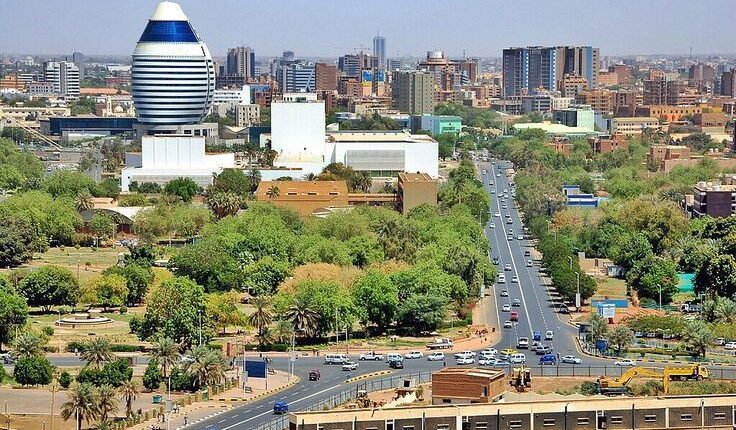
“Greetings from Khartoum” (Final) — A Series of Observations and Impressions from the Editor-in-Chief
Between Two Periods:
While in Khartoum, I found myself constantly making comparisons — not between living inside or outside Sudan, but between the situation I was witnessing now and what it had been only weeks or months earlier. That is why the opening question in every meeting I had with friends and acquaintances was always: When did you arrive in Khartoum, and what was the situation like when you arrived?
One friend told me he had arrived during the fourth month after liberation and stayed with a relative in Al-Jereif West. One evening, after sunset, he decided to visit a friend who lived not far from the Kenana Sugar Company premises on Obeid Khatim Street. He took Sixtieth Street northwards towards the Abdullah Al-Tayeb Street junction near “Jurash” Hospital before turning westward. He summed up the scene at that time with a single phrase:
“Throughout that entire journey, there wasn’t a single light on the road except the headlights of my own car.”
My neighbour in Al-Jereif West, who had returned to his home around the same time, told me that people were effectively “migrating” to Omdurman to obtain the most basic necessities. It was nearly impossible to find a functioning bakery, pharmacy, or grocery shop anywhere in East Khartoum. He added that if you crossed one of the area’s main asphalt roads on foot, you did not even bother checking for traffic — the mere sight of a civilian car passing through was, in itself, an event.
Another friend, who for the past two months had been accompanying his young son at Al-Raqi Hospital adjacent to the National University building south of Al-Raqi district, told me:
“When we first came here, private cars passing along this road” — he pointed to Al-Hawa Street — “were an extremely rare sight. Now look how the scene has changed: several service shops have opened, traffic movement has returned, and demand for rental shops has risen.”
As I was returning from there after sunset via Sixtieth Street, I noticed the growing number of furniture stores with illuminated signs, barely three hundred metres apart.
The reader may notice that these observations focus primarily on East Khartoum. That is both accurate and intentional. The reason is that this area — stretching from Garden City on the Blue Nile southwards through Al-Barari, Nasser Extension, Al-Manshiya, Riyadh, Al-Taif and Al-Maamoura (both west and east of Sixtieth Street) up to Madani Street — remains among the least populated areas in all seven localities of Khartoum State. It also continues to suffer from weak services. These are two interconnected problems, like the chicken and the egg: each precedes and follows the other at the same time.
Yet despite this, life has begun returning to the area. Most of the main cross streets are now illuminated by solar power, as are the longitudinal roads — except Obeid Khatim Street, which perhaps awaits an initiative from the Prime Minister, following the example of his predecessors, so that it may become like Africa Road west of the airport or Sixtieth Street. When that happens, a serving of kaware’ at the newly reopened Mona Lisa Restaurant in Nasser Extension — now refurbished in a fresh style — or a meal of foul and agashi at “Al-Shaygi” on the road linking the Bulbul stations on Obeid Khatim Street and Nubta on Sixtieth Street, will undoubtedly carry an entirely different flavour.
The Challenges of Return and Stability
A combination of factors drove most residents of Khartoum State to abandon their homes following the outbreak of war in April 2023. At the time, the collapse of security and fear of exposure to various dangers and abuses stood out as the principal concern. However, the systematic destruction of infrastructure and essential services — electricity, water, healthcare, and education — became the main reason why many who had fled hesitated to return even after the security threat had subsided and Khartoum State had been liberated.
Now, more than a year after liberation, one can say that something close to a miracle has taken place. From beneath the rubble, Khartoum has begun to rise again. Security conditions have improved significantly, water services have returned, schools and universities have resumed operations, markets and public transport are functioning once more, and most visible traces of war have been cleared from the streets.
Undoubtedly, much of the credit belongs to the remarkable efforts of “General Ibrahim Jaber’s Committee” and the coordination established between it and the authorities of Khartoum State. Yet the effort — which we no longer hear much about — still requires completion through a vision focused on making life easier for citizens, enabling them to resume their lives and rebuild their livelihoods.
The Most Active Sectors
I asked several people who had remained in Khartoum or returned recently: What types of work and business activities are most thriving these days?
The answer came immediately and without hesitation: house maintenance, solar energy, furniture shops, and food outlets.
When I looked more closely at these sectors, I found they genuinely reflected the priorities of people returning to Khartoum — or considering returning. Electricity services no longer cover all the areas they served before the war, and in places where power has been restored, supply is subject to scheduled outages lasting several hours. Likewise, homes abandoned by their owners for nearly three years — many of them looted, stripped, or partially damaged — now require repair and rehabilitation before they can once again become habitable.
Where Are the Banks? Where Is the Media?
Naturally, anyone deciding to return to Khartoum State will first think about repairing their home and replacing at least some of the furniture and essential electrical appliances they lost, until they can restore the rest. Since the overwhelming majority of people have lost their jobs in both the public and private sectors, their need for income-generating activities and a minimum level of stability has become even more urgent.
This is where the role expected of the banks should have emerged. Despite the destruction and looting many banks suffered, they remain the institutions most relied upon to provide the financing necessary for small and medium-sized enterprises, enabling people to settle again and the economy to move.
By fortunate coincidence, while in Khartoum, I spoke with several friends of my son who, before the war, had run small businesses of their own or on behalf of their families. Their businesses were destroyed during the conflict, and they had now returned to Sudan in an attempt to revive them.
I told them that the Central Bank of Sudan had directed banks to increase financing allocated to reconstruction, and that some companies affiliated with several banks had announced opportunities in microfinance. I advised them to visit any bank where they held an account and inquire about the requirements needed to benefit from the available opportunities.
To my surprise, they all replied in unison that they had never heard of this.
One of them told me he had called the bank’s customer service centre to ask about procedures related to his account. They placed him on hold for ten minutes before disconnecting the line without anyone answering him.
Another said he had gone personally to the bank to complete an account-related procedure and ended up waiting six hours — from nine in the morning until four in the afternoon.
I was struck by a double failure: a failure on the part of the banks, which had not succeeded in promoting their products and communicating their message to young people eager to work and searching for accessible financing options; and a failure on the part of the media, which had not succeeded in reaching these audiences.
In our age, media professionals ought to identify in advance the social sectors they seek to address and select the most effective means of delivering their message. It is beyond doubt that the overwhelming majority of people in their thirties and younger now rely on social media as their primary source of information.
Shortlink: https://sudanhorizon.com/?p=13790