

The Government Can Handle Anything
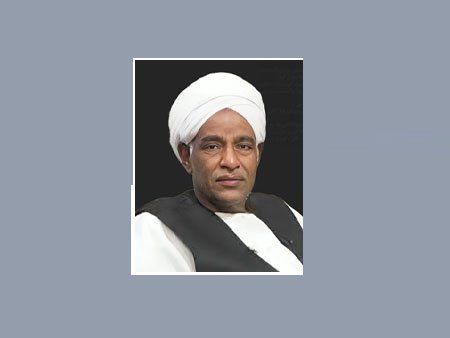
Mahjoub Fadl Badri
We were guests of Mr Essam Al-Sheikh Al-Batahani at his flat in Cairo. The Bataheen are among the most generous tribes in Sudan; generosity is rarely mentioned without recalling one of their generous men, such as Sheikh Siddiq Talha, Nazir of the Bataheen, Sheikh Abdullah Bilal in Wad Dahasha, Al-Haj Yousif, Abdul Basit Mohammed Ahmed in Al-Tarajma, east of Rufaa, or Sheikh Essam Al-Sheikh in Id Babiker in East Nile, or at the Al-Madina Al-Mihwariya resort south of Khartoum. God bless these gallant and generous men in every corner of the land of the noble and kind-hearted.
The War of Dignity was still in its early months when a large group of Sudanese gathered as guests of Essam Al-Sheikh, enjoying camel liver, aseeda with sauce and local ghee, and vermicelli, as our host was accustomed to serving every Friday. Once the cups of tea began to circulate, so did the conversation about the ongoing war, after some people shared their personal experiences amid its horrors. The discussion eventually produced a fundamental question: who would prevail?
My answer, arising from a deeply held conviction, was: “The army will win, sooner or later.” But most of those present met this answer with scepticism.
Some of the sceptics argued that the army had lost many of its headquarters, while its remaining positions were under siege and subjected to successive waves of attack. They said that the army was suffering from a shortage of infantrymen and weak armament. They pointed to soldiers whose uniforms looked shabby compared with the fully equipped Rapid Support Forces, and to vehicles that appeared worn out and weapons that looked old, judging from the video footage. They also argued that the army’s leadership had been infiltrated, citing the deaths of several senior officers. Meanwhile, they said, the RSF enjoyed rapid mobility, superior numbers and sustained supply lines, reinforced by intensive media propaganda from foreign channels featuring many figures described as advisers to the RSF.
The balance of the discussion was clearly tilting in the RSF’s favour. Had that gathering ended with a vote on which opinion was more convincing, I would have lost the round. I felt bitter, but my certainty that the army would ultimately prevail did not waver in the slightest, even though most of the capital, Khartoum, was under RSF control, along with Gezira State, parts of White Nile State, Jebel Moya, extensive areas of Blue Nile State, most of Darfur and parts of Kordofan.
But then the tables turned on the militia. Within a matter of months—by the grace of God first and foremost, then thanks to the great army, and then thanks to the people who raised the slogan “One Army, One People” and put it into practice.
As soon as people breathed a sigh of relief and became convinced that the militia was heading towards its demise, political discussion resumed with renewed vigour over a familiar question: how should post-war Sudan be governed?
And so we returned to the very same square around which we had been circling before the war!
The government opens the door to a Sudanese-Sudanese dialogue, and voices of rejection immediately rise—though indirectly. Some say, for example: Dialogue is good and necessary, but we need more guarantees before we participate. In other words, do they want to descend into the conference hall by parachute?
Only fools expect different results while repeating the same methods. Or, as Einstein famously said:
“Insanity is doing the same thing over and over again and expecting different results.”
General al-Burhan said that the government would not interfere in either the agenda or the outcomes of the dialogue, and that it would provide logistical support and security guarantees.
The government will not accept the participation in future political life of those who committed killings or assisted them.
The government will receive all those who return, and the army will absorb them into its ranks, without granting them immunity from legal proceedings in cases involving private claims.
The army will pursue the militia until it is completely crushed and the land of our country is cleansed of its defilement. It will also fulfil its duties during the transitional period until elections are held, after which it will hand power to whomever the people choose.
The government is facing enormous pressure from the United States to accept a proposal that would provide the militia with a lifeline, but it refuses. Al-Burhan expects that further sanctions may be imposed upon us, as he stated in Al-Managil.
The government has returned to Khartoum, but public services there have still not been fully restored. Some people, despite the circumstances, want to enjoy every service in full and are determined to portray the government as a failure, without taking into account the exceptional conditions our country has passed through—and continues to pass through.
The army has prevailed, and Sheikh Essam Al-Sheikh Al-Batahani has returned to Sudan and settled once again among his family and loved ones. Cairo misses him.
And with the Friday breakfast gatherings no longer taking place, I lost my opportunity to boast, so to speak, before those sceptics. I would have said to them: “The army won because God supported it, and because the government can handle anything.”
The government, after all, has countless ways of dealing with matters, and a sensible person knows that the government is not to be trifled with—or, as Sheikh Al-Obeid Wad Badr said in a Sudanese proverb:
“Do not provoke the fool, do not challenge the ruler, and do not bear witness to something you did not personally witness.”
A man from the countryside once came to the city and walked through its streets with his brother, who lived there. When it was time to eat, his brother gave him a sandwich.
The man asked:
“Where is the sauce in this thing?”
His brother replied:
“It is in the middle—inside it.”
So the man opened the sandwich and found that it was filled with meat. His mouth fell open in astonishment, and he exclaimed:
“Glory be to God! You see, the government really can handle anything!”
Shortlink: https://sudanhorizon.com/?p=17309