

Sudan Suffers Not Only from War, but Also from the Image the World Sees
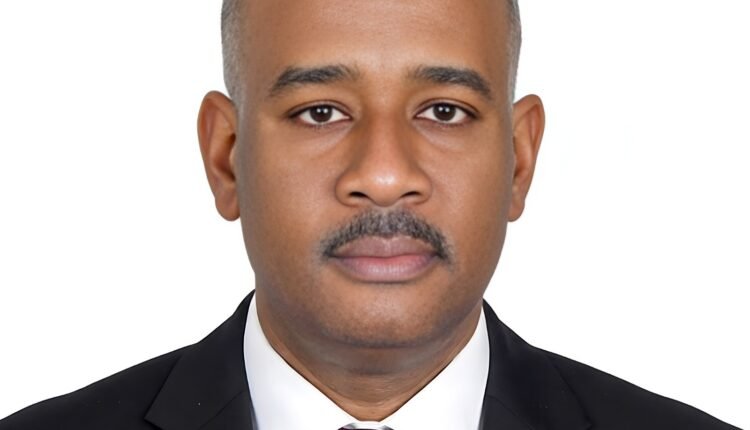
Muhannad Awad Mahmoud
During the meetings of the United Nations Industrial Development Organisation (UNIDO), held at the organisation’s headquarters in Vienna to discuss economic and industrial recovery in Sudan, Syria and Palestine, the Director General, Mr Gerd Müller, made a brief remark that was perhaps one of the most significant observations of the entire event.
After listening to members of the Sudanese Businessmen and Employers Federation delegation describe how activity in agriculture, industry, trade and exports had continued despite the war, he simply said:
“The image we have of Sudan is completely different.”
I reflected deeply on that statement, not merely because it came from a senior United Nations official, but because it touched upon one of the most consequential issues affecting Sudan’s economic future.
Since the outbreak of war in April 2023, the world’s attention has understandably focused on scenes of destruction, displacement and humanitarian suffering. These are undeniable realities, and their consequences cannot be understated.
The problem arose when these images became the only narrative about Sudan.
For many international institutions, investors and development partners, Sudan has come to be seen solely as a humanitarian crisis or a conflict zone. At the same time, other equally important realities have largely disappeared from view.
A striking example is that, during periods when the international community was warning of famine and the collapse of Sudan’s agricultural sector, the World Food Programme was purchasing sorghum produced in Sudan to meet food requirements in South Sudan.
The Sudan that many outsiders perceive as a country devastated by war is the very same Sudan that possesses one of the world’s largest untapped agricultural resource bases, vast livestock wealth, enormous mineral resources, and a strategic geographical position linking the Arab world with Africa.
The problem, however, is not the absence of opportunities but the failure to present them effectively to the world.
The Vienna meetings demonstrated that there is genuine interest in Sudan within international institutions. Yet interest alone is insufficient. The international community does not invest in theoretical potential; it invests in bankable projects, clear strategies and credible partners capable of delivering results.
Nor can responsibility be placed entirely upon the international media or external institutions. We, too, bear part of the responsibility. For many years, Sudan has lacked effective economic promotion platforms, maintained only a limited and uncoordinated presence at major international economic forums, and failed to market its investment opportunities in a language that resonates with global investors.
When the owner of the story is absent, others will tell it instead.
It is also only fair to acknowledge the considerable efforts made by the Sudanese Mission in Vienna, under the leadership of His Excellency Ambassador Magdi Mofadal, Sudan’s Ambassador and Permanent Representative to the United Nations and International Organisations in Austria, in presenting Sudan’s perspective to international institutions throughout the years of conflict.
Nevertheless, the voices of producers and business leaders often carry greater weight with investors because they reflect practical commercial experience. This explains the strong interest in the presentations delivered by the Sudanese Businessmen and Employers Federation during both the formal meetings and the bilateral discussions.
Sudan’s participation in Vienna provided a practical model of what the next phase should look like: a genuine partnership between government and the private sector, rather than each working along separate tracks.
At the same time, the Government of Hope faces immense domestic challenges, including rebuilding state institutions, restoring essential services, and addressing the economic and social consequences of war. However, the success of these efforts also depends upon opening an effective external economic front capable of attracting investment, rebuilding confidence and presenting a different image of Sudan to the world.
This makes close coordination between the Government and the Sudanese Businessmen and Employers Federation not merely an administrative option, but a national necessity.
The next stage requires a portfolio of clearly defined, investment-ready projects, supported by professionally prepared feasibility studies that can be presented to international institutions, investors and potential development partners.
It also requires a comprehensive review of the legislative and economic environment, particularly investment laws and related procedures. Investors evaluate not only the size of an opportunity, but also the strength of legal protections, the simplicity of administrative procedures and the consistency of government policies.
Perhaps the most striking aspect of the Vienna discussions was that they focused less on humanitarian assistance and far more on investment, production, value chains, agro-processing, mining, energy, and small and medium-sized enterprises.
There was a growing recognition that genuine recovery cannot be achieved through aid alone. Sustainable recovery is driven by a productive economy and a vibrant private sector capable of creating employment and generating economic growth.
If UNIDO proceeds with its planned European investment mission to Sudan in the coming months, the visit will represent an important opportunity to redefine Sudan in the eyes of European investors, moving beyond the stereotypes and perceptions that have accumulated during the years of conflict.
An investor who visits the country, engages directly with producers and business leaders, and sees the scale of available opportunities first-hand is far more likely to develop confidence than one whose decisions are based solely upon reports or television news coverage.
The Sudanese Businessmen and Employers Federation possesses an extensive network of regional and international relationships that could play a vital role at this stage—not only by promoting investment opportunities but also by attracting economic delegations, companies and financial institutions to experience Sudan’s realities and potential first-hand.
Vienna revealed an important truth: the world is not closed to Sudan, as some believe.
On the contrary, there is genuine interest, a willingness to listen, and a readiness to engage.
The true measure of that interest, however, will not be the number of meetings held or delegations received, but our ability to translate it into investments, partnerships and projects that generate production, employment and economic growth.
The real challenge in the coming phase is not persuading the world that Sudan has suffered from war—the world already knows that.
The real challenge is convincing the world that, despite the war, Sudan remains a country worth investing in.
That is neither the responsibility of government alone nor of the private sector alone. It is a shared national responsibility.
For nations are measured not merely by the resources they possess, but by their ability to transform those resources into tangible economic value that the world can recognise and trust.
Shortlink: https://sudanhorizon.com/?p=15219