

Sudanese Prominent Human Rights Activist Adeeb: The Quintet Must Support Sudanese Internal Dialogue
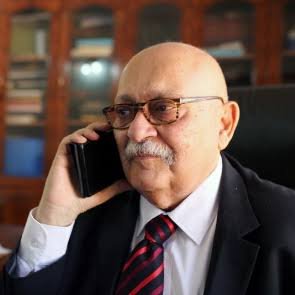
Cairo – Sudanhorizon – Sabah Moussa
Sudanese Lawyer, human rights activist, and prominent leader in the Democratic Bloc, Nabil Adeeb, has stated that the speech delivered by the Chairman of the Sovereign Council, Lieutenant General Abdel Fattah al-Burhan, on Friday, carried a measure of hope, both regarding ending the war and addressing the broader political dimensions of the Sudanese crisis.
In an exclusive statement to Sudanhorizon, Adeeb added that, concerning ending the war, the speech affirmed that the Sudanese Armed Forces (SAF)armed forces’ commitment to defeating the rebellion does not preclude their openness to any serious and genuine initiative leading to peace and an end to the war. He emphasized that this is an important indication, as it opens the door to peaceful solutions, provided they are serious and offer the necessary guarantees for achieving lasting peace.
Adeeb explained that regarding addressing the Sudanese crisis, the speech mentioned the meeting between the Chairman of the Sovereign Council and a group of citizens who spontaneously called for a comprehensive Sudanese dialogue to be held within Sudan. They requested the necessary guarantees for such a dialogue to take place and for the participation of all political forces. The Chairman pledged that the state’s role would be limited to facilitating and protecting the dialogue, without being a party to it or controlling its course or outcomes.
Adeeb argued that this pledge was of paramount importance, as the success of any genuine national dialogue requires that it be Sudanese-owned and driven by Sudanese will, and that participants enjoy the necessary independence and freedom to express their views without fear or coercion. He added that, as part of facilitating the dialogue, the state pledged to provide the necessary logistical support for its convening, thus creating the practical conditions that would enable all parties to participate.
Adeeb added that, regarding legal protection for the participants in the dialogue, the speech included a pledge to take the necessary legal measures to drop criminal charges filed based on complaints submitted by state agencies against any of the participants.
He explained that the Chairman of the Sovereignt Council also pledged to grant the participants temporary procedural immunity, preventing the continuation of proceedings related to charges arising from complaints submitted by entities or individuals outside the state apparatus, given that the state does not have the authority to waive the private rights of their owners.
He noted that the guarantees did not stop there, but extended to a pledge to grant the participants full immunity for any opinions they express during or as a result of the dialogue, thus ensuring their freedom of expression and discussion and preventing them from being held accountable for the positions and opinions they present within the framework of the dialogue process.
Adeeb pointed out that, more importantly, the speech did not limit the climate of freedom to those directly participating in the dialogue. Rather, it addressed the promotion of public freedoms and the creation of a political and legal environment that allows everyone to participate in the national debate, including those not directly involved in the dialogue sessions. He stated that the national dialogue, even if held among specific representatives, should not become an exclusive affair, as the issues discussed concern the future of the entire nation.
Therefore, every citizen and every political or civil force has the right to freely express their opinion on its course, issues, and outcomes. He explained that the speech can be seen, in principle, as opening two parallel doors: one for ending the war by responding to serious peace initiatives, and another for addressing the root causes of the political crisis through a comprehensive, free, and independent Sudanese dialogue, facilitated and protected by the state without being dominated by it.
He added that the true value of these pledges remains contingent on their translation into practical measures and clear legal guarantees that create the necessary climate for a serious dialogue capable of producing broad national consensus.
Adeeb announced the existence of a national committee to manage the dialogue from within, confirming that he is a member of this committee. He said that the committee will hold a press conference in which it will specify the names of the rest of its members and its tasks, stressing that the participation of the opposition abroad is important and necessary for the inclusiveness of the dialogue, saying that “this is what we ask for and aim for, but it is not among the committee’s objectives to obligate them to do so, but rather to convince them to participate.”
He added that they, for their part, have already called for dialogue, and now the opportunity has come for them to achieve their goal. He called on the five-member mechanism to support the internal dialogue, saying that what the mechanism is asking for is a Sudanese-Sudanese dialogue, and this will not be achieved with the required inclusiveness except inside Sudan.
He said that the five-member mechanism should support it if it is serious about what it is calling for.
Shortlink: https://sudanhorizon.com/?p=17020