

Minnawi Addresses the EU at Its Headquarters
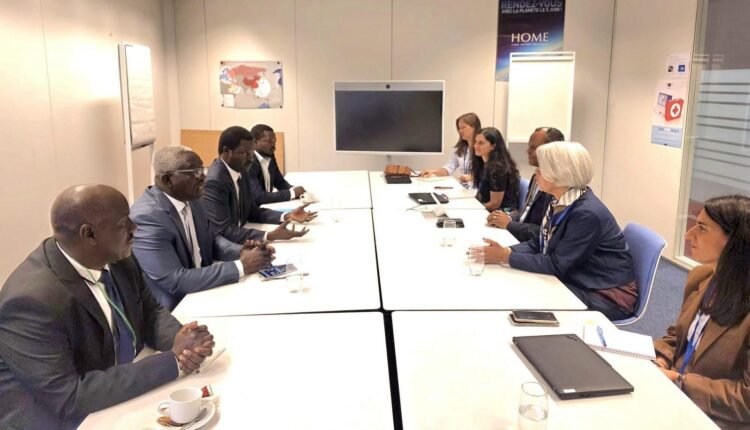
Brussels – Sudanhorizon – Mariam Abshir
The Governor of the Darfur Region, Minni Arko Minnawi, briefed senior European Union officials on the Sudanese government’s conditions and requirements for achieving peace and ending the war. He also invited the international “Quintet” group to visit Sudan and meet with the country’s authorities.
During a meeting on Wednesday in Brussels with Anette Weber, the European Union’s Special Representative for the Horn of Africa, Minnawi stressed that any Sudanese dialogue must take place inside Sudan and among Sudanese parties without exception. He noted that this does not mean rejecting other initiatives, but rather that such efforts should be built upon Sudanese foundations.
The Darfur governor expressed reservations about the role of some neighboring countries involved in Sudan peace initiatives, describing them as lacking neutrality, with the exception of Egypt and Eritrea. He argued that some countries in the Horn of Africa are not neutral in the conflict, while others are directly involved and serve the interests of the Rapid Support Forces (RSF). According to Minnawi, some states are also advancing the interests of countries that are part of the crisis through facilitation or non-neutral positions, which he characterized as interference in Sudan’s internal affairs.
Minnawi said that the withdrawal of the RSF from cities it occupied in Darfur, the restoration of normal conditions, and the return of displaced citizens to their villages are among the key conditions for ending the war. He emphasized that the current situation is abnormal and argued that, regardless of any change in name, the militia has long pursued a political agenda aimed at demographic change through displacement and replacement of local populations. He stressed the importance of assembling armed forces in secure locations.
He further stated that any peace effort should be based on Sudan’s national initiative presented by the Prime Minister to the United Nations, arguing that introducing alternative initiatives amounts to a lack of recognition of that proposal. He maintained that preserving Sudan’s unity requires restoring the previous situation rather than entrenching current realities, and stressed that peace must be accompanied by justice and accountability for crimes committed during the conflict.
Minnawi also informed the EU official that the Democratic Bloc participated in the recent Addis Ababa meetings but refused to sit with the “Ta’sis” coalition, which he described as the political wing of the militia and led by the militia commander himself, while the Democratic Bloc is headed by a civilian leader. He asserted that Ta’sis is neither welcome nor qualified to participate in political dialogue or discussions on civilian transition, alleging that some of its leaders were involved in atrocities committed in Zamzam and El Fasher.
He renewed his invitation to the Quintet to visit Sudan and receive a direct briefing from Sudanese stakeholders regarding the outcomes of the Addis Ababa meetings.
For her part, Anette Weber warned that Sudan faces the risk of fragmentation and division and could lose Darfur if a ceasefire is not achieved and a political solution is not found.
During a separate meeting with the Director for Africa and South America at the European Commission’s humanitarian aid and operations department (ECHO), Minnawi provided an update on the current humanitarian situation. The discussions included a call for increased humanitarian assistance for displaced persons and returnees.
Sudan’s Ambassador to Brussels, Abdelbagi Kabir, described the visit as highly successful. He said Minnawi conveyed the perspective of a key component within the government, both as Governor of Darfur and as a major participant in the fight against the militia, as well as an influential political actor. Kabir told Sudanhorizon that such opportunities are important for Sudanese political leaders to engage directly with international partners rather than leaving European Union institutions and broader international decision-making circles to outside voices promoting their own interests or those of foreign states.
Minnawi arrived in Brussels on an official invitation in his capacities as Governor of Darfur, leader of the Sudan Liberation Army, and a member of the Democratic Bloc. A delegation from the Democratic Bloc had been expected to accompany him, but visa delays prevented their participation.
It is worth noting that Anette Weber’s engagement comes in her role as the European Union official responsible for the Sudan file within the Horn of Africa portfolio. She is the primary EU official responsible for presenting Sudan-related matters to the European Union.
Shortlink: https://sudanhorizon.com/?p=14983