

Towards a New Sudan: Perspectives on Building a Developmental State and a Productive Economy — Final Episode
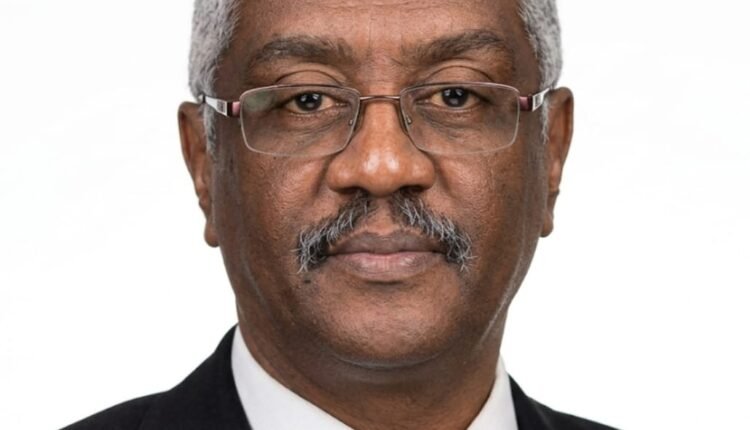
Nu’man Yousif Mohammed
This series concluded by outlining the broad contours of Sudan Vision 2040. Yet the elegance of their language does not judge visions, but by their capacity to change reality. This is where the genuine transition from vision to action begins—as a national covenant around which Sudanese people should unite in order to build the Sudan of 2040.
Unless ideas are transformed into policies, policies into institutions, and institutions into results that people can experience in their daily lives, those ideas will remain confined to paper, however precise or profound they may be.
Throughout this series, I have attempted to answer a question that continues to trouble everyone concerned about the future of this country:
How can Sudan move from an economy that consumes its resources to one that creates value from them, and from a state that manages crises to one that shapes the future?
Today, the most important question remains:
Where do we begin?
The answer does not lie in a single project, an isolated government decision, or a detached five-year plan. It begins with a national determination that Sudan’s future must no longer remain hostage to recurring crises, changing governments, or the disputes of everyday politics.
Development is not the programme of one government. It is a national project.
From Vision to Implementation
Sudan has paid a heavy price for the accumulation of plans that remained in drawers rather than entering implementation.
The problem was not a shortage of studies or a lack of expertise. It was the absence of an implementation system capable of turning a vision into an institutional commitment rather than a temporary political choice.
The success of Sudan Vision 2040 therefore requires the construction of a state in which strategic planning becomes a continuous practice, every objective is linked to performance indicators, every project has a timetable, and every official is subject to clear accountability.
Achievement must become the criterion for remaining in office—not loyalty or political quota-sharing.
This will only be possible if five principal conditions are met:
political will that places development above short-term calculations;
independent, competent, and durable institutions;
a genuine partnership between the state, the private sector, and civil society;
a financial and banking system that directs funding towards production rather than speculation; and
a national culture that regards economic success as a collective responsibility rather than the responsibility of government alone.
The Enabling State, Not the Competing State
The time has come for the state to withdraw from the role of investor and market competitor and devote itself to its essential responsibilities: creating an environment in which initiative can flourish, protecting fair competition, upholding the rule of law, maintaining policy stability, and providing infrastructure and public services.
Modern states are not measured by the number of enterprises they operate, but by their ability to empower society to produce and innovate.
The private sector, meanwhile, should be treated as a development partner, not merely as a source of finance or a recipient of incentives.
The more space is created for initiative, creativity, and productive investment, the greater the opportunities for employment, the higher the level of productivity, and the stronger the competitiveness of the national economy.
Protecting the National Renewal Project
Building a vision is more difficult than drafting one, and protecting that vision is more difficult than constructing it.
Every national renewal project confronts three forces that obstruct progress: the rentier mentality, corruption, and bureaucracy.
These are not merely administrative problems. They are cultural patterns that infiltrate institutions and consume time, resources, and public trust.
Protecting the project of a new Sudan therefore requires the entrenchment of four principles from which there must be no retreat.
First: Institutional Independence
Economic and regulatory institutions must be insulated from political contestation so that professional decisions remain free from narrow interests.
Second: Full Transparency
Public information must be recognised as a right of citizens, while accountability must become part of the culture of administration rather than an exceptional measure introduced only during crises.
Third: Broad Public Participation
Civil society, universities, research centres, and professional media must participate in monitoring performance and evaluating policies.
Sustainable development cannot be managed solely from above. It must be built through social partnership.
Fourth: Strategic Flexibility
Plans that fail to adapt to global change quickly become historical documents.
A living vision, by contrast, continually reviews and updates itself without abandoning its fundamental objectives.
A Message to the Generation of the Future
A vision extending to 2040 does not address our generation alone. It also speaks to the Sudanese young people who will enter the labour market, lead the economy, and manage the state during the next two decades.
The greatest investment our generation can make is to leave future generations stronger institutions, better education, a more productive economy, and a state that is more just and efficient.
Our responsibility is not to build the future entirely with our own hands, but to prepare the road for those who will continue the work after us.
Nations do not rise in a single generation. They advance when each generation receives the banner without allowing the journey to be interrupted.
A Covenant for National Renewal
The essence of this series may be summarised in ten principles forming a national covenant for renewal:
The human being is the primary purpose of all development.
Economic sovereignty begins with production.
Institutions are stronger and more enduring than individuals.
Added value is the true path to wealth.
An enabling state is better than a competing state.
The private sector is a partner in development.
Knowledge and innovation are the new capital.
Digital transformation is the foundation of modern administration.
Environmental sustainability is a pillar of economic competitiveness.
Long-term planning is the only guarantee of escaping the cycle of crises.
A Final Word
When this series began, its purpose was not merely to produce a collection of economic articles, but to open a window onto the Sudan that could exist.
The war has taught us that nations may lose much of their wealth, but they do not lose their future so long as they retain their people, their intellect, and their capacity to learn from their mistakes.
Sudan does not need a miracle as much as it needs a clear vision, competent administration, strong institutions, and a national will that places the interests of future generations above the interests of the present moment.
If this series has succeeded in establishing one central idea, I hope it is this:
Development is not a political slogan or a government programme. It is a national culture, a shared responsibility, and an ethical compact between the state and society.
The road will not be easy, but it is a road worth taking.
So long as Sudan possesses its people, its resources, its location, and its will, it also possesses the ability to transform itself from a state exhausted by crises into one that creates opportunities; from an economy struggling to survive into one that drives development; and from a nation that recounts stories of war into one that creates stories of success.
That is the covenant we should make with ourselves, and that is the wager worth winning.
The future is not inherited. It is built.
Shortlink: https://sudanhorizon.com/?p=16515