

Lessons for Youth Inspired by the Prophetic Migration (Hijrah)
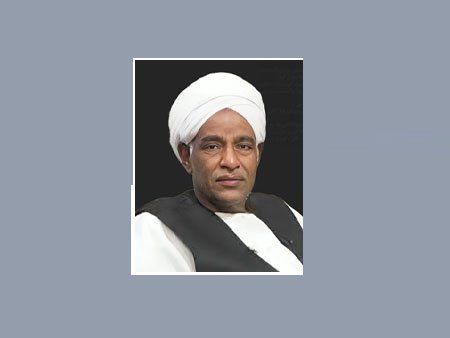
Mahjoub Fadl Badri
Each time the anniversary of the noble Prophetic Hijrah passes, the desire grows stronger to draw lessons from that momentous event, which marked a decisive turning point in the history of Islam and the mission of the Prophet ﷺ.
The first of these lessons is the ability to rise above personal desires, submit wholeheartedly to Allah’s command, place sincere trust in Him, and engage in purposeful action regardless of the risks and sacrifices involved. Our beloved Prophet ﷺ left Makkah—the land dearest to his heart—in obedience to the command of Allah. Yet he also took every practical measure necessary for the journey: choosing a trusted companion, arranging transport, securing a guide, preparing provisions, and carefully planning the route of departure.
Young people played the greatest role in implementing this plan. Among them were Ali ibn Abi Talib, Asma bint Abi Bakr, and Abdullah ibn Urayqit, all of whom were young. On the opposing side, the group of young men chosen by Quraysh to assassinate the Prophet ﷺ were likewise youth, as was Suraqah ibn Malik, who pursued the blessed caravan in hopes of claiming the reward offered for his capture. The young people of Yathrib were also among those who welcomed the Prophet with the famous chant, Tala‘a al-Badru ‘Alayna (“The Full Moon Has Risen Upon Us”).
Anyone who reflects upon the Hijrah will discover countless lessons, particularly when comparing it with the Night Journey and Ascension (Al-Isra’ wal-Mi‘raj). One may ask: why did Divine Wisdom decree that human effort and planning should play such a significant and visible role in the Hijrah, whereas the Isra’ and Mi‘raj was a purely divine miracle in which human effort had no part?
The miracles associated with the Hijrah were relatively few. Allah veiled the sight of the young men who sought to kill the Prophet ﷺ. He also prevented the leaders of Quraysh from seeing the Prophet and his companion at the Cave of Thawr, for they were two, with Allah being their third. Likewise, Suraqah’s horse repeatedly sank into the ground, preventing him from catching them.
Through this, Allah the Almighty demonstrated that believers must take every possible means while placing their trust in Him. It would have been effortless for Allah to transport His Prophet from Makkah to Madinah in the blink of an eye—or even less—but His wisdom decreed otherwise, teaching humanity the balance between reliance on God and responsible action.
It is by Divine Will that the anniversary of the Hijrah now arrives during the years of Sudan’s War of Dignity, when Sudanese youth find themselves divided between refugees, displaced persons, returnees, and those still uncertain of their future. At the same time, we see members of the armed forces, volunteers, and young men engaged in defending their homeland, honour, and people, seeking only the reward of Allah. Among them are martyrs, the wounded, prisoners, and the missing—many of them young people. May Allah accept their sacrifices and grant them a near victory, God willing.
When this war finally comes to an end, the responsibility for reconstruction, rebuilding, increasing production, and improving productivity will fall largely upon the shoulders of Sudan’s youth.
Professor Osman Abu Zeid addressed this issue in a lengthy article entitled The New Deal, in which he discussed the predicament facing Sudanese youth and possible paths forward. Within that article, he cited a comprehensive paper by Dr Ibrahim Al-Kabbashi, presenting a coherent vision of what he regards as Sudan’s greatest challenge: youth unemployment and its resulting poverty, despair, and social and economic instability.
The paper argues that unemployment is not a recent phenomenon but a deepening crisis inherited from previous decades. Its continuation threatens to produce increasingly serious consequences. The article analyses the crisis in detail and proposes solutions through what it calls the New Deal—a national project centred on empowering young people to establish and manage thousands of small and medium-sized enterprises in agriculture, industry, services, and commerce rather than waiting for government employment opportunities.
The proposal is built upon several pillars:
Training and equipping young people with the skills needed to manage businesses.
Providing accessible financing under favourable conditions.
Encouraging partnerships, cooperatives, and community initiatives.
Linking projects to locally available resources in different states.
Engaging government institutions, the private sector, and civil society in support and implementation.
According to the author, the success of such a New Deal requires several conditions:
A clear understanding and accurate diagnosis of the scale of the crisis.
Political commitment and support for the project.
Adequate financing mechanisms.
Broad partnerships between youth, the state, and society.
A cultural shift from dependence on employment to a culture of production and entrepreneurship.
The future of Sudanese youth, he argues, should not be tied solely to government jobs or temporary aid programmes. Instead, it should be built on addressing unemployment and poverty while achieving stability and development by investing in the energy and talents of young people. The goal is to transform them from job seekers into opportunity creators and wealth producers through a broad national project based on community solidarity and productive economic participation.
Those interested in further details may consult the full paper by Ambassador Dr Ibrahim Al-Bashir Al-Kabbashi.
As we commemorate the noble Hijrah, we call upon our youth to draw inspiration from its lessons. The Hijrah is not merely a geographical migration, a historical event, or a great occasion celebrated annually.
True migration also means abandoning wrongdoing, rejecting idleness, embracing diligent work, and avoiding complacency. To neglect productive effort and purposeful striving is itself a form of failure that must be overcome.
May Allah bless our ambitious young men and women, guide them towards what benefits them and their nation, and grant them the wisdom to turn today’s challenges into tomorrow’s opportunities.
Shortlink: https://sudanhorizon.com/?p=14959