

Is the Central Bank Giving Sudanese Banks Time to Comply — or Beginning to Reshape the Banking Sector?
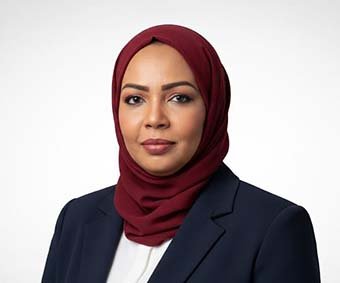
Dr Marwa Fouad Qabbani
The issue of bank capital in Sudan is no longer merely a regulatory matter concerned with setting new figures. It has become part of a much larger question: how do we rebuild a banking sector capable of withstanding shocks and financing the economy after the war?
Central Bank of Sudan Circular No. (4/2026), issued on 17 February 2026 concerning regulatory requirements for banks’ paid-up capital, carries, in my view, a message that goes far beyond simply raising the minimum capital requirement. The circular abolished the previous threshold of SDG 100 million and raised capital requirements based on each bank’s nature and activities. It set the requirement at SDG 230 billion for agricultural and industrial development banks, SDG 140 billion for commercial banks, SDG 140 billion for digital banks, and SDG 55 billion for financial investment banks. In contrast, requirements for microfinance and small and medium-sized finance banks ranged from SDG 35 billion to SDG 55 billion.
More importantly, the Central Bank of Sudan did not merely raise capital requirements; it gave existing banks two clear options for regularising their positions: increase their capital or merge.
And this is where the real story begins. Are we simply looking at a grace period for banks to bring themselves into compliance? Or does the circular mark the beginning of a process of screening and reshaping Sudan’s banking sector?
In my view, we are looking at both. This question becomes even more important given the current size of Sudan’s banking sector. According to the list published on the Central Bank of Sudan’s official website, 38 banks are currently operating. They have different institutional and ownership structures, including state-owned or state-participated banks, Sudanese private banks, banks with foreign or Arab participation or ownership, and specialised and investment banks.
The issue, however, is not the number itself, but a more important question: do all these banks have the financial, operational, and technological capacity to survive in the post-war period?
The existence of 38 banks does not necessarily mean that there are 38 institutions of equal strength or equal capacity to absorb risks and finance the economy. The new capital circular may therefore provide an entry point for redrawing the map of Sudan’s banking sector, rather than merely increasing capital figures.
A bank that can meet the requirements and continue operating should be provided with an environment conducive to growth. A bank that needs to increase its capital should submit a clear plan identifying its funding sources. As for a bank that cannot meet the requirements on its own, a merger may be a more economically realistic option.
The assessment of banks should also not be based on ownership alone. A state-owned bank is not necessarily stronger than a private one, nor is a private bank necessarily more efficient. Likewise, foreign participation does not automatically make an institution stronger. The true criteria should include asset quality, capital adequacy, liquidity, governance, risk management, technological capacity, service quality and the ability to finance the economy.
This brings us to the bigger question: does Sudan really need 38 banks, or does it need fewer banks that are stronger, better capitalised and more efficient?
The banking sector that entered the war is not the same sector that has emerged from it. Assets have been damaged, branches have ceased operating, operational systems have come under severe pressure, credit and operational risks have increased, and the needs of the economy have far outstripped the capacity of many banks to meet them.
At the same time, the post-war period requires a different kind of banking sector: stronger, better capitalised, better able to manage risks, more reliant on technology, and better prepared to finance agriculture, industry, trade and reconstruction.
Accordingly, increased capital should not be viewed as a penalty imposed on banks, but rather as the first line of defence for protecting depositors and safeguarding the stability of the banking sector.
But another equally important question remains: does increasing capital alone make a bank strong?
Certainly not. A bank may have substantial capital while suffering from poor asset quality, high levels of non-performing loans, weak governance, inadequate technological systems or insufficient risk-management capabilities. Compliance should therefore not merely mean raising funds to reach the required figure. It should involve a comprehensive reassessment of the bank and its genuine capacity to remain viable.
Here, mergers can shift from a compulsory option to a historic opportunity.
Sudan does not necessarily need many small banks competing for a limited market. Rather, it needs strong banks that can mobilise savings and direct them towards productive sectors. However, merging two weak banks does not necessarily create a strong bank.
For this reason, every merger should be preceded by a genuine assessment of asset quality, non-performing loans, provisions, liquidity, liabilities, governance, technological systems, human resources and legal obligations. Otherwise, we may transfer the problem from one bank to another instead of solving it.
At the same time, restructuring should not be merely an accounting exercise. It should be an opportunity to redefine the bank’s role in Sudan’s new economy. An industrial development bank does not perform the same function as a commercial bank or an agricultural bank. A microfinance and small and medium-sized finance institution has a direct role in promoting financial inclusion, financing productive groups and supporting entrepreneurs. Meanwhile, a digital bank represents a new model that does not fundamentally depend on a branch network, but on technology.
For this reason, the new classification of banks is an important step. Still, it should evolve into risk-based banking supervision that accounts for the nature of each bank’s activities, rather than focusing solely on the size of its capital.
Digital banks, in particular, require a different approach. Digital banks need more than capital. It requires secure digital infrastructure, cybersecurity, data protection, business continuity, robust systems for combating fraud and money laundering, and effective integration with the national payments system.
For microfinance and small and medium-sized finance institutions, we must ensure capital requirements do not reduce their role at a time when the Sudanese economy urgently needs to restart small businesses, finance producers, and restore livelihoods.
The next phase requires the compliance period to become a genuine reform programme. Each bank should submit a clear plan covering the sources of its capital increase, its business plan, asset quality, digital strategy, risk management and capacity to finance the economy.
The Central Bank of Sudan should also provide clear incentives for mergers and establish a rapid legal and procedural framework for them, while protecting the rights of depositors and shareholders, addressing distressed assets and preventing the transfer of risks from one entity to another.
Most importantly, the new capital must be transformed into genuine lending capacity. A bank has little value if it has substantial capital but cannot finance agriculture, industry, trade, and reconstruction. Increased capital should therefore be linked to clear business plans, performance indicators and a demonstrable capacity to direct financing towards productive sectors.
The next phase is neither about rescuing banks at any cost nor about eliminating them at any cost. It is about selecting the banks capable of surviving, competing and serving the economy.
After the war, the Sudanese economy needs banks capable of financing reconstruction, agriculture and industry; stimulating trade; attracting the savings of Sudanese people at home and abroad; expanding financial inclusion; and moving the economy away from cash-based transactions towards a digital economy.
The real question, therefore, is not: How many banks will remain after the compliance period?
The more important question is: What kind of banks do we want for Sudan during the recovery and reconstruction phase?
If the Central Bank of Sudan manages this phase according to transparent standards, and banks treat it as an opportunity for rebuilding rather than merely a regulatory burden, Circular No. (4/2026) could become the starting point for reshaping the banking sector into one that is stronger and more efficient.
But if we reduce the matter to simply reaching the required capital figure, we will have addressed the form while leaving the substance of the problem unresolved.
Capital matters, but a strong bank is not simply the bank with the largest capital. It is the bank that can turn capital into confidence, financing, production and growth.
Perhaps this is the right moment to ask the question that has been delayed for far too long:
Do we want 38 banks in Sudan, or do we want a strong banking sector capable of carrying Sudan’s economy into the post-war era?
Dr Marwa Fouad Qabbani
Strategic Planning and Digital Transformation Expert
Shortlink: https://sudanhorizon.com/?p=17888