

Behind the Ceasefire Curtain: A Reading of the Leaked Document
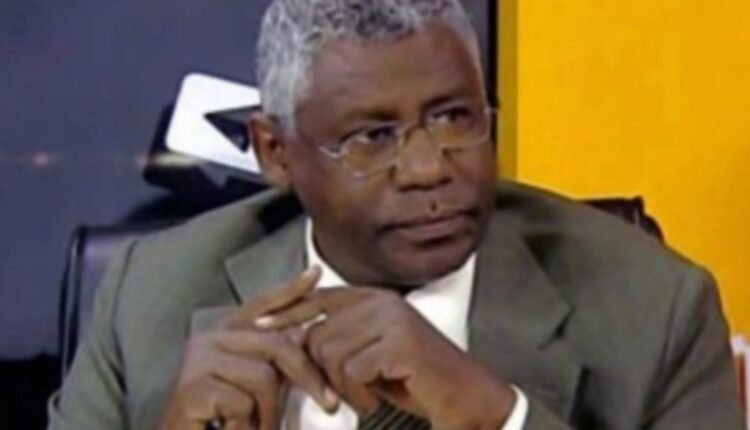
Adel Al-Baz
1
In the labyrinth of complex politics, leaked documents are often the flame that illuminates dark corners—or perhaps the trap laid across the road to peace.
The latest document, entitled “Restoring Peace in Sudan”, is no exception. Rather, it is a mirror reflecting a struggle of wills and revealing potential traps that could jeopardise Sudan’s future.
When the first document from the Naivasha negotiations was leaked—a letter from Ustaz Ali Osman to John Garang—I went to Ustaz Ali Osman, may the clouds bring him life-giving rain, and asked him:
“Is this the government’s final position, or merely a negotiating position?”
After a lengthy explanation of the document’s underlying principles, he told me that it was only a negotiating position and asked why I had raised the question.
I replied:
“If it is a negotiating position, then there is a possibility that the negotiations may succeed. But if you insist upon it as your final position in the negotiations, then I hope you will not waste your time on talks that will lead nowhere.”
2
After reading yesterday’s leaked document entitled “Restoring Peace in Sudan”, I found myself asking the same question:
Does the government present the position in response to the American proposals a negotiating position, or is it final?
If it is merely a negotiating position, then “the ashes have consumed Hammad”—the situation is beyond rescue.
But if it is a final position and the United States has accepted it, then we may be standing on the threshold of a genuine peace process.
Why, and how?
3
The Traps in the Document: An Analysis of the Five Tracks
The government’s response, as expressed in the leaked document, contains positions across all five tracks from which it cannot retreat.
Indeed, retreating from them would fracture the alliance of groups rallied around the army, whether the popular mobilisation forces, the Joint Forces, the Islamist brigades, or even the army itself, which would not accept retreat on any of the five tracks.
Any attempt to bypass these positions in order to introduce amendments to the document would mean that the ceasefire and those promoting it had succeeded in destroying the unity of the people and the armed factions, leaving the army alone and exposed.
On the other hand, if the army remains steadfast in the positions declared throughout the document, it will preserve its unity.
Since the document has now entered the public domain, one possibility is that it emerged from a lengthy secret negotiating process that secured the acceptance of sections of the international community as well as the approval of the parties involved in the War of Dignity, after which it was deliberately leaked.
Alternatively, it may have been leaked by a party seeking to blow up the entire process.
The militia is unlikely to accept the document, nor are its allies, as Khalid Omar Youssef indicated in his article yesterday.
Low Negotiating Ceilings: Why?
This document represents a negotiating position with remarkably low ceilings.
It would have been more appropriate for the government to raise its demands as high as possible in order to gain bargaining leverage at the negotiating table.
For example, the document makes no mention of the militia’s crimes.
The government should not allow the militia to escape accountability for its crimes.
How can a militia contribute to the destruction of an entire country, commit grave human rights violations, destroy infrastructure, and then have its leaders remain comfortably in place, negotiating their return to the political arena?
The document could also have included provisions on compensation.
Can the militia and its supporters be allowed to cause all this destruction and killing without paying a single penny towards reconstruction—or even blood money?
Many other provisions could have been included to raise the government’s negotiating ceiling.
I do not understand why the government would begin negotiations from the minimum position from which it cannot retreat.
Does that make any sense?
Key Issues in the Document
What concerns me in this article are five points distributed across four tracks of the document.
6.1 First Track: Humanitarian Ceasefire
The document states:
“The withdrawal of the militias from all cities they have occupied since 11 May 2023, including the areas identified in the attached schedule, as part of confidence-building measures and to create an appropriate environment for a permanent ceasefire.”
This point is currently the fundamental obstacle to progress in any negotiations.
The rebels will not accept withdrawal from the cities because doing so would amount to an admission of defeat and effectively mark the end of the rebellion and its supporters.
The rebellion’s predicament is that it already accepted this principle in the Jeddah Declaration before the entire world and the American mediators.
It therefore cannot justify remaining inside the cities.
Nor can the Joint Forces accept the militia remaining in cities where it continues to inflict suffering upon civilians.
There was a proposal that both the army and the militia should withdraw from the cities, leaving responsibility for security to the police and to a civilian administration appointed by the State.
But the militia would not accept that proposal either.
The withdrawal of the militia from the cities is non-negotiable.
It is one of the provisions to which the government remains most firmly committed and which it has repeatedly promised the Sudanese people to uphold.
6.2 Using the Ceasefire for Negotiations
Another provision states:
“Using the ceasefire to negotiate a permanent cessation of hostilities and initiate a peaceful civilian-led transition in accordance with an agreed roadmap.”
The phrase that caught my attention is “in accordance with an agreed roadmap.”
Agreed between whom?
Between political forces that have failed for years to agree on anything, even within the same political camp, and which have continued to fragment endlessly?
In these proposed negotiations—which represent a gateway to power, prestige and political spoils—obtaining meaningful results from negotiations among political scarecrows will be impossible.
We will wait years for them to agree.
Or, more accurately, we will be waiting for Godot.
6.3 Political Process and Governance Track: Exclusion and Unjust Equivalence
In the political process and governance track, consider this remarkable provision:
“Ensuring that the dialogue and political process are free from violent extremist groups and from members of the rebel militias who committed atrocities.”
Who are the “violent extremist groups”?
The immediate assumption is that the phrase refers to Islamists.
Here, those who fought against the militia are being placed on the same footing as the rebel militia itself.
The dangerous message is this:
If you fought alongside the militia or alongside the State, you are excluded from the political process and have no right to participate in the country’s future.
Islamists are apparently expected to become martyrs but are not permitted to become witnesses to the nation’s wedding!
This is an astonishing proposition.
Of course, it is understandable that this provision was included to satisfy certain parties that have consistently demanded such exclusions in the Quad’s document and elsewhere.
However, it would have been preferable to make the exclusion of Islamists—who neither deserve this description nor deserve exclusion—conditional upon the exclusion of the militia and its allies.
It is not fair for the militia’s allies to remain at the negotiating table determining the country’s future while the army’s allies are excluded.
That is suspicious logic.
It is certainly neither in the army’s interest nor in the interest of the transitional period.
This exclusionary approach has already been tried twice: after the political change and during the Framework Agreement process.
What was the outcome?
Why do we repeat the same idea and expect different results?
6.4 Comprehensive National Dialogue: Aspirations or Reality?
Another provision in the governance and political process track states:
“Launching a comprehensive national dialogue inside Sudan, under civilian leadership and United Nations supervision, resulting in a transitional civilian government; initiating a Sudanese political process to achieve a comprehensive political settlement; establishing a unified Sudan under civilian rule and civilian-led State institutions; establishing a transitional civilian government to implement the outcomes of the dialogue, oversee free elections, and ensure justice and accountability.”
This is an excellent provision—but it belongs to the realm of pleasant wishes.
Can any rational person genuinely expect 70 political parties made up of “isolated elite groupings” to agree on a civilian government when they have failed to agree on the simplest matters during their empty workshops?
And from another perspective, can anyone seriously expect diaspora parties dependent on foreign support to accept a civilian government that gives them only a limited share of power proportionate to their insignificant political weight?
Who would accept such a distorted arrangement?
The army itself would not accept a government controlled from abroad by a clique of Qahtists.
This is nonsense and political gamesmanship while the nation’s precious time is being wasted.
4
One Road to Ending the Absurdity
There is only one way to bring this absurd transitional period to an end.
The army must make up its mind and declare that legitimacy derives from the people and that the only path to political power is through elections.
It should establish a clear timeframe for the transitional period during which political forces and those aspiring to power can prepare for elections.
Those elections should be held on schedule under international and regional supervision.
Whoever receives the confidence of the Sudanese people should assume power, and the army should return to its barracks.
This is the realistic and achievable scenario.
Everything else is a waste of the nation’s time and will bring further suffering and loss to its people.
Shortlink: https://sudanhorizon.com/?p=15788