

A Vision for Revitalising the National Water Resources Council
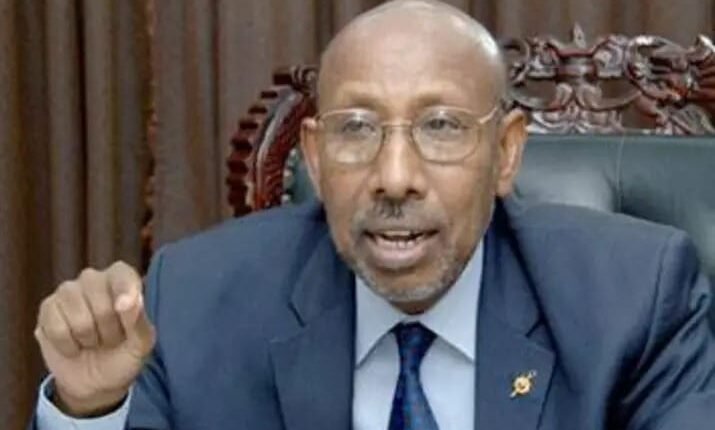
Consulting Engineer Saif al-Din Hamad Abdullah
1. Introduction
The National Water Resources Council represents the cornerstone of water resources planning, development, and management in Sudan.
The Council was established pursuant to Article 5 of the Water Resources Act of 1995, and Cabinet Resolution No. 169, dated 27 March 1996, was issued to constitute it. This was followed by several other decisions concerning water resources, including:
Resolution No. 652 of 1999, concerning the formation of a ministerial committee for joint irrigation projects under the Nile Basin Initiative;
Resolution No. 17 of 2002, concerning the establishment of a ministerial council to formulate the country’s water strategies, followed by Resolution No. 310 of 2002, which added further members to that council; and
the Water Resources Act (Amendment) of 2021, signed on 24 April 2021.
Under Resolution No. 169, the Minister of Irrigation and Water Resources was appointed Chair of the Council, alongside 23 other members.
In addition to senior engineers and former ministers and under-secretaries of irrigation, the Council included state ministers responsible for engineering affairs and representatives of the ministries of foreign affairs, finance, agriculture, environment, and tourism. It also included the Secretary-General of the Federal Governance Chamber, the Under-Secretary of the Ministry of Justice, the Chair of the Board of the National Electricity Corporation, and others.
Representatives of the Ministry of Defence and the General Intelligence Service were added under the 2021 amendment.
The Council met twice during the brief tenure of Dr Mohammed Sharif al-Tuhami as minister, and once during the first year of Engineer Kamal Ali Mohammed’s term.
2. Challenges Facing the Council’s Activation
There are many areas of overlapping responsibility among ministries, authorities, and other bodies connected with water resources in Sudan. This is further complicated by the federal system, under which water resources are also managed directly at state level.
Ensuring the implementation of decisions at both federal and state levels is essential to securing the state’s authority and sovereignty over water resources and to safeguarding Sudan’s water security.
For this reason, the Council’s present structure, under the chairmanship of the Minister of Water, does not adequately serve its intended purpose. Nor does it fulfil the role required of it or sufficiently reflect the importance of water resources as the lifeblood of the country and a fundamental pillar of national security, state sovereignty, and full public authority over those resources.
The current arrangement also creates difficulties under the rules of protocol, given that the Council includes cabinet ministers, such as the ministers of foreign affairs and justice, as well as state governors.
The Head of State should therefore chair the Council. Ministers and directors of water-related bodies and authorities should serve as members, together with state governors, while the Minister of Water should act as rapporteur.
Membership should also include former ministers and under-secretaries of irrigation, water experts, selected vice-chancellors of long-established universities, chairs of parliamentary committees concerned with water, heads of engineering, agricultural, and pastoral organisations, and prominent public, diplomatic, security, religious, and media figures, among others.
The Council must be constituted through a separate decision rather than having its composition incorporated into the Water Resources Act. This would preserve the freedom and flexibility needed to amend its membership in response to future circumstances and developments.
The Water Resources Technical Unit should serve as the Council’s general secretariat and establish branches in the states.
The Council should meet at least once a year, in addition to any extraordinary meetings called by its Chair or convened in emergency circumstances.
3. Expanding the Council’s Mandate
Expanding the Council’s responsibilities is necessary in view of the nature and importance of water resources and their sovereign, developmental, security, and political roles.
Its responsibilities should include the following:
A. Formulating General Water Resources Policies
This should include identifying and assessing water resources, rationalising their management and use, preventing natural disasters caused by drought and flooding, and protecting those resources from pollution and degradation.
It should also promote their integrated and balanced development alongside other natural resources, thereby ensuring maximum benefit and achieving the necessary coordination and cooperation with other competent bodies.
B. Developing a Long-Term Federal Programme
The Council should formulate a long-term federal programme for the optimal and balanced use of water resources, with clear priorities.
C. Submitting Decisions and Recommendations
The Council should submit the necessary decisions and recommendations concerning:
water resources shared with other countries; and
the foundations of cooperation with international organisations for attracting national and international financing to implement programmes for the development, protection, and conservation of water resources.
D. Periodically Reviewing Legislation
The Council should periodically review legislation relating to water resources to ensure that it remains appropriate for their development, management, and protection, and should submit recommendations to the competent authorities accordingly.
E. Encouraging Scientific Research
It should encourage scientific research in the fields of water resources and transboundary waters.
F. Establishing Specialised Committees
The Council should form specialised committees to assist it in carrying out its responsibilities and define the mandate of each committee.
G. Supervising Sudan’s Overall Available Water Resources
The Council should supervise and monitor the total volume of water available to Sudan from its share and rights in the Nile waters under the 1959 Agreement with Egypt, as well as from other transboundary waters governed by existing agreements.
It should also monitor the quantities available from the country’s various national water resources.
H. Overseeing Water Abstraction and Use
The Council should exercise general oversight over the abstraction of water from non-Nile rivers, other watercourses, and groundwater for irrigation, drinking, industry, hydroelectric power generation, sanitation, and other uses.
It should oversee the distribution and use of such water, including determining:
the areas of land to be cultivated;
the facilities to be established for different uses of water; and
the measures required to protect watercourses and groundwater from pollution caused by exploration, mining, sewage, industrial discharge, agricultural chemicals, and other sources.
It should also oversee the treatment of drainage water in coordination with the Higher Council for Environment and Natural Resources and other competent bodies.
I. Allocating Specific Quantities of Water
The Council should be empowered to allocate specified quantities of surface water or groundwater, constituting a proportion or part of the total federal surface-water or groundwater resources, for defined purposes.
It should also regulate the abstraction and shared use of water allocated in this manner.
J. Ensuring Equitable Distribution
Available water should be distributed equitably among different uses in a manner consistent with optimal and rational utilisation and the principles of integrated water management.
K. Regulating Water Use and Preventing Pollution
The Council should regulate the use of water for different purposes in a way that prevents pollution, in coordination with the relevant authorities.
May God grant success.
Shortlink: https://sudanhorizon.com/?p=16431