

Great Men Never Turn Tail
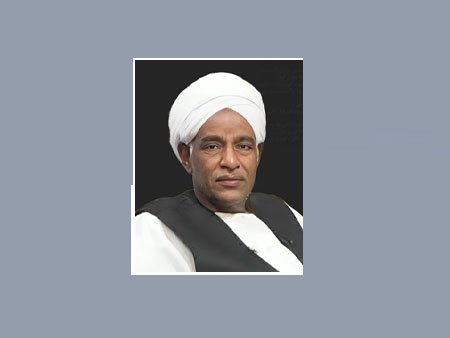
Mahjoub Fadl Badri
After a prolonged period of considerable difficulty and a lengthy struggle with illness — compounded by an apparent reluctance on the part of the decision-makers — approval was finally granted for the doctors’ recommendation that Lieutenant General Bakri Hassan Saleh, former Minister of Defence, Minister of the Interior, Minister of Presidential Affairs, First Vice-President and Prime Minister, be allowed to travel abroad without further delay to receive urgently needed medical treatment. The response came very late indeed, as though to affirm the saying: “Better late than never.”
Without any fanfare or media coverage, the senior statesman, both in age and standing, travelled to Türkiye, where his son Hassan — or “Uncle Hassan”, as his father affectionately calls him — lives. For three months, Bakri received treatment for his heart, which has been fitted with a pacemaker for several years. He also underwent more than one eye operation. Comprehensive medical examinations were carried out, and all the results were reassuring, praise be to God.
This was despite the diabetes that has been part of his life for a long time. Yet the strict discipline with which the general manages this condition, for which there is no definitive cure, has been the antidote that has enabled this committed soldier to live with diabetes for more than three decades. We pray it may serve as atonement for his sins and purify his body.
Lieutenant General Bakri left Sudan for Türkiye after an agonising wait, in the first days of last August. Had this information reached the media, the pages of the Qahata movement on social media would have been awash with sensational claims about the general’s escape or his being smuggled out of the country. They would undoubtedly have gone further, swearing the strongest oaths—assuming they have even an ounce of faith—that General Abdel Fattah al-Burhan, commander of the army of the Keizan, had colluded with Lieutenant General Bakri to carry out some conspiracy against Sudan, just as their troubled minds might suggest!
The former First Vice-President did not appear at any public event or engage in any political activity while he was abroad.
All the efforts made by “Uncle Hassan” and his brothers to persuade their father to remain with him in Türkiye, continue his treatment and take further precautions about his health proved unsuccessful. They also tried to persuade him to choose another foreign country, at the very least — anywhere except Sudan. But the senior general rejected every offer from his family, friends, and those who knew his worth.
He said he would rather endure illness or a lack of medical treatment than break the commitment he had made to himself to return to his homeland as soon as his treatment was completed. He brushed aside medical reservations, rational arguments and the possible risks of complications arising from his illness, as well as the possibility that he might be returned to the closed detention facility rather than the house arrest imposed on him to this day!
He is not a man who would allow history to record, or anyone to say, that he had fled from confronting his opponents in his own country and sought refuge abroad. Nor would he stoop to the level of that group of agents who travel from country to country inciting hostility against their homeland, their fellow citizens and their national army.
He was the same man who declared, with pride and conviction, before the court trying the 30 June coup case that what he had done was a “military act” and should therefore be tried before a military court — even if that court were to sentence him to face the firing squad. (For al-dirwa, the Arabic expression he used, refers to execution by shooting.)
A great man remains great. You are indeed a great man, Your Excellency Bakri. Great men do not turn their backs and flee.
Thus, Lieutenant General Bakri Hassan Saleh Khairi, a member of the 24th graduating class of the Military College, set an outstanding example of steadfastness, courage and loyalty to his commanders. His voluntary return to the homeland sends a clear message to the Armed Forces leadership: it should extend the same care and attention to its former Commander-in-Chief, Field Marshal Omar Hassan Ahmed al-Bashir, who remains in detention.
The Field Marshal is also suffering from several medical conditions, and doctors have recommended that he travel abroad to receive treatment. There should be no fear that he might flee, for the opportunity to do so was available to him from the very first day of General Ibn Auf’s statement. Yet he did not take it. Great men do not turn their backs and flee.
So, General al-Burhan, Bakri has presented you with a practical demonstration of his convictions and sacrificed himself for his commander. He harbours no resentment towards Field Marshal al-Bashir — for, as the saying goes, “A leader of men does not carry grudges”. This is the same President al-Bashir who dismissed him from the post of First Vice-President without giving any reason, and appointed General Awad Ibn Auf in his place. Ibn Auf could not bear the weight of responsibility for long and stepped down in less than 24 hours. What a contrast between one general and another!
At the end of October, Lieutenant General Bakri returned to his homeland, to his beloved town of Dongola. Although he missed the date-palm harvest, he can, God willing, find consolation in being present for the wheat harvest season.
When Lieutenant General Bakri was Minister of Presidential Affairs, the army’s annual list of promotions and retirements was published. Bakri was displeased because his name was not included among those due to retire. He said to me:
“I have had enough. I was waiting to be retired so that I could go and look after my farms and my palm trees.”
His wish has now come true, albeit incompletely and amid many difficulties. Praise be to God for his safe return.
Greetings, then, to you, great general — a noble and courageous man.
Shortlink: https://sudanhorizon.com/?p=19736