

A Government of Retreat
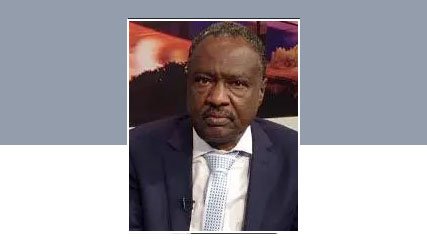
By Rashid Abdelrahim
This government has come to be defined by one characteristic above all others: it is a government of retreat. It issues decisions only to reverse them shortly afterwards. Some decisions are withdrawn after a matter of days, others within hours, and some never even make it beyond the printing and signature stage before being abandoned.
Perhaps the most significant reversal concerned the committee established to prepare Khartoum for the return of government ministries and state institutions and the resumption of official work from the capital.
Following the widely acknowledged success of the committee headed by Lieutenant General Ibrahim Jaber, its work was effectively suspended, and responsibility was transferred to Prime Minister Dr Kamil Idris. In reality, however, the committee was not transferred—it was simply paralysed. Indeed, almost every responsibility entrusted to Dr Idris appears to have ended up buried in official files. This has included initiatives extending beyond domestic affairs, such as his much-publicised “Professor Kamil Idris Initiative for Peace and Peaceful Coexistence”, which has now disappeared entirely from public discussion.
Appointments to senior government positions have also been reversed without explanation or clarification.
Among them was the dismissal of Lamia Abdel Ghaffar as Minister of Cabinet Affairs after just six months and one week in office.
The same occurred with the appointment of Mohamed Abdel Qader as an adviser to the Prime Minister.
Other appointments have not merely been withdrawn but have been effectively denied altogether, as was the case with the proposed appointment of a new Undersecretary at the Ministry of Foreign Affairs. The Cabinet hastily issued a statement denying that any such appointment had been made, despite several journalists insisting that the decision had indeed been issued.
The government’s reversals extend beyond appointments and committees. They affect decisions across virtually every institution, including matters that require the highest standards of care, precision and consistency.
A striking example is the now well-known Al-Asjad affair. The company was granted authorisation to operate in financial transfers despite having limited experience in the sector, only to have its approval revoked within days.
This raises an important question: what explains the confusion that has long characterised the state and the government, and which has become markedly more apparent in recent times?
Lieutenant General Yasser Al-Atta has repeatedly stated that a “fifth column” exists within state institutions. We have already witnessed the former Governor of the Central Bank of Sudan later assuming the same position within the rebel administration known as Ta’sees.
If recent decisions are examined carefully, it may well be possible to identify links leading back to political support networks and tribal interests.
Such disorder and weak governance only encourage the rebellion to expand. A closer examination may reveal that many of these confused decisions are influenced by precisely those political and tribal networks.
A government characterised by hesitation, reversals, denials, evasiveness and a reluctance to speak honestly to its own citizens—a government fearful of being accused of sympathising with forces supported by Arab states that are themselves hostile to Sudan—cannot lead the country towards peace and development.
This is especially true while the war remains unresolved, the national currency continues to depreciate, Sudan’s foreign relations deteriorate, and virtually nothing appears to be moving forward successfully.
The confusion is such that two ministries within the same government have signed a memorandum of understanding with one another as though they were entirely separate institutions rather than members of a single Cabinet.
The Sudanese people have already endured enough. They have suffered the devastation of war, lost loved ones, homes and livelihoods. They struggle with chronic electricity shortages, failing public services and an unbearable cost of living.
They deserve better than a government that cannot stand by its own decisions.
Shortlink: https://sudanhorizon.com/?p=15564