

The Obfuscation of Labels and the Reality of Revolutions
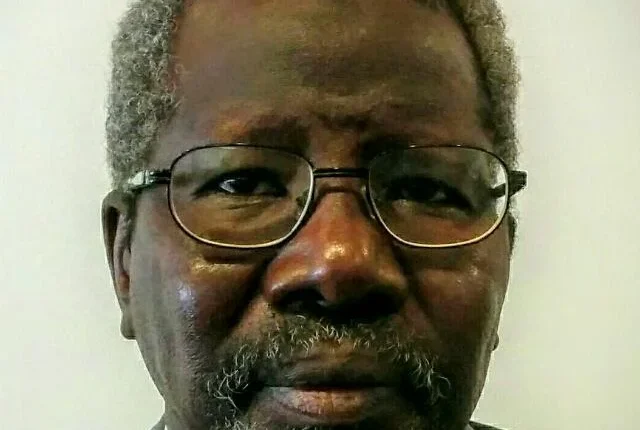
Dr Hassan Issa Al-Talib
Amid heated online exchanges and the reckless use of absolute labels, and to avoid sinking into the mire of arbitrary terminology, it is more accurate and logical to describe what happened in Sudan on 11 April 2019 as an “uprising”. This designation is grounded in the statement made at the time by the Commander of the Army, Lieutenant General Awad Ibn Auf, which was broadcast by the national television and stated that “the head of the regime has been placed in a safe location”.
Under the African Union Charter on Democracy, Elections and Governance, and the “Accra Declaration”, such an act constitutes a coup d’état. This is because the head of the regime who was forcibly placed in that “safe location” was Omar al-Bashir, who had been elected in 2015 as President for a five-year term. That election was a general one, contested by several candidates, and was monitored by observers from the African Union. The head of the AU observation mission was the former Nigerian president Olusegun Obasanjo, who affirmed the integrity of the elections in his report, which was submitted to and adopted by the African Union. The League of Arab States, the Carter Centre, and a number of regional and international non-governmental organisations also participated in the monitoring process.
In political science and in the terminology of regime change, revolutions signify “comprehensive change”, most often for the better—such as the American Revolution of 1765, the French Revolution of 1789, the Russian Revolution of 1917, and the Chinese Revolution led by Mao Zedong in 1949. All of these established systems of governance are entirely different from those they overthrew, and the majority of their peoples agree that they came to live under better systems of rule.
What occurred in Sudan was the outcome of a partnership forged on 11 April 2019, becoming the product of a political alliance and an agreement to share power and administer government between the military and leaders of activists who had been misled and deceived by influential international and regional actors guided by understandings with embassies and international intelligence agencies, driven by overwhelming regional ambitions. It has since become clear that these actors deliberately and cynically exploited the enthusiasm of activists, politicians, and protesters, as well as their fervour and naïve innocence, in pursuit of their own greedy geostrategic agendas.
Today, the Sudanese citizen—who six years ago aspired to a state with a better economy, better governance, and greater rights—now mourns what has been lost, exchanging words of sorrow and condolence with every compatriot encountered. Regret comes too late; there is no escape.
Instead of establishing a system of governance superior to the one they lost when they rose up against the Salvation (Inqaz) regime, everyone in the country today weeps over homes occupied by foreign elements from the diaspora and by mercenaries. They weep as well for those who have been killed, violated, robbed, and raped among their families and neighbours, and for those who have been displaced and exiled to distant shelters and to the bleak, shameful camps of displacement.
But the era of deception and obfuscation has come to an end. Awareness has awakened, eyes have opened wide after the intoxication of enthusiasm, and all the threads of conspiracy—woven in every colour—are now clearly visible: who sets them, who holds them, and who is ensnared by their tricks.
In Sudanese proverbs, it is said: “A stumble corrects one’s gait”—a common colloquial expression meaning that every horse has a misstep, and every sword has a flaw.
And in the tradition, it is said:
A believer is not stung twice from the same hole.
“Our Lord, remove the punishment from us; indeed, we are believers.”
Shortlink: https://sudanhorizon.com/?p=9827