

After Yale University’s Report, the World Should Feel Ashamed
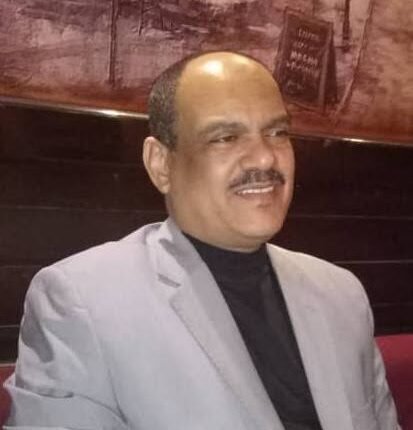
By Ambassador Rashad Faraj Al-Tayeb
Researcher in Thought and International Relations
With the growing body of international testimonies about the atrocities of the war in Sudan, the report released by Yale University is of exceptional significance, given the institution’s deeply rooted academic credibility spanning more than three centuries.
This university, one of the most prestigious research centres in the United States and the world, has long produced well-documented reports through its “Humanitarian Research Lab,” a lab specialising in field investigations and digital evidence related to war crimes and large-scale violations.
The latest report was issued under extremely complex circumstances. It relied on an on-the-ground network of local researchers before all communication with them was completely cut off following the fall of El-Fasher—an event that added greater weight to the report and gave its findings a tone of tragedy and painful authenticity.
In this context, Nathaniel Raymond, the Executive Director of the Lab, conveyed one of the harshest testimonies since the outbreak of the war.
He confirmed that the field network informed them that, immediately after the fall of the city, around 1,200 family members and friends were killed by the Rapid Support Forces (Janjawid). Within hours, the number jumped to ten thousand. 😭
By the following day, all traces of them had vanished, and communication ceased entirely, suggesting that they had all been eliminated.
These details are not mere numbers in a report—they are definitive evidence that what occurred in El-Fasher constitutes a fully-fledged war crime, marked by clear intent of extermination and collective targeting on ethnic and geographic grounds.
A careful reading of such reports—especially when issued by an institution with no interest other than revealing the truth—exposes the vast gap between Sudan’s bloody reality and the discourse of certain international institutions still pressuring the Sudanese government to negotiate with a group that, according to both on-the-ground and international evidence, has committed acts amounting to genocide in a definitive, documented, and widely observed manner.
Such reports represent professional and impartial testimony that cannot be ignored or treated lightly, for they reveal a structure of systematic violence—a project built fundamentally on terror, domination, mass killing, population displacement, and the overrunning of cities.
The ethical and political challenge facing the international community today lies in determining how to deal with a militia accused of war crimes, ethnic cleansing, and genocide, while Sudan is simultaneously being pushed to sit with it as a political partner and as a party to a dispute over authority and legitimacy.
Those who commit atrocities cannot be relied upon to shape the country’s future.
Reconciliation, as historical lessons teach us, cannot be built upon the skulls of victims, nor upon well-documented reports of brutal extermination.
Any leniency in this context sends a dangerous message: that committing massacres is no obstacle to becoming part of a political or democratic process.
What must be done today—dictated by both ethical and legal responsibility—is the following:
First, launching an independent, transparent international investigation that holds all perpetrators accountable, without immunity or exceptions.
Second, supporting the Sudanese government in asserting sovereignty over its territory, because leaving the country prey to armed fragmentation is the perfect recipe for continued crimes.
Third, compelling the states that fund the war and supply weapons and mercenaries to kill Sudanese civilians to cease immediately and to bear full responsibility for compensating Sudan for the losses caused by the war and the destruction inflicted by both the fighters and their supporters.
Fourth, halting any unrestrained calls for negotiation with the criminal militia factions before holding them accountable and issuing fair judgments against them, for justice precedes politics, and any peace built at the expense of truth will not endure.
Yale University’s report has placed the international community—and all states directly involved—before their moral mirror.
No one can now claim a lack of evidence or ambiguity.
And it is no longer acceptable to speak of “two warring parties,” or of negotiations or political settlements, nor to repeat the claim that “there is no winner in this war,” or that “the solution must be political.”
What happened in El-Fasher is not an isolated incident. It is a defining moment in the record of the war—a warning bell reminding the world that time has run out for diplomatic manoeuvring and for attempts to impose solutions that benefit the rebel monsters who pose a danger to humanity itself.
There is no solution with them except through collective accountability, defeat, and ultimately elimination—not rewarding them.
Shortlink: https://sudanhorizon.com/?p=9314