

General Ibrahim Abboud: A Man Wronged by History!
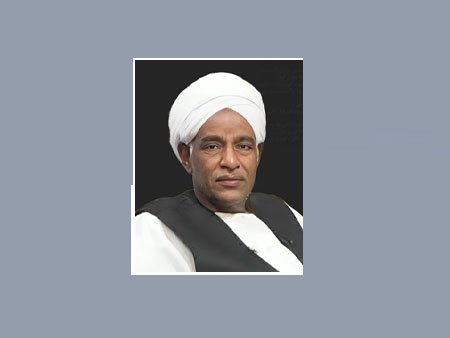
Mahjoub Fadl Badri
At the home of Ambassador Abdel Mahmoud Abdel Halim in Maadi, Cairo, while he was serving as Sudan’s Ambassador to the Arab Republic of Egypt, we gathered for a social occasion with several prominent figures from our country. Ambassador Abdel Halim is one of the finest products of Sudan’s richly endowed diplomatic service. May God preserve him wherever he may be.
Among those present were Lieutenant General (Police) Dr Omar Gaddour, prominent businessman Dr Ashraf Sayed Ahmed Al-Kardinal, singer Kamal Tarbas, and others. During our conversation, the subject turned to General Ibrahim Abboud’s rule. I exchanged views with Professor Dr Gaddour, recalling the achievements and positive aspects of Abboud’s administration. This greatly surprised Al-Kardinal, who remarked that he had never before realised that so many achievements in industrial and agricultural development, education, transport and communications had taken place during that period.
These included the Al-Junayd Sugar Factory; the fruit and vegetable canning factory in Kosti; the dairy factory in Babanusa; the onion factory in Kassala; the cardboard factory in Aroma; the establishment of the New Halfa Agricultural Scheme, together with the Khashm el-Girba Dam; the ammunition factory at Al-Shajara; the expansion of the Gezira and Managil schemes; and the establishment of agricultural research centres throughout the country.
Al-Kardinal proposed producing a film about Abboud’s period in power, undertaking to finance the entire production, whatever the cost. He nominated General Dr Omar Gaddour to chair the committee responsible for preparing the film’s material and overseeing every stage of its production.
Yet, like so many excellent ideas, this one never moved an inch forward. We cannot blame Al-Kardinal for that, since the committee never even met once!
Brigadier Salah al-Din Mohamed Ahmed Karrar has devoted two audio recordings to the 68th anniversary of General Ibrahim Abboud’s era, recalling the late leader’s virtues and some of his achievements. Among the most outstanding qualities of General Ibrahim Abboud, and of the distinguished officers who shared in governing the country with him, were their personal integrity and their restraint in both word and deed.
Abboud himself was reluctant to assume political power, being firmly convinced that the army had no business involving itself in politics. However, he complied with the instruction of Prime Minister Major-General Abdullah Bey Khalil, in his capacity as Commander-in-Chief of the Armed Forces, who asked him to take over power lest the country descend into chaos. It is worth noting that Abdullah Khalil was not only the supreme military authority but also senior to Abboud in military rank and seniority, being the more senior officer in the military hierarchy.
The achievements of Abboud’s administration in just six years were unparalleled by those of any other government. Had his rule continued, our country might well have attained a far better position than the one it occupies today.
Even the smallest anecdotes help paint a clear picture of the kind of man Abboud was. He would not accept travel allowances for official trips abroad or travel expenses for journeys within the country, considering such travel an integral part of his duties. He would not spend money from his own pocket, because he was always accommodated as a guest!
May God have mercy on General Engineer Ibrahim Pasha Abboud. After graduating from Gordon Memorial College, he joined the School of Warrant Officers. He was preceded in seniority by General Ahmed Mohamed, who had taken over the post of Commander-in-Chief from the colonial authorities as part of the Sudanisation process. General Ibrahim Abboud succeeded him in that position before being asked to assume the country’s government. He governed it with distinction, supported by a highly capable team of officers.
Indeed, following the October Revolution, those opposed to Abboud’s rule opened investigations into alleged corruption, hoping to uncover evidence of wrongdoing and bring charges against what they called ‘Abboud and his clique’. After an exhaustive search, however, their investigations produced remarkably little. They discovered that Major-General Al-Maqbul Al-Amin Al-Haj owed the Grand Hotel seven Sudanese pounds!
Brigadier Salah Karrar comments that the revolution took place on 21 October, before payday, when the debts were due. The investigating committee also discovered that Abdel Majid Ahmed, who had served as Minister of Finance under Abboud, had brought a tea set into the country without paying customs duty! What a scandal!
My maternal uncle, a committed Communist Party member and a prominent trade union leader in the railway sector, was known for his exceptional discipline and impeccable character. Despite the bitter hostility between the Communist Party and Abboud’s government, he held General Abboud in profound respect. He even displayed Abboud’s photograph in his reception room and would describe him as ‘a man of integrity’.
May God have mercy on those honourable men.
It is said that one day General Abboud entered his official residence, as was customary, and found the household attendant ironing the bedsheets. He immediately raised his voice and called out to the members of his household:
‘Sakina! That attendant is here to iron the military uniforms, not the household bedsheets!’
There could be no better way to conclude this article than with the slogan the people themselves coined:
‘We let you down, and then we lost our way following you, Abboud!’
Shortlink: https://sudanhorizon.com/?p=20409