

From Awad Abdel-Razzaq to Sanders: The Sudanese Experience and the Question of Religion in the Project for Change — A Commentary on a Contribution by Saif al-Din Jibril
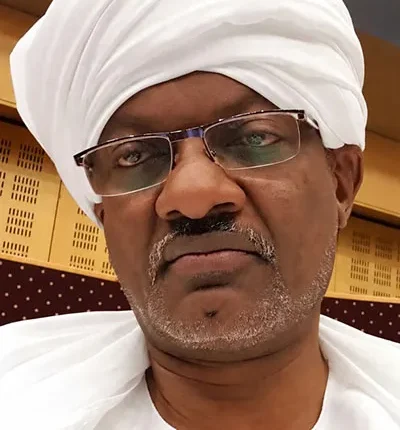
Hisham Yusuf Abdel-Rahman
In a contribution shared via a WhatsApp group, our friend Saif al-Din Jibril raised a profound intellectual and political issue worthy of reflection. This is not only because it offers a re-examination of the historical dispute between Awad Abdel-Razzaq and Abdel-Khaliq Mahjoub, but also because it successfully links that conflict to the experience of Bernie Sanders and the progressive movement within the U.S. Democratic Party. It brings back to the fore a fundamental question that has long confronted “the forces of change” in Sudan: How can progressive ideas—held by elites—be transformed into a broad social and political force capable of influencing society and altering its reality?
I would like to add two dimensions to Saif’s points—dimensions that merit consideration when discussing this issue. The first concerns Sudanese initiatives that have, to varying degrees, attempted to transcend traditional ideological and organizational frameworks. The second concerns the role of the Islamic religion and societal religiosity in shaping the Sudanese consciousness. This highlights the necessity of building a project for change that is rooted in the reality, values, and culture of the society itself, rather than in theoretical constructs detached from it.
First: Sudanese Experiences and Attempts to Move Beyond Traditional Frameworks
The Sudanese political landscape has not been devoid of attempts to transcend traditional ideological polarization—approaching, in essence, what Awad Abdel-Razzaq advocated: the construction of a broad, democratic national movement grounded in the reality of society and its specific stage of development—even if these attempts did not explicitly adopt his specific theses. Perhaps one of the most notable of these experiences was the student movement in which Dr. Ismail al-Hajj Musa and his associates were prominent at the University of Khartoum during the 1960s—particularly within the climate of the October 1964 Revolution and its aftermath. This experience can be viewed as an early attempt to transcend partisan and ideological polarization and to build a national, democratic movement more open to society at large. In its essence, it echoed some of the ideas advocated by Awad Abd al-Raziq, even if it did not directly adopt his specific theses. However, organizational and political shortcomings hindered the movement from evolving into a sustainable political project capable of realizing its initial aspirations.
Later came the experience of the Independent Students’ Congress (Mu’tamar al-Tullab al-Mustaqillin), established at the University of Khartoum in 1977. It championed the slogan, “The entire nation belongs to the people—neither to a select few nor to a specific faction,” and sought to move beyond the traditional polarization between the Right and the Left. It aimed to establish a national discourse rooted in intellectual independence, democracy, citizenship, and social justice. The movement expanded during the 1980s, contributing to the student activism that accompanied the April 1985 uprising. It fostered the emergence of leaders such as Omar Al-Digair. Over time, and through various organizational phases, its political offshoots evolved into the Sudanese Congress Party—led first by Ibrahim Al-Sheikh, and subsequently by Omar Al-Digair, who assumed the presidency in 2016.
However, despite the political and organizational presence it achieved, this movement faced a formidable challenge following the fall of the Al-Bashir regime in April 2019. It transitioned from an opposition role to participating in the transitional governing coalitions—a shift that occurred amidst the intense political polarization both preceding and following the outbreak of the war in April 2023. In my view, the party’s stances and alliances—particularly the ties some civilian factions maintained with the Rapid Support Forces (RSF) and their positions regarding the war—revealed contradictions that necessitate a serious, critical review. This raises legitimate questions about the extent to which the party’s political practice remained consistent with its foundational principles: intellectual independence, democracy, and the establishment of a civil state. This, however, should not be taken as an assertion of any formal organizational or military link, for which no credible evidence has been established.
Ultimately, the core dilemma did not lie in the soundness of the movement’s intellectual premises, but rather in the challenge of translating these progressive concepts into reality. Despite varying circumstances and trajectories, these efforts struggled to build a solid social base, institutionalize democracy within the organization, manage internal dissent, and transform slogans into concrete political programs and practices capable of withstanding the pressures of governance, complex alliances, and conflicting interests. This is not to deny the contributions these experiences have made to Sudanese political life, but rather to acknowledge that their foundational ambitions were broader than the results they ultimately achieved.
Perhaps one of the most significant lessons from the Sudanese experience is that many political renewal projects began with promising ideas, yet failed to break free—to the extent hoped for—from the very pathologies of partisan practice they were originally intended to transcend. Genuine renewal is not achieved by merely changing labels or terminology; it requires a transformation of political culture, organizational methods, and the ways in which power and disagreement are managed.
It is precisely here that the comparison—suggested by our friend Saif—with the experience of Bernie Sanders becomes significant. The point is not merely to adopt progressive ideas, nor even to succeed in establishing an organization that champions them; rather, it lies in the ability to build a broad social movement—one rooted in people’s daily interests, which practices the very democracy, transparency, and leadership rotation it advocates, and which constantly subjects its own ideas to the test of reality.
Second: Religion and Societal Religiosity in the Equation of Change in Sudan
However, there is another dimension that cannot be overlooked when discussing the future of progressive forces in Sudan: the role of the Islamic religion and societal religiosity in shaping the Sudanese consciousness, as well as its cultural and value-based structures.
Given its deep historical and social presence, Islam is not merely a religious affiliation separate from public life; rather, it is a fundamental component of Sudanese social and cultural identity—all while recognizing the religious, cultural, and ethnic pluralism that characterizes the country. Popular religiosity—with the Sufi traditions, values of mutual support, tolerance, and social solidarity associated with it—has contributed to shaping an important aspect of these social relationships and the Sudanese collective consciousness, even though its manifestations vary across different environments, regions, and historical periods.
Consequently, any project for social and political change that ignores this reality—or treats popular religiosity as an obstacle to progress—risks becoming alienated from broad segments of the very society it seeks to transform.
In this context, it is worth recalling the “Islamic Left” project proposed by the Egyptian thinker Dr. Hassan Hanafi. He sought to reinterpret the Islamic heritage through a lens that places issues of social justice, liberation, and resistance against exploitation and tyranny at the core of an intellectual and political agenda.
Hanafi’s approach aimed to reconnect heritage with the realities of the present, transcending the artificial dichotomy between embracing one’s cultural legacy and aspiring toward social and political progress. This endeavor warrants both reflection and critical examination—not as a ready-made template to be replicated, but as an intellectual effort to bridge the gap between the religious values deeply rooted in society and its aspirations for freedom, justice, and change.
Perhaps the most important lesson here is that progressivism does not necessitate a complete break with a society’s religious and cultural heritage; conversely, respecting religion does not justify exploiting it in the struggle for power or monopolizing its political interpretation.
The goal is neither to replace one closed ideology with another, nor to replicate the experience of “political Islam”—the failures and contradictions of which have been clearly exposed within the Sudanese context. Rather, the objective is to formulate a national, democratic project that draws inspiration from values such as justice, social solidarity, and human dignity, while simultaneously safeguarding equal citizenship, public freedoms, and the rights of those who hold different religious or intellectual views. This necessitates a distinction between religion—as an intrinsic component of a society’s consciousness and value system—and its political instrumentalization as a tool for exclusion and the monopolization of both truth and power.
Third: From the Soundness of an Idea to the Capacity to Transform Reality
Connecting these Sudanese experiences with Awad Abdel-Razzaq’s thesis, Hassan Hanafi’s “Islamic Left” project, and the American experience of Bernie Sanders does not imply that their intellectual foundations or historical contexts are identical. Rather, it reveals a shared, fundamental question: How can one construct a political project that combines a clear intellectual vision with an understanding of the social and cultural reality, alongside the capacity for organization and influence?
The Sudanese experience has demonstrated, at various stages, that possessing progressive ideas is not, in itself, sufficient to build an influential political movement. Slogans that fail to translate into the daily lives and interests of the people quickly lose their power to mobilize and endure.
Furthermore, the formation of broad alliances cannot achieve its objectives unless it is grounded in clear programs, democratic institutions, mechanisms for accountability, and the ability to manage differences without allowing them to devolve into fragmentation or exclusion.
Moreover, engaging with society from within its own cultural and value framework does not mean surrendering to everything that happens to be prevalent within it. Instead, it entails leveraging the positive elements of that framework to foster development, while simultaneously challenging those aspects that conflict with freedom, equality, justice, and human rights. Herein lies the importance of incorporating religion into the Sudanese project for change—not as a substitute for political rationality or a civil state, but as a key to understanding society, engaging with it, and constructing a reformist discourse that embraces its unique historical and civilizational character.
Fourth: Toward a Critical Review of the Sudanese Political Experience
Revisiting the thesis of Awad Abd al-Raziq should not merely be a matter of historical fairness; rather, it necessitates an honest, critical examination of Sudanese experiences that—in one way or another—sought to move beyond closed ideological organizations. This includes analyzing both their achievements and their failures, ensuring that we do not simply reproduce the same past failures under new labels.
Similarly, looking at the experience of Bernie Sanders should go beyond mere admiration for the ability of progressives to operate within the American Democratic Party. Instead, it should focus on understanding the conditions that enabled them to build a social and electoral base, and to link their demands to issues such as housing, healthcare, education, wages, and the cost of living.
Given its diverse social and cultural fabric, turbulent political history, and the challenges posed by war, fragmentation, and weak institutions, Sudan requires a project for change that is rooted in its own specific context. Such a project must account for the transformations within its society and integrate social justice, democracy, development, and peace—all without entering into conflict with the beliefs and values deeply embedded in the consciousness of the majority of its citizens.
Consequently, the true challenge facing Sudanese progressive and national forces is no longer just answering the question, “How do we attain power?” but rather, “How do we build a democratic social force capable of transforming the very nature of political practice itself—whether from within or outside of power?” In my view, the crisis in Sudanese politics has never stemmed from a lack of ideas or a scarcity of reform and renewal initiatives. Rather, it has been a recurring inability to translate these ideas into solid institutions, democratic practices, actionable programs, and tangible outcomes that citizens can experience in their daily lives.
Consequently, the future of change in Sudan will not be forged through a rupture with society and its heritage, nor by merely repackaging old organizations and ideologies in new guises. Instead, it requires a national democratic project—one that engages with the reality of society without surrendering to its negative aspects, embraces its religious and cultural values without weaponizing them for exclusion, and transforms justice, freedom, citizenship, and development into practical, achievable goals.
I am grateful to my friend Saif al-Din Jibril for this contribution, which has reopened an important avenue for discussion. It provides an opportunity to revisit Sudanese experiences—worthy of careful review and assessment—free from either uncritical veneration or blanket condemnation, and in a spirit that seeks to understand the causes of failure just as much as the conditions for success.
Ultimately, the future is not shaped by good ideas alone; it is forged by a society’s capacity to transform those ideas into organized power, democratic institutions, and a political practice that derives its legitimacy from the people, responds to their aspirations, and respects their values and dignity.
Shortlink: https://sudanhorizon.com/?p=19971