

Geopolitical Researcher: I Do Not Expect Any Significant Shift in the New Congress’s Stance Toward the UAE
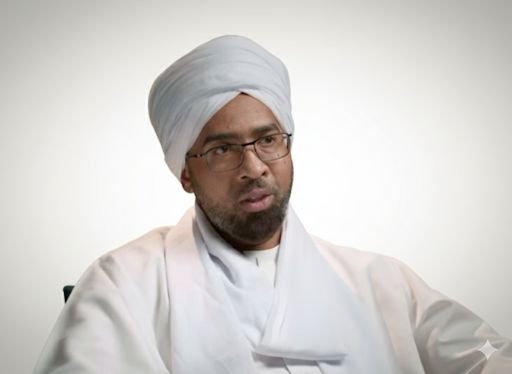
Texas – Sudanhorizon Abdul Rahman Abdullah Sayed Ahmed, a researcher in economics and geopolitics, has ruled out any substantial shift in the new U.S. Congress’s position toward the United Arab Emirates (UAE)—despite clear and mounting accusations that the UAE has provided various forms of support to the rebel Rapid Support Forces (RSF) militia, which has committed war crimes and crimes against humanity across several regions in Sudan.
In a brief interview with this news outlet , Sayed Ahmed explained that the Democrats will enter Congress with a long list of domestic priorities—such as immigration, healthcare, and the defense budget—meaning that foreign policy, in general, will not be a primary focus for them.
Sayed Ahmed added that even if one were to assume a degree of interest in foreign policy—or that such issues must necessarily be on their agenda—the top priority would be Iran, with the goal of reaching an agreement that, at the very least, secures the Strait of Hormuz and resolves the conflict with Tehran. The second priority, he noted, would be the war between Russia and Ukraine. While anticipating that domestic issues will dominate the agenda of Democrats in both chambers of Congress—with Iran and Ukraine taking precedence in foreign policy—Abdel Rahman Abdullah Sayed Ahmed, a researcher in economics and geopolitics, suggests that the Sudan-UAE file will not be entirely absent. He notes that it will likely remain on the radar of certain members of Congress, in both the Senate and the House of Representatives, emphasizing that the issue is not about the legitimacy of the matter, but rather its standing within the Democratic Party’s broader agenda.
Sayed Ahmed expects Democratic lawmakers to focus on the UAE, specifically by attempting to expose the commercial ties between President Trump’s sons and Emirati entities. He points out that the UAE has maintained a significant presence within the United States, investing vast sums into artificial intelligence programs and deals, and partnering with the Trump family in the realm of digital currencies. Through its involvement in the American economic landscape, the UAE has been able to exert influence over various policy areas. A clear illustration of this is the harmonious relationship between Massad Boulos—the U.S. presidential envoy for the Middle East and Africa—and Emirati leaders, a rapport that has been widely observed.
Shortlink: https://sudanhorizon.com/?p=19908