

Russia Is Now Within Our Reach
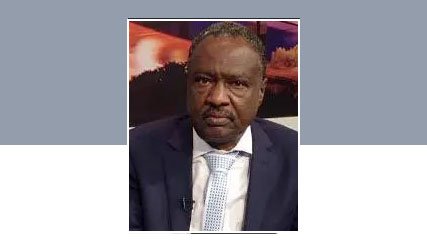
Rashid Abdel Rahim
What would happen if the preliminary understandings reached between Russia and Sudan during the Russia–Africa Summit were agreed to and implemented?
I would like to imagine that they have become a reality.
Russia would then build fuel storage facilities to support its operations and establish power-generation projects. At that point, neither the rebellion nor any country could attack these facilities with drones or by any other means.
Alongside electricity, there would be projects to supply grain to Sudan and Africa. This would mean building grain silos at the port and elsewhere.
There have also been understandings on the transportation and movement of products. This means securing them from their point of departure to their destination, both within Sudan and beyond its borders.
The agreements with Russia would bring about a degree of automatic security. Who would dare attack the investments of a major power?
President Putin spoke about digitalisation projects. This means managing and implementing projects through computer applications and software that ensure speed, quality, and precision — a major advantage when working with a country with extensive experience in management, monitoring, and oversight.
President Putin also spoke about logistics. In this context, the term means that what is being undertaken will be designed to establish its own foundations for continuity, sustainability and ongoing support.
The proposals discussed at the meeting between Russia and Sudan also include Russian involvement in the gold sector. This would mean increased production, higher quality and revenues free from smuggling. It would also mean expanding exploration activities in ways that help improve the sector’s overall performance.
Establishing a gold exchange would become a realistic possibility once a major power became involved.
An agreement with Russia, followed by the implementation of what has been discussed, would mean improved electricity supply, higher production and increased exports. Consequently, the Sudanese pound would strengthen, and the trade balance would improve. All this would follow naturally from the agreements.
We would not need to negotiate with Russia over granting it a military base or a military presence on the Red Sea. It would be enough to increase the movement of Russian ships to a level sufficient to transport wheat, fuel and every other product generated by these agreements or moved through Sudanese territory.
Russia is no stranger to Sudan. As President Putin pointed out, the relationship between the two countries goes back more than seventy years. The long-established Soba University Hospital, the grain silos in Gedaref and Port Sudan, the Karima fruit and vegetable canning factories, the Babanusa dairy factory and the vegetable canning factory in Wau, in what is now South Sudan, all stand as evidence of this relationship. So too do the numerous surveys of precious and other mineral resources prepared by Russian experts.
Russia is a country that does not impose political or other conditions, and we have experience of working with it.
The real challenge will be having the political will and determination to act and end hesitation. Our executive institutions must also be capable of implementing partnerships without resorting to the attitude of “we want our cut”, or to practices such as selling licences and filling public-sector positions with members of the tribes, clans and families of senior officials.
But can we do that?
If some people once chanted, “America, Russia — your punishment is drawing near”, then today we have every right to chant: “Russia is now within our reach.”
Shortlink: https://sudanhorizon.com/?p=19681