

Strengthening Sovereignty and Achieving Economic Emancipation
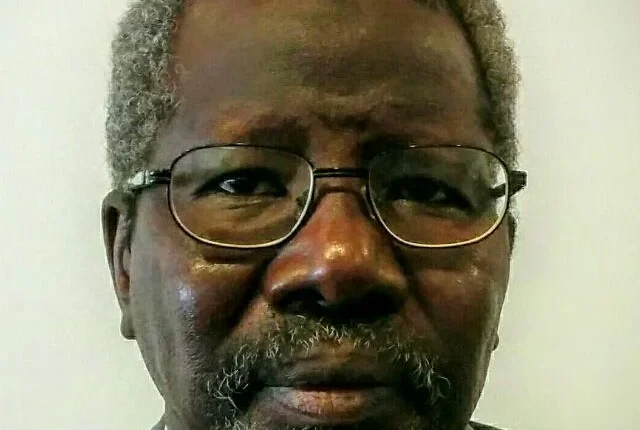
Dr Hassan Issa Al-Talib
The Secretary-General of the Arab League’s visit to Khartoum on 26 October 2026 provided moral support for Sudan’s efforts in the War of Dignity. It also recognised the advances made by the army and supporting popular forces across the various theatres of operations, as well as the increasingly desperate retaliatory attacks on electricity supplies and civilian facilities.
Unfortunately, the Arab League, which Sudan joined on 19 January 1956, has played no honourable role in addressing Sudan’s concerns or comparable issues elsewhere in the Arab world – whether in Libya, Yemen or Somalia. Nor has it played a meaningful role in confronting the series of conspiracies against Sudan since April 2019. Its lacklustre positions and submissive silence in the face of the crime of genocide in Gaza since October 2023 have further exposed its shortcomings.
As regards the war imposed on Sudan since 15 April 2023, the Arab League has failed to broker an impartial mediation process. At best, it has confined itself to a secretariat role, adopting a passively neutral stance towards initiatives put forward by numerous countries and groupings, whether the Quad or the quintet, American or European. Instead, it has chosen to align itself with those who finance its programmes, which its less affluent member states cannot fund adequately. It appears to follow the old principle:
I have seen people gravitate towards those who have money;
Those without money are the ones people turn away from.
The question of national sovereignty is not open to interpretation, nor should it depend on the approval or disapproval of others, whoever they may be. Sudan belongs to the Sudanese, first and foremost. This is an unequivocal position and an enduring principle. They alone have the right to decide its future, determine the nature and form of the state, and choose the system of government they want. They have paid dearly in blood and sacrificed their resources to defend their cherished homeland. They rallied around the unifying national slogan, “One Army, One People”, and have remained true to their pledge and achieved their objective.
What is required now, following the visit by General Abdel Fattah al-Burhan, President of the Transitional Sovereignty Council, to the Russian Federation, and his active participation in the Russia–Africa Summit held in Moscow on 28 and 29 October 2026 under the theme “Peace, Security and Development”, is to build on the outcomes of that engagement. The summit’s joint statement reaffirmed the commitment to “working towards building a multipolar international order”.
Observers widely regarded the bilateral meetings with Russian leaders, including President Vladimir Putin, as successful and strategically significant. They are considered a landmark and a turning point in strengthening the structure and foundations of bilateral relations between Sudan and the Russian Federation, dating back to the establishment of diplomatic relations in the mid-1950s.
The outcomes of this visit must therefore be followed by purposeful strategic plans, including a roadmap developed by committed Sudanese experts with specialised knowledge across different fields.
This pivotal diplomatic initiative should also be followed by determined efforts to establish the National Council for Popular Consultation (the National Parliament). This should be achieved through consensus and broad agreement among grassroots constituencies at local, state and national levels, affirming respect for institutional constitutionalism and strengthening popular authority during the transitional period. This arrangement would remain in place until recognised electoral institutions are established and political parties registered, in accordance with the rules required for the period following the War of Dignity and reconstruction, and consistent with prevailing realities, constitutional requirements and established practices.
From this perspective, the immediate and pressing priority is to unite all sections of the Sudanese people and bring the national voice together under the principle of “Country First”. This requires rejecting calls for infighting and mutual provocation, and eradicating the festering sources of harm that seek to fuel division, discord, fragmentation and hostility through infiltration of state institutions and the activities of fifth-column elements.
The fundamental condition for participation in political life and the management of reconstruction and rebuilding programmes should be freedom from collaboration with hostile interests and profiteering, as well as a clean record free from crimes that violate honour and integrity.
To consolidate this purposeful direction and ensure its success, a sovereign decision should be issued for Sudan to join the BRICS group. This would affirm the country’s emancipation from the stranglehold of the US dollar and from arbitrary unilateral sanctions, which have constrained Sudan’s economy and development since 1997, amid what the author describes as continuing conspiracies by hostile forces seeking to undermine the country.
BRICS is regarded as the only political and economic bloc representing the countries of the Global South. It constitutes the first institutional challenge at the international level to the system established after the defeat of the Axis powers in the Second World War, the collapse of Germany and Japan, and the imposition of the victors’ authority and will after 1945. This paved the way for the dominance of Western capitalist approaches, the prescriptions of predominantly Christian-majority countries and their political and legal systems, led by the United States, Britain and France, alongside the Soviet Union. The resulting international order was built around the imposition of the victors’ will.
At the time, approximately fifty countries participated in signing the founding Charter of the United Nations – around 20 per cent of its current membership. Almost all African countries, except Liberia and Ethiopia, were still under Western colonial rule.
The political and diplomatic symbolism of the present moment is further reinforced by the fact that the Russian Federation is one of the five founding members of BRICS, alongside China, India, Brazil and South Africa. Russia hosted the group’s first summit in 2009, in the city of Yekaterinburg. Egypt and Ethiopia, Sudan’s neighbours, subsequently joined the group.
Bilateral agreements and Sudan’s accession to this international organisation could enable the country to engage with the 24 constituent republics of the Russian Federation and expand trade, economic and financial exchanges with the other BRICS members. It could also facilitate transactions in Russian roubles, Chinese yuan, Indian rupees, South African rand, Brazilian reals and the currencies of the group’s other member states.
Furthermore, the BRICS New Development Bank could help finance infrastructure and continental projects Sudan undertakes to support African integration through the New Partnership for Africa’s Development (NEPAD). This would also help activate the NEPAD National Secretariat and the African Peer Review Mechanism in promoting good governance and sound administration.
Shortlink: https://sudanhorizon.com/?p=19674