

21 October: When the Fish Has Had Its Fill!
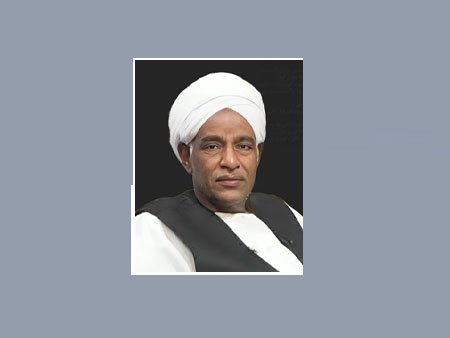
Mahjoub Fadl Badri
We were pupils at Merowe Amiriya Intermediate School. It had four classrooms, a fully equipped laboratory, storerooms, administrative offices, a typewriter and a lush garden. The school provided all textbooks, exercise books, and school supplies; organised literary evenings and educational excursions; and issued students third-class railway tickets and Nile steamer passes to travel to their families’ homes during the annual holidays.
The school boarding house, with its six spacious dormitories, provided reasonably comfortable accommodation: a bed, two blankets and a pillow. It also served three filling meals a day. Each pupil received three loaves of tabouna bread, which most pupils’ families could afford only on feast days and special occasions, as well as tea with milk in the morning.
The boarding house supplied drinking water from the Nile, while washing water came from a well in the middle of the compound. Each pupil received two bars of soap and a weekly allocation of laundry blue. One iron served seven pupils. For sporting activities, the school had a full-sized football pitch, four courts for volleyball and basketball, two fully equipped table-tennis tables, and a radio.
In the midst of this comfortable, almost luxurious life, compared with the living conditions of most ordinary families, we studied, ate, drank, played, travelled, received medical treatment, and watched the travelling cinema for free.
Yet in this stable, secure environment, what became known as the October Revolution took place. We did not sit out this “frenzy”, any more than others across Sudan who enjoyed the same services in their respective areas.
The police did what their duty required in such circumstances. For the first time in Merowe, we saw tear gas. We watched police officers carry heavy batons instead of their elegant black side-sticks, and wear reinforced palm-frond shields and steel helmets instead of their smart peaked caps. They chased us until the demonstration dispersed. We chanted, “Back to the barracks, soldiers!” Some went further and departed from the approved script, shouting, “Back to the barracks, you insects!”
In doing so, we stripped the police of the authority and respect they had once commanded. In those days, even a police officer found guilty of losing a button from his uniform shirt could face up to six months in prison. Little did we realise that we were not merely undermining the blessing of public security; we were undermining the state itself.
From that day onwards, we never again had cause to say, “Long live our well-being!” Things continued to deteriorate, going from bad to worse, and the popular proverb proved true: “When a fish has had its fill, it jumps out of the water!”
What became known as the October Revolution was nothing more than a luxury indulged in by the capital’s elites, serving only dubious objectives and offering no prospect of stability or security for our country. Perhaps the most telling words ever uttered on this subject were those of the famous chant:
“We let you down, and we went astray following you, O Abboud!”
The October Revolution gave us little more than a vast collection of stirring slogans and rousing songs, accompanied by a disastrous decline in the civil service and a marked deterioration in virtually every public service: general and higher education, public health and environmental sanitation, irrigation water and clean drinking water, transport and communications.
The wheels of development ground to a halt, and production stalled. Yet we failed to learn the lesson. Years passed as we continued to endure declining services and stalled development—development that had been initiated by the “military men”!
The civilian party governments added not a single brick to that edifice. Development resumed only when the “military men” returned to power after the May Revolution.
Then the uprising against Jaafar Nimeiri came, and the political parties returned to power. They had learnt nothing and forgotten nothing. They took not a single step towards development before the Ingaz regime came to power and did what it did.
And so the country continued to revolve in a vicious circle: military coup, popular revolution, transitional period, civilian party government, another military coup—and so on.
That circle was broken completely after the outbreak of the War of Dignity, ignited by the Dagalo brothers’ militia and its political backers in Qahṭ (the Forces of Freedom and Change), with funding from the evil mini-state that serves as a cat’s paw for Zionism. God thwarted their schemes, and they gained nothing. Our army continues to move from one victory to another, towards a decisive victory, God willing.
One thing, however, is certain: Sudan after the war will not be the same Sudan it was before. The harsh lesson and the enormous price paid will not have been in vain, and the blood of the martyrs will not have been shed for nothing. The law must hold the most extreme criminals accountable—not blind revenge.
After the war, we must turn our attention to the question that has long remained unanswered: How should Sudan be governed? Not who should govern Sudan? That is how our country can rise again, through production—and more production.
Sergeant Abdel Aati was the most senior-ranking officer in the police force in Karima. During the demonstrations, some protesters directed a chant against the police, shouting: “Abdel Aati is a despicable man!”
That evening, the sergeant went to the father of one of the pupils and complained that his son had insulted him personally, calling him by name. He repeated the exercise with many other parents.
Just look at the police officer’s decency, restraint and good judgement!
He would ask, “Tell me, Hajj so-and-so, am I really a despicable man?”
The father would reply, “God forbid! Of course not. Who on earth said such a thing?”
The sergeant would answer, “Your son did!”
The boys were punished with a sound beating with a donkey rope, while the principal instigators escaped the punishment they deserved.
May God deal with whoever was responsible for all this!
And what did our country receive in return? The turmoil and bewilderment that still engulf it today.
Shortlink: https://sudanhorizon.com/?p=19445