

“Somoud” and Its Rejection of Sudanese–Sudanese Dialogue (2–3): The Imperatives of Foundational Negotiations and the Transition to a Constitutional State
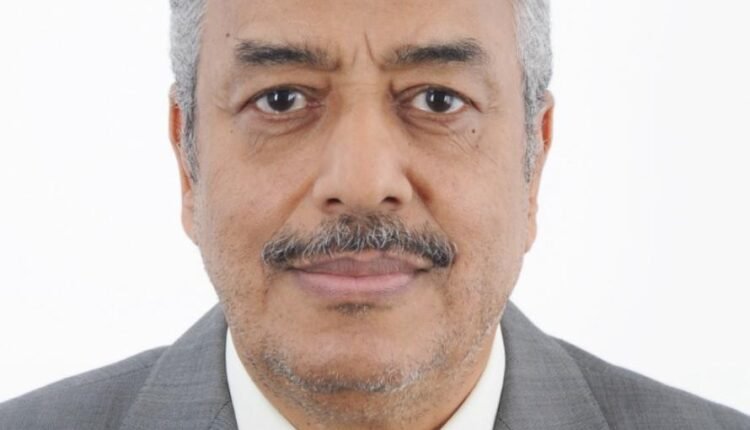
Dr Ismail Sati
The first part of our article concluded that the problem lies not merely in accepting or rejecting the current dialogue initiative, but in the absence of a comprehensive foundational vision that defines how Sudanese people can agree on the rules governing their state, manage their differences and prevent the recurrence of the crises that led the country into war. It also explained that military negotiations to end the fighting must be distinguished from political negotiations addressing the future of the state and its institutions.
However, distinguishing between these two tracks is not enough in itself. Foundational negotiations require rules that prevent any party from monopolising representation, balance national sovereignty with accountability, define the nature and endpoint of the transitional period, and ensure that justice does not become revenge or that a political settlement does not lead to impunity. This instalment addresses these issues.
Fourth: Foundational Negotiations Mean More Than Simply Bringing the Parties Together
One shortcoming of successive Sudanese political experiences has been the tendency to treat crises as conflicts between individuals, political parties, or institutions, while leaving the underlying rules that produced those conflicts insufficiently addressed.
Governments may change, alliances may shift, and agreements may be signed, but the crisis returns when no stable rules govern the transfer of power, define institutional mandates, regulate relations between civilian and military forces, and ensure that political disagreements do not become threats to the state’s very existence.
This is where systems thinking becomes important. Rather than simply asking which party is at fault in the current crisis, it examines the relationships, structures and mechanisms that have allowed crises to recur. It considers how a national system can be designed to achieve greater stability, learn from experience and correct its own mistakes.
Foundational negotiations, therefore, should not be merely another meeting where political parties present their demands and distribute positions according to the balance of power. Instead, they should address how to establish rules that ensure the state continues to function even when governments change, allow the opposition to fulfil its role without obstructing institutions, prevent the government from monopolising power, and ensure that everyone is subject to the law.
To achieve this, I believe four essential conditions must be met:
1. Agree on the objective before competing for power: This means defining the principles on which Sudanese people want their state to be founded before moving on to the details of distributing positions and allocating powers.
2. Separate individuals from institutions: Disagreement with a political or military leader must not become a reason to undermine the institution they lead. Equally, an institution must not become a shield that protects individuals from accountability.
3. Establish rules for managing differences: National consensus does not mean the disappearance of disagreement. It means agreeing on how to manage differences peacefully and lawfully, and on the mechanisms to be used when interests and visions conflict.
4. Develop mechanisms for correction and accountability: No political system is immune to error. A successful system, however, is one that can identify and correct its mistakes without the state collapsing or entering another cycle of violence.
These principles distinguish foundational negotiations from conventional negotiations over the distribution of power. They should form the centrepiece of any serious initiative to address Sudan’s crisis.
Fifth: Foreign Interference and Double Standards
One issue that raises concerns about “Somoud”’s position is its reliance on appealing to the international community and seeking external pressure in Sudan’s political conflict, including by directing accusations at the armed forces.
I do not believe that turning to external actors should be an automatic option whenever a political force disagrees with state institutions. International relations are not always governed by abstract principles of justice. They are influenced by the interests of major powers, balances of power, regional alliances, and economic and strategic considerations.
The experience of international politics demonstrates that standards applied to weaker states may not be applied to powerful states or their allies to the same degree. Some international institutions may also come under political pressure, and their decisions cannot always be separated from the international environment in which they operate.
One example that raises these concerns is US Secretary of State Marco Rubio’s position on the International Criminal Court and his call for measures against Court officials, in the context of the US administration’s objections to the Court’s proceedings concerning Israel. Such positions raise questions about how far major powers are willing to accept international accountability when it affects their allies or interests.
For this reason, I do not regard calls for international investigations or external sanctions as necessarily neutral measures. Nor do I consider their automatic acceptance to be evidence of a state’s strength or of its institutions’ confidence in the soundness of their positions. Instead, each call should be examined within its political context, taking into account the actors behind it, the independence of the mechanisms involved, the nature of the evidence on which it rests, and the outcomes it seeks to achieve.
This does not mean rejecting all forms of international cooperation or disregarding the rights of those affected. Instead, protecting Sudan and its institutions requires political prudence and vigilance, ensuring that accusations do not become instruments to weaken the state or influence the course of the war and the political settlement.
In this context, Sudanese political leaders have a national responsibility to resolve their differences and not to make appeals for external pressure a substitute for building domestic consensus. Sudan cannot regain independence in decision-making if the future of its institutions becomes contingent on the positions and shifting interests of foreign powers.
The same standard should also be applied when assessing all parties. Accusations against one party should not be accepted merely because an international body has endorsed them, nor rejected simply because they target a party we support. Instead, the facts, evidence and political context must be examined, while recognising that international accountability mechanisms themselves may be affected by balances of power.
Defending national sovereignty does not mean granting any institution immunity from criticism. But it also means rejecting the use of domestic political disputes to invite external pressure whose consequences may extend beyond the parties to the conflict and affect the state and society as a whole.
Sixth: Does “Somoud” Represent a Broad Cross-Section of the Sudanese People?
One question to ask “Somoud” is: what level of popular mandate does it have to speak on behalf of the Sudanese people and present itself as a principal party in determining the state’s future?
Political participation does not give any coalition the right to monopolise national representation. Nor do some leaders’ positions necessarily reflect the views of all coalition members, let alone those of other political, civilian, and community-based forces.
I do not believe that Somoud, simply by virtue of its political position, represents such a broad section of the Sudanese population as would entitle it to monopolise the determination of dialogue conditions or decide which forces deserve to participate. This is a political judgement I offer in light of the coalition’s positions and the nature of its representation; it is not a substitute for a reliable measure of popular support against which such claims could be assessed.
The Sudanese people are far too diverse to be reduced to a limited group of political coalitions. Civilian and political forces disagree with the army without adopting the positions of Somoud’s leaders. Social, professional, and popular constituencies also do not necessarily feel represented by any of the existing coalitions.
For this reason, participation in foundational negotiations should extend beyond the current political alignments. It should be based on rules that allow different interests and viewpoints to be represented without giving any party a permanent advantage because it participated in an earlier political phase or claims to represent the revolution or democracy.
A popular mandate cannot be acquired simply by assertion, nor can it be derived from extensive media exposure or foreign relations. It must instead be renewed through mechanisms of representation and accountability and through free elections.
Seventh: The Transitional Period and Elections — What Is the Practical Alternative?
If the objective is to establish a stable state capable of recovering its strength, the question should not be limited to who will govern immediately after the war ends. Instead, it should address how Sudan can move from a reality of conflict and division toward constitutional institutions whose legitimacy derives from the people.
In my assessment, a defined transitional period in which the military administers the state until free and fair elections are held is an option that deserves serious consideration, given Sudan’s complex circumstances. However, the powers of the transitional authority and the safeguards governing their exercise must be clearly defined.
I do not mean granting the military institution open-ended or unlimited authority. Rather, I propose adopting exceptional transitional arrangements with a clearly defined timeframe, aimed at restoring stability, expanding public freedoms, rebuilding institutions, improving living conditions and preparing the necessary environment for genuine elections.
In this context, we can draw lessons from the transitional period after the April 1985 uprising, when Field Marshal Abdel Rahman Swar al-Dahab headed the Transitional Military Council before elections were held the following year.
Citing this experience does not mean that it can be replicated in its entirety under present circumstances. Sudan today faces war, security, and institutional challenges of far greater complexity. Nevertheless, the experience reminds us that a transitional period can be designed with a defined purpose and duration, rather than as an open-ended opportunity for political forces to compete for power.
For this option to be acceptable, it should include clear safeguards, foremost among them:
1. A publicly declared transitional period: Set a target election date from the outset, with transparent rules governing any changes deemed necessary.
2. The restoration of political and media freedoms: Guarantee political parties and civilian forces the right to organise and engage in peaceful activities, subject to agreed rules and conditions.
3. A clearly focused transitional mandate: Prioritise security, the restoration of public services, reconstruction and addressing the economic crisis, rather than pursuing partisan arrangements designed to entrench power.
4. Fair electoral arrangements: Prepare a fair electoral law, establish independent electoral institutions, and guarantee the integrity of voter registration, voting and the counting of ballots.
5. Clearly defined institutional relationships: Establish the relationship between the transitional authority and military and civilian institutions, and prevent the extension of the transitional period or expansion of its powers without clear justification and an agreed oversight mechanism.
6. Genuine political competition: Allow the Sudanese people to choose their government through the ballot box, rather than through closed-door agreements between coalitions and political leaders.
The success of any transitional period should not be measured solely by the identity of those leading it, but by its ability to prepare the country for a genuine constitutional transition and return political decision-making to the citizens.
Nor should this proposal replace foundational negotiations. Rather, it should be one possible outcome, following agreement on the principles and safeguards governing the transitional period.
Eighth: Justice and Accountability — There Can Be No Sustainable Peace Without Addressing Crimes
Sudan’s future cannot be built on a political settlement that ignores the crimes and violations committed during the war since 2023. Rebuilding the state does not mean turning the page on the past without accountability. Equally, the pursuit of justice must not become an instrument of political revenge or collective condemnation.
I believe foundational negotiations must establish a clear principle: anyone against whom sufficient evidence exists of responsibility for war crimes or other serious crimes committed from 2023 to the present should be subject to a thorough investigation and a fair trial in accordance with the law, regardless of their military or political position or their affiliation with any party.
This includes civilian officials where their criminal responsibility for crimes falling within the scope of the law is established. Participation in dialogue or the conclusion of a political agreement must not be used as a means of extinguishing criminal liability or granting blanket immunity to those found guilty.
At the same time, an accusation alone must not be treated as proof of guilt. Every accused person must be afforded fair legal proceedings, including the right to a defence, based on documented evidence.
A distinction must also be drawn between individual criminal responsibility and political responsibility, and between legal accountability and historical assessments of the performance of governments and coalitions. These are different levels of assessment, each with its own methods and standards.
Justice is not an issue that can be postponed indefinitely, nor is it a bargaining chip to be traded for political positions. It is integral to establishing the state Sudanese people want to build and to ensuring that power or political influence does not become a means of escaping the law.
The principle required can be expressed succinctly: justice without revenge, and reconciliation without impunity. Justice that turns into revenge reproduces conflict, while reconciliation that disregards crimes undermines confidence in both the state and the law.
Ninth: All Parties Have a Responsibility to Offer Alternatives
Responsibility for finding a way out of the crisis does not rest with Somoud alone, nor is it confined to the party that called for dialogue. All political and military forces seeking to influence Sudan’s future must present a clear vision, specify their commitments and accept accountability for their positions and decisions.
Somoud, in particular, should answer some fundamental questions:
What foundational alternative does it propose to the current initiative, and what rules should govern it?
How will it ensure the participation of different political and social forces, including those that disagree with its position on the army?
What criteria will it use to distinguish legitimate political opposition from actions that may entail legal liability?
How will it ensure that the transitional period does not become a means of restoring the influence of the coalitions that held power after 2019 without a renewed popular mandate?
What is its position on holding free and fair elections on a fixed timetable and requiring all political forces to submit to the test of popular legitimacy?
How will it address justice and accountability for crimes and violations without selectivity or impunity?
Conversely, the party calling for dialogue must present a clear vision of its intended outcomes, ensure the process does not become a mere occasion to endorse decisions already taken, and provide participation based on fair national criteria.
Those who support the army are also required to distinguish between defending the military institution and unconditionally defending every decision made by its leadership. They must commit to ensuring the army remains a professional national institution, not a permanent substitute for constitutional institutions and popular representation.
It is not enough for one party to reject another party’s project, or for a third to declare its support for the army or civilian rule. What is needed is proposals that can be debated and implemented, with clearly defined responsibilities, safeguards, and timelines. This would enable Sudanese people to assess the available alternatives based on their expected outcomes, rather than the slogans used to promote them.
Summary of Part Two
The foregoing makes it clear that the value of foundational negotiations does not derive from the number of participants, but from the rules they agree upon, the safeguards that prevent the monopolisation of power or evasion of accountability, and their ability to move from a transitional phase to constitutional legitimacy derived from the people.
Yet a deeper question remains: Why have Sudan’s crises returned in different forms despite dialogues, agreements and changes of government? And why have piecemeal solutions failed to build a state capable of accommodating differences and preventing them from turning into armed conflict?
To answer these questions, we must move beyond criticising political positions to understanding the system that generates the crisis. This is where Sudanese–Sudanese dialogue connects directly with the ideas I presented in the previously mentioned article about the need to adopt systems thinking as a framework for refounding the state.
We shall examine this in the third part, God willing.
Shortlink: https://sudanhorizon.com/?p=19339