

Who Could Possibly Beat Al-Burhan by Fifty Points at Cards?!
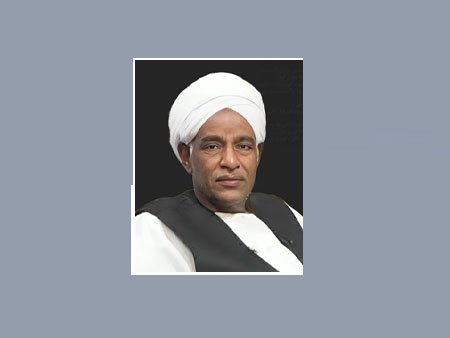
Mahjoub Fadl Badri
General Abdel Fattah al-Burhan has shown he has no equal when it comes to engaging ordinary people, especially the soldiers of the Sudanese Armed Forces. He understands the fighting soldier’s spirit and knows what lifts morale. With remarkable skill, he strikes the right chord, without confining himself to formalities. By brushing aside security concerns, he gives his security team a hard time and throws their protection plans into disarray, seemingly unconcerned by the risks. He drinks from roadside vendors, shares kawja (a traditional Sudanese meal) with the troops, and plays cards with them!
There is no doubt Al-Burhan is no keesha (card-game novice); he is a skilled player, a real maqaddida (a shrewd, experienced card player). Yet military discipline and the chain of command do not permit a soldier or officer to beat the commander or yajurru khamsin — defeat him by fifty points! A player might deliberately miss the chance to play a winning card, lest he get in trouble or be accused of insolence and insubordination.
The video clip showing Al-Burhan playing cards was undoubtedly one of the most memorable appearances of the Chairman of the Sovereignty Council and Commander-in-Chief, as he spoke and acted spontaneously, doing whatever came naturally to him. In this way, he presents himself as a commander who goes directly among the ranks without fear or hesitation, without airs and graces, protocol or ceremony. At times, even his personal security detail appears virtually powerless to restrain him.
To some, Al-Burhan’s manner may seem like a display of nonchalance ill-suited to the country’s circumstances, with the war still raging. From another perspective, however, it reflects the remarkable skill of a statesman who carries the people’s burdens on his shoulders — and has enough of his own troubles that he can barely bear them all! There is a reason why a commander stands among his soldiers, eating what they eat and drinking what they drink, and facing danger alongside them on the hottest fronts, while weapons are still loaded and the next bullet remains in the barrel!
To those who dislike seeing the commander playing cards with his soldiers, we say this: it is the first sign the army has seized the initiative on the battlefield, and it is one building block in strengthening troop morale, which draws its fighting spirit from its leadership.
Major General Farouk Ali Mohammed used to tell soldiers during the final briefing before any assault: “Don’t call me a coward if you haven’t seen me out in front of you, with this very stick of mine! If you don’t see me there, don’t attack!” May God have mercy on him. Such is the tradition of all the officers of our army — as the saying goes, the army is the school that produces men and the den of heroes. May God bless them all.
War consists of a series of battles, with different phases, including advances and withdrawals. It is a game whose outcome is decided by the final score. The War of Dignity was started by the Dagalo boys’ militia, and they will emerge from it only in utter defeat. Every day, our army teaches them a lesson in the art of warfare and men’s courage. They had imagined it would be a walk in the park, believing that all it would take was an hour or so before Al-Burhan was put in handcuffs and a victory announcement broadcast! But the will of Almighty God, followed by the heroic resistance of the Presidential Guard, turned the tables on them and wrested control of events from their hands. Their own plans became their undoing.
Very soon, God willing, the Commander-in-Chief will announce final victory, beat them by fifty points, and throw down the losing joker!
Back in the May era, a man had a relative in detention. He turned to a friend with connections to “the General”, the Minister of the Interior, an avid card player. The two went to the minister’s house and found him playing cards with his friends.
The man sat behind the minister, watching the cards in his hand and waiting for him to play the doh card, which would be no use to him—the doh bayiz. He kept watching until the game ended. That card would have opened the way for the player sitting to the minister’s right. As soon as the game was over, the man got up and left.
His friend followed him and said, “Wait a little so we can speak to the minister and ask him to get your relative released from detention.”
The man replied:
“Man, release whom?! Your fellow wouldn’t even release the doh card! Don’t tell me he’s going to release anyone from detention!”
Shortlink: https://sudanhorizon.com/?p=19190