

Artificial Intelligence and Mobilising Private Capital for the Recovery of Developing Economies
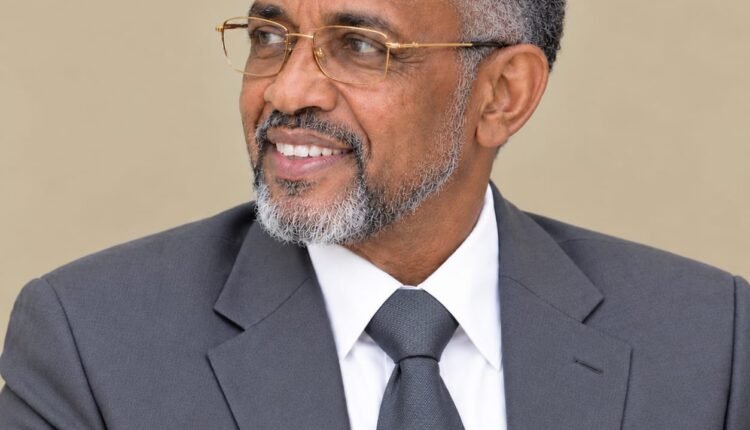
Eng. Mohammed Al-Shater Al-Amin Al-Hassan
Reports from the International Monetary Fund’s October 2026 World Economic Outlook and the United Nations Conference on Trade and Development point to a major paradox: global growth remains stable at 3.1%, but its quality is poor. Some 70% of developing economies have not yet recovered their pre-2020 per capita income levels, the development financing gap stands at US$4.2 trillion annually, and debt-servicing costs in sub-Saharan Africa have risen by 60%. Addressing this situation requires a sound theoretical foundation drawing on three schools of thought.
The first is Paul Romer’s 1990 endogenous growth theory, which views knowledge as an internal driver of economic growth. From this perspective, artificial intelligence is a general-purpose technology, comparable to steam power and electricity. The second is leapfrogging theory, which emphasises developing economies’ ability to bypass certain stages of development, as Africa did when it moved rapidly towards mobile communications. The third is the blended finance model advocated by the Organisation for Economic Co-operation and Development (OECD), which holds that each dollar of concessional public finance can mobilise four to five dollars in private capital.
The practical impact of these approaches is evident in three fields.
In agriculture, which accounts for 25% of gross domestic product and 60% of employment, platforms such as eSoko use satellite imagery and pest forecasting. These technologies have increased productivity in Kenya and Rwanda by 25% and reduced waste by 30%.
In financial inclusion, where 1.4 billion people remain outside the formal banking system, alternative credit-scoring algorithms have transformed access. They have enabled M-Pesa and Fawry to integrate 400 million people into financial services without requiring collateral.
In human capital development, platforms such as Cure.ai have made medical diagnosis 70% cheaper, while adaptive learning platforms offer personalised education.
However, progress along this path faces three gaps. The first is infrastructure: 800 million Africans lack access to electricity. The second is data: national data systems and well-governed databases are often absent. The third is skills: according to the World Economic Forum, 70% of jobs in 2030 will require digital skills.
This transformation also carries risks that must be acknowledged. Artificial intelligence could intensify the concentration of digital wealth and reinforce algorithmic bias against vulnerable groups if models are trained on unrepresentative data. It also raises questions about data sovereignty.
These challenges are particularly evident in Sudan. The country possesses an extensive agricultural base but lacks a digital agricultural registry, while financial inclusion has historically remained low. According to 2025 data from the Central Bank of Sudan and the Alliance for Financial Inclusion, the Central Bank launched a 20 billion Sudanese-pound initiative to include three million new beneficiaries and create 129,000 jobs, with a particular focus on rural women. The initiative operates through restricted mudaraba contracts with microfinance companies. Against this background, using artificial intelligence to forecast floods, price agricultural commodities and assess creditworthiness through the Bankak application is a national necessity, not a technological luxury.
The challenges of inclusive growth also expose a crisis in the prevailing growth model. Harvard defines inclusive growth as growth that is sustainable and distributed across the broadest possible base, while 2026 reports confirm that 85% of indicators are falling behind. The current growth model is resource-intensive, generates relatively few jobs, remains vulnerable to climate change, and incurs annual losses equivalent to 1.5% of GDP.
Growth must therefore be redefined. It should mean growth that reduces carbon emissions through smart grids; growth that narrows inequality through freelance work platforms, which generate US$1.2 trillion in the Global South; and growth that builds resilience through early-warning systems capable of reducing flood losses by 30%.
If artificial intelligence is the engine, private capital is its fuel, and mobilising that capital requires three sets of reforms.
First, institutional reform: this should include specialised commercial courts, a digital land registry and a clear bankruptcy law. Improving a country’s ease of doing business ranking by 20 places increases foreign direct investment by 15%.
Second, financial instrument reform: this should involve green bonds, whose global value reached US$2 trillion in 2025, as well as social bonds, impact bonds and currency-risk guarantee funds. Egypt successfully mobilised US$1.5 billion for the Benban solar power project through such instruments, while Rwanda has used guarantees from the International Finance Corporation.
Third, technological reform: this should involve using blockchain to authenticate contracts and artificial intelligence to assess project risks.
In conclusion, recovery cannot be achieved without technology, development cannot be sustained without justice, and ambition cannot be financed without private capital. The formula is:
Well-governed technology + a smart, well-regulated state + a market financed in accordance with environmental, social and governance (ESG) principles.
We recommend three measures:
Establish a national data and artificial intelligence agency to oversee data registries and develop a data protection law.
Launch a national blended finance fund that issues green and social bonds backed by international guarantees, mobilising capital for agricultural and healthcare projects.
Integrate artificial intelligence skills and freelance work into vocational education curricula.
A country that connects artificial intelligence to farmers’ needs, economic analysis to a national plan, and global capital to local projects can transform a development crisis into an opportunity for inclusive growth that leaves no one behind.
Shortlink: https://sudanhorizon.com/?p=19185