

Wasting Money in Higher Education
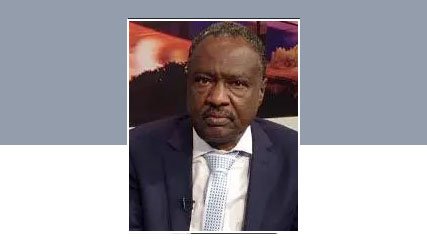
Rashid Abdelrahim
Social media has been awash in recent days with news and discussions about higher education, offering valuable and useful opinions. Yet these contributions are being lost, with little benefit being derived from them.
Higher education needs bold decisions to advance and develop. Unfortunately, we do not have a government capable of delivering results and taking decisive action.
This government appears to look on as the very person who appointed it repeatedly carries out important tasks that should be its responsibility, as though it can neither see nor hear what is happening. Given this repeated pattern, it deserves to be issued with a death certificate.
President Abdel Fattah al-Burhan has bypassed the government on several occasions, including on major issues. The latest example is the Gezira Scheme, which he visited two days ago, donating 50 billion Sudanese pounds and 42 vehicles to various bodies within the project.
Higher education in Sudan needs extensive development, but its foundations are neither sufficiently strong nor adequately equipped to bear the consequences of such change.
The shelves of university postgraduate libraries are filled with vast numbers of master’s and doctoral dissertations on which considerable time, effort and money have been spent. Yet we struggle to find any that have led to useful work or helped advance industry or production, whether in applied sciences or the humanities.
Several years ago, I examined around 50 master’s dissertations from a single faculty at a public university, intending to select some worthwhile studies on an important and productive subject. To my surprise, I encountered a mass of scribblings that could not possibly be described as postgraduate research.
I came across some astonishing examples: students who could neither express themselves properly nor write competently, and who lacked even the basics of writing, let alone the ability to present a useful subject or address a meaningful issue. I find it difficult to understand how faculty members could approve such substandard work.
If the state suspended postgraduate studies at Sudanese universities for five years, it would lose nothing. On the contrary, it would gain considerably and save money that could be put to more worthwhile use.
Many people who have obtained master’s and doctoral degrees have gained little from them beyond promotions or salary increments that offer no real benefit.
A review of these dissertations, even if not particularly rigorous, would show that most of their authors deserve to have their degrees revoked.
It is embarrassing to present such qualifications when applying for jobs abroad and competing with graduates from universities that do not take a lenient approach to awarding academic degrees.
No accurate statistics exist on the number of universities, students, or degrees awarded.
Sudan has approximately 60 public, private and community universities for a population estimated at 40 million, while Egypt has around 130 universities for a population exceeding 120 million. This suggests that Sudan has more universities than it needs, and university faculties have become vehicles for profiteering and investment.
This situation is unworthy of a country that once served as a model in education and various fields of study, with respected academic qualifications whose holders represented their country with distinction.
The catastrophe of war has cast a long shadow over the entire education sector, particularly universities, making reform an urgent and pressing necessity.
Shortlink: https://sudanhorizon.com/?p=19134