

A Systems-Based Analysis of the Repeated Calls for a Change of Government in Sudan
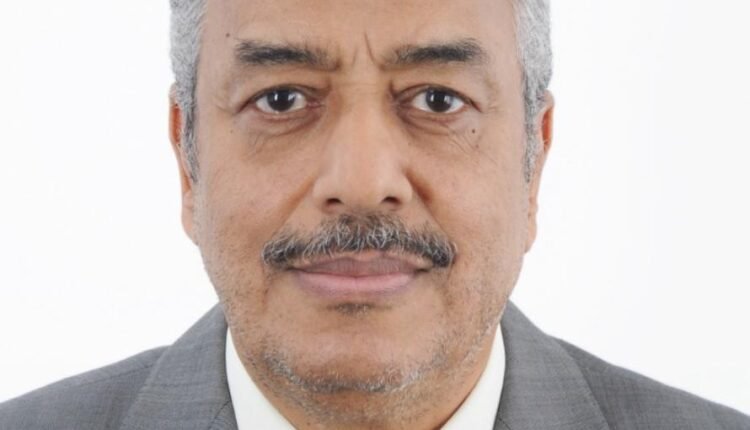
Dr Ismail Satty
Calls for a change of government under Prime Minister Dr Kamil Idris recur in Sudan’s political arena amid the country’s interconnected political, economic, security, and administrative crises. While some proponents base their arguments on an assessment of the government’s performance and hold it accountable for its results, others believe replacing the Prime Minister or reshuffling ministers could help address the deteriorating situation.
However, before debating changes to the government, the question should be: do the roots of failure lie with the individuals holding positions of responsibility, or in the system within which they operate? Answering this question requires shifting away from fragmented thinking, which reduces problems to a single factor—individuals—and toward systems thinking, which examines structural relationships, operational mechanisms, and the interactions among the state’s various components.
One recurring problem in Sudanese political practice is the tendency to treat crises as the direct result of the performance of those holding public office. When conditions deteriorate, the immediate response is to call for officials to be replaced, as though replacing them alone would bring about the desired transformation.
This reasoning, however, overlooks a fundamental reality: anyone entrusted with public responsibility does not operate in a vacuum, nor do they exercise their powers independently of the institutional and political environment surrounding them. They operate within a network of powers, jurisdictions, interests, and conflicts; under formal and informal rules; and within patterns of relationships that determine what they can and cannot do, and how their decisions interact with others’.
Consequently, replacing an individual while leaving the same structural relationships intact may fail to deliver sustained improvement. Instead, it may reproduce previous outcomes, even if the faces change and the slogans differ. If the problem stems from overlapping jurisdictions, poor coordination, fragmented decision-making centres, weak accountability, a lack of feedback, or a disconnect between planning and implementation, appointing a new official will not automatically resolve these shortcomings. The new appointee may face the same limitations that constrained their predecessor. The problem, therefore, does not always lie with the person occupying a position; it may lie in the structure of the position itself and its relationship with the other components of the system.
Systems thinking begins with the premise that a system’s performance is determined not only by the characteristics of its individual components, but also by the relationships and interactions linking those components. A government is not simply a Prime Minister and a number of ministers. It is a system in which institutions, agencies, jurisdictions, resources, information and decisions interact. Its performance depends on the coherence among these elements, the clarity of their relationships, and their capacity to work toward shared objectives.
In this sense, each minister’s individual competence does not necessarily guarantee the effectiveness of the government as a whole. Some ministers may be well qualified yet operate in an environment that obstructs coordination, denies them the necessary authority, or leaves their decisions subject to conflicting interventions. Plans and resources may be available, but without mechanisms for implementation, monitoring and corrective action, the desired results may remain out of reach.
A system’s performance is not simply the sum of its individual members’ performance, since relationships between individuals and institutions can either strengthen efficiency or dissipate it. Accordingly, assessing government performance should not be confined to ministers’ competence. It should also examine the clarity of jurisdictions and responsibilities; the degree of integration between institutions; whether powers match responsibilities; how efficiently information reaches decision-making centres; the effectiveness of coordination, accountability, and performance-measurement mechanisms; and the government’s capacity to learn from its mistakes and correct its course. It should also consider whether the state’s components operate under a shared vision and consistent priorities, rather than being driven by conflicting interests.
Taken together, these factors largely determine a system’s ability to transform individual efforts into coherent institutional performance and tangible results. The debate thus shifts from judging individuals alone to diagnosing the system that shapes their behaviour and influences the outcomes of their work.
In this context, structural relationships in systems analysis extend beyond the administrative arrangements formally set out in regulations. They also encompass patterns of power distribution, decision-making rules, actual centres of influence, behaviour-shaping incentives, channels of communication and coordination, and the relationship between responsibility and accountability.
Formal rules may prescribe specific responsibilities, while practice follows different relationship patterns. Multiple institutions may exist without genuine integration. Decisions may be issued without clear implementation mechanisms or feedback processes to identify deviations and correct them. In such circumstances, failure is not merely an individual’s mistake; it arises from relationship patterns that reproduce the same mistakes.
Changing individuals without changing these relationships is therefore like replacing parts of a machine while retaining the design that causes it to malfunction. The machine may operate differently for a while, but the underlying cause of the fault remains. To achieve different, sustainable results, we must examine the relationships and mechanisms that produced the previous outcomes rather than simply replacing those held responsible for them.
This does not mean systems thinking denies individual responsibility or lets institutional structures become a convenient scapegoat for every failure. Informed leadership, competence, integrity, and decision-making ability all influence a system’s performance. Replacing a particular official may be necessary if their failure or inability to fulfil their duties has been established, or if they have lost the trust required to discharge their responsibilities. However, individual accountability should not obscure the responsibility to address institutional shortcomings, just as institutional reform should not become a pretext for exempting officials from scrutiny.
What is required, then, is a distinction between two complementary levels of intervention: one concerned with individuals’ competence and conduct, and the other with the system’s capacity to harness their abilities, regulate their performance and integrate their efforts. A sound system does not assume that everyone working within it will be perfect. Instead, it is designed to limit the consequences of individual mistakes, identify deviations, prevent them from becoming wider failures, and facilitate learning and correction.
In the present circumstances, the debate surrounding Dr Kamil Idris’s government should not be confined to whether it stays or goes, or to the names of potential replacements. It should instead address the nature of the system within which the government operates, the limits of its actual authority, its relationships with other state institutions, and its ability to unify decision-making, coordinate policies and translate objectives into results.
Repeated media campaigns calling for a particular official to be replaced may also increase pressure on that official and divert their efforts to respond to such campaigns rather than focus on their duties, potentially undermining their effectiveness.
This calls for questions that go beyond the traditional ministerial reshuffle. What structural weaknesses are obstructing the government’s work? What can the government change within its existing powers? What institutional reforms are needed to clarify jurisdictions and define responsibilities? How can coordination between state agencies be improved? And what monitoring and accountability mechanisms are required to ensure that decisions translate into tangible results?
It is also necessary to establish clear national priorities, link them to implementation programmes, define responsibilities, and set measurable indicators, supported by regular mechanisms to review performance and correct course where necessary.
This does not mean ruling out changing the government as a political option. Rather, it should be assessed as one possible course of action, not as a remedy in itself. The value of such a change depends on its reasons and objectives, the shortcomings it is intended to address, and the extent to which it is linked to broader reform of the system of governance.
If a change restructures institutional relationships, clarifies powers, improves coordination, and strengthens accountability, it may form part of a genuine reform process. But if it amounts merely to replacing one set of names with another while preserving the rules and relationships that produced the failures, it may change the faces without changing the direction.
Sudan’s crisis is too deep to be reduced to the person of the Prime Minister or a group of ministers. Nor can state reform be achieved simply by finding new individuals and assigning them to manage the old structure. The real challenge is to move away from a political practice in which every crisis prompts calls to replace individuals, towards an institutional approach that learns from failure, diagnoses its root causes and re-examines the relationships governing the functioning of the state.
Instead of asking only, Who should govern?, we must also ask: How should the system of governance operate? How should power and responsibility be distributed? How can institutions work together effectively? How should decisions be made, implemented and evaluated?
Changing individuals may be necessary, but it becomes genuine reform only when it is linked to changing the structural causes that made failure possible and building a system capable of producing different results. Sudan needs more than a change of faces. It needs to move beyond a pattern of thinking in which every crisis becomes an occasion to search for new individuals, rather than to seek meaningful change in the way the system of governance operates, the relationships within it, and the mechanisms through which its course is corrected.
Shortlink: https://sudanhorizon.com/?p=18929