

The New Khartoum Stock Exchange: Keeping Pace with the World and Finance Sudan’s Future
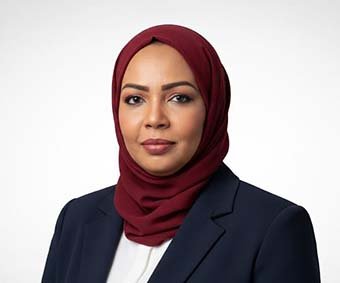
Dr Marwa Fouad Qabbani**
The resumption of trading on the Khartoum Stock Exchange was not merely another piece of economic news, nor simply the restoration of an activity suspended by the war. The anticipated reopening of the secondary market after nearly three years of inactivity raises a larger and more important question: should the Khartoum Stock Exchange return in the form it had before the war, or should this moment be seized to build a new exchange that keeps pace with global transformations and becomes an instrument for financing Sudan’s future?
In my view, the answer should be clear: Sudan needs a new stock exchange, not merely the reopening of the old one. The war did not simply bring trading to a halt; it also exposed the need to rebuild Sudan’s financial infrastructure in a way that is more resilient, better able to withstand crises, and more firmly grounded in technology, digitalisation and governance.
From a Trading Exchange to a Capital Market
Sudan has more than three decades of experience in securities markets. The Khartoum Stock Exchange Act was enacted in 1994, and the primary market commenced operations in October of that year, while trading on the secondary market began in January 1995.
Since then, the market has evolved, different investment instruments have emerged, the Khartoum Stock Exchange Index has been introduced, and trading has gradually moved from traditional methods towards electronic systems. Global markets, however, have developed at a much faster pace.
A modern stock exchange is no longer simply a place where orders to buy and sell shares are executed. Rather, it is part of an integrated financial ecosystem encompassing trading, disclosure, central securities depository services, clearing and settlement, custody, risk management, supervision and data analytics.
This is where the opportunity for a new Khartoum Stock Exchange begins.
Reconstruction Is a Unique Opportunity
The resumption of trading after the war should be viewed as a starting point for rebuilding Sudan’s capital market.
Sudan is entering a phase that will require enormous investment in agriculture, industry, energy, mining, telecommunications, transport, housing and infrastructure. Banks alone cannot finance all these requirements.
This is where the importance of the stock exchange emerges as a channel for mobilising savings and transforming them into long-term investment. The primary market enables companies to raise capital, while the secondary market allows investors to exit investments and convert their holdings into liquidity.
In this way, the stock exchange is transformed from a mere trading platform into an instrument for financing production, reconstruction and economic growth.
‘Khartoum Stock Exchange 2.0’ Begins with Digital Transformation
The first step in development should be to build a fully integrated digital stock exchange.
Today’s investor wants to access the market from a mobile phone or other device, view prices and data, manage a portfolio, and execute transactions electronically.
A modern digital platform should therefore be developed to provide investors and brokers with integrated services, facilitate electronic disclosure, rapidly publish prices and market data, and connect the market with banks and fintech companies through secure technological interfaces.
What is required, therefore, is not simply electronic trading, but a digital economy for the capital market.
The Stock Exchange, Banks and Payments: One Ecosystem
One of the most significant opportunities available to Sudan today is the possibility of integrating the capital market with the developments underway in banking and electronic payments.
The restoration of the national payment switch and the development of electronic banking services could help create an interconnected ecosystem that spans from the bank account to the settlement of an investment transaction.
The process would therefore become:
Bank account → Investment account → Trading → Clearing and settlement → Bank account
Such integration reduces manual procedures, lowers costs, accelerates the execution and settlement of transactions, and makes investing easier and more secure.
Depository, Clearing and Settlement: The Heart of the Market
Some may focus on trading as the most important component of a stock exchange, but modern markets depend upon a much broader infrastructure.
Once a transaction has been executed, the ownership of the securities must be verified, funds settled, ownership transferred and assets held securely.
Developing the central securities depository, clearing, settlement and custody infrastructure should therefore be among the principal priorities of the next phase. The faster and more secure these systems become, the greater the market’s efficiency and the lower its risks.
The Primary Market Needs a Revolution
While the secondary market provides liquidity to investors, the primary market provides financing to companies.
The development of the stock exchange should therefore be accompanied by a broad programme to increase the number of listed companies. Sudan needs strong companies from agriculture, mining, energy, telecommunications, industry, transport, logistics and infrastructure to enter the market.
Eligible private and family-owned businesses could also be encouraged to convert into public limited companies, giving them access to capital markets rather than relying entirely on bank financing.
Sukuk and Islamic Finance: A Sudanese Advantage
Sudan has extensive experience in Islamic finance, and this expertise could be a competitive advantage in the Khartoum market.
Alongside equities, the market could develop sukuk, investment funds, infrastructure-financing instruments, green sukuk, and other products suited to the needs of the Sudanese economy.
Combining Islamic finance, fintech and a digital capital market could provide a genuine opportunity to create a Sudanese model capable of competing at the regional level.
Confidence Begins with Governance
Technology alone will not make the stock exchange successful.
Investors want to know where their money is being invested, the company’s true position, the risks involved, and how their rights will be protected.
Governance, disclosure and supervision must therefore be strengthened. A unified electronic platform for corporate disclosures should be developed, alongside tighter controls against price manipulation and insider trading.
Confidence is the real capital of any financial market.
Artificial Intelligence Enters the Trading Floor
The Khartoum Stock Exchange can benefit from the latest global technologies to build a more intelligent supervisory system.
Artificial intelligence and data analytics can help identify abnormal trading activity, detect attempts at market manipulation, analyse liquidity movements, and recognise patterns that are difficult to identify using conventional methods.
Supervision can thereby move from detecting misconduct after it has occurred towards proactive market surveillance.
Sudanese Investors Abroad: A Major Investment Opportunity
Sudanese communities abroad represent an important potential source of capital.
Digital investment platforms could be established to enable Sudanese expatriates to access the Khartoum market and invest in shares, sukuk and investment funds within clear legal and regulatory frameworks.
The objective should be to transform a proportion of overseas savings from consumption-oriented remittances into long-term capital that contributes to production and reconstruction.
From Regional Co-operation to Global Integration
The Khartoum Stock Exchange already has regional, Arab and African relationships and memberships, providing an important foundation upon which to build.
The next phase, however, should move beyond simple co-operation towards deeper levels of integration and connectivity with regional and international capital markets.
Sudan’s market needs to become better equipped to attract institutional investors, draw in foreign capital, and provide an investment environment that progressively aligns with international standards.
People Before Technology
No matter how advanced technology becomes, it cannot build a successful market on its own.
Sudan needs specialists in capital markets, electronic trading, financial analysis, risk management, cybersecurity, governance, fintech and artificial intelligence.
Investment literacy must also be promoted among the public, because broadening the investor base requires a genuine understanding of shares, sukuk, investment funds, risks and returns.
The real challenge is not:
When will the Khartoum Stock Exchange return?
Rather, it is:
How can we make its return the beginning of a new Sudanese stock exchange — one that is digital, transparent and secure, and capable of attracting capital and financing production and reconstruction?
Sudan does not need to restore the stock exchange of yesterday. It needs to build the stock exchange of the future: an exchange where technology is the means, governance the foundation, confidence its capital, liquidity its engine, and productive investment its objective.
Only then will the Khartoum Stock Exchange cease to be merely a market for trading securities and become one of the principal engines of Sudan’s new economy — an instrument for transforming savings into investment, investment into production, and production into growth, employment opportunities and a more sustainable future.
Shortlink: https://sudanhorizon.com/?p=16976