

Green Sukuk and Their Role in Financing Sustainable Development Projects: Renewable Electricity Financing as a Model — The Saudi Electricity Company Experience (3/3)
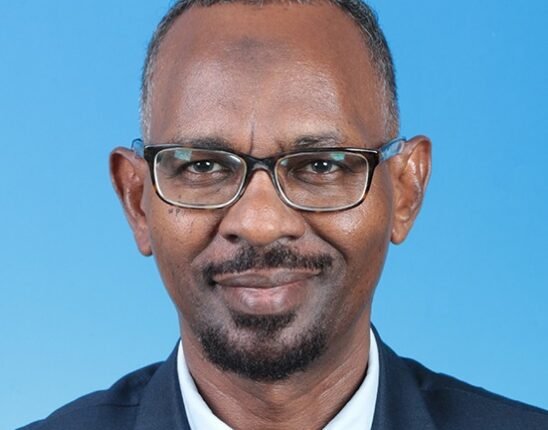
Dr Ahmed Abdel-Baqi
The Kingdom of Saudi Arabia places considerable emphasis on achieving the Sustainable Development Goals and has adopted ambitious national plans to that end, foremost among them Saudi Vision 2030. Given the breadth of this subject, this article focuses on the experience of the Saudi Electricity Company, which developed substantially after the Saudi government restructured the electricity sector in 1998.
The Saudi Electricity Company was established in 2000 as a major Saudi joint-stock company specialising in the generation, transmission and distribution of electricity through a diverse range of power stations. It subsequently became the largest electric power company in the Middle East and North Africa, with capital amounting to SAR 41,665,938,150.
Since its establishment, the company has achieved significant progress in line with the Kingdom’s national vision and aspirations, particularly in renewable energy, environmental projects and climate-change mitigation, consistent with Saudi Arabia’s commitments under the Paris Agreement and the Sustainable Development Goals.
The company has benefited from the availability of domestic and international investment and financing, which has enabled it to expand environmentally sustainable projects. In October 2023, it signed agreements to develop five renewable-energy projects at a total cost of US$2.4 billion and with a combined capacity of 4,500 megawatts. These comprised four solar photovoltaic projects and one wind-energy project.
To keep pace with this expansion, the company also focused on increasing electricity-storage capacity. According to the electricity-sector database of the Washington-based specialist platform Attaqa, Saudi Arabia sought to raise its storage capacity from approximately 8 gigawatt-hours in 2025 to 22 gigawatt-hours in 2026, with a projected increase to 48 gigawatt-hours by 2030.
This ambitious target would make Saudi Arabia the world’s third-largest energy-storage market after China and the United States. Electricity storage has therefore become one of the principal pillars of the Kingdom’s national energy transition, as it moves rapidly towards building a flexible and integrated power system capable of supporting its plan to increase renewable energy’s share of the national energy mix to 50 per cent by 2030.
The company is currently developing more than ten battery-storage sites across Saudi Arabia, with total capacity exceeding 30 gigawatt-hours. These large-scale projects are at various stages of development and are distributed across different regions of the Kingdom, with several sites already commissioned and connected to the national grid.
These developments were made possible by the abundance and diversity of investment resources available in the country. Nevertheless, the Saudi Electricity Company also pioneered green investment instruments.
In 2020, it issued its first public green sukuk in international markets, valued at US$1.3 billion. This was the first green sukuk issuance from Saudi Arabia in international markets and the largest such issuance from the Middle East and North Africa.
The proceeds were allocated entirely to financing and refinancing eligible green electricity projects intended to reduce dependence on fossil fuels and limit carbon emissions.
According to information published on the Saudi Electricity Company’s website, the company successfully issued a further US$1.25 billion in green sukuk in February 2025, with a ten-year maturity and a profit rate of 5.489 per cent. This was the fourth issuance under the company’s Green Sukuk Framework, with the proceeds used to finance or refinance its portfolio of renewable-energy generation and energy-efficiency projects.
From 2020 to the most recent issuance, the company’s total green sukuk issuances reached US$3.75 billion. This reinforced its commitment to reducing carbon emissions in line with its strategic objective of achieving carbon neutrality by 2050 and supporting the Kingdom’s transition towards renewable energy and energy efficiency under Saudi Vision 2030.
The company has pursued these objectives by increasing investment in electricity grid infrastructure, integrating renewable energy sources, and accelerating digitalisation and automation initiatives. These measures are intended to sustain the delivery of high-quality and reliable electricity services that meet customer expectations.
A Sudanese Perspective
Sudan has a valuable opportunity to study and draw lessons from the Saudi Electricity Company’s experience generally, and from its investment in renewable energy and energy efficiency in particular, while adapting these lessons to Sudanese conditions.
Green sukuk could become one of the financing solutions available to Sudan for developing solar photovoltaic projects. This could be achieved by creating a special-purpose vehicle authorised to issue green sukuk to the public on a broad ownership basis, enabling Sudanese citizens—particularly those living abroad—to contribute directly to solving the country’s electricity crisis.
Such investments could be structured through Sharia-compliant instruments such as ijara, istisna’, mudaraba and musharaka. They could be supported by a guarantee from the Central Bank of Sudan and backed, where appropriate, by assets belonging to the Sudan Electricity Holding Company.
The state and the Central Bank could also continue encouraging the current activities of banks such as the Bank of Khartoum, Omdurman National Bank, Al Baraka Bank, Faisal Islamic Bank and others in financing solar-energy systems through contracting and murabaha arrangements, together with flexible advance-payment requirements.
To strengthen this activity, a dedicated electricity-financing portfolio could also be established, accompanied by incentives and facilities for participating companies investing in green solar photovoltaic projects.
Solar photovoltaic generation offers particular advantages, including the speed with which facilities can be built and its suitability for decentralised production and distribution. These features could help relieve Sudan’s electricity shortage, at least in part, more quickly than some conventional alternatives.
The Possibility of a Sudan–Saudi Electricity Interconnection
Cross-border electricity interconnection is a major instrument for strengthening energy security, supporting the transition to renewable energy, and generating both economic and strategic benefits.
As highlighted by the International Energy Agency, the World Resources Institute and ScienceDirect, these benefits include:
strengthening energy security and grid stability;
reducing costs and generating economic gains;
supporting regional integration and cooperation;
facilitating renewable-energy deployment;
reducing carbon dioxide emissions; and
lowering the need for standalone energy-storage capacity.
A number of grid-interconnection projects have consequently been developed around the world, including ten projects in the Arab region.
One of the most prominent is the electricity interconnection between Egypt and Saudi Arabia, extending approximately 1,350 kilometres, including a 22-kilometre subsea cable, with a transmission capacity of 3,000 megawatts and an estimated cost of US$1.8 billion.
Sudan could therefore explore negotiations with Saudi Arabia regarding the possibility of establishing an electricity interconnection across the Red Sea.
Sudan and Saudi Arabia have had an agreement since 1974 concerning the exploration of mineral resources in their shared area of the Red Sea seabed. In 2012, the two countries signed the Atlantis II Project Agreement, although the project was suspended because the necessary modern extraction technologies were not then available. The agreement was renewed in 2020 but again failed to proceed.
In my view, there is now an urgent need to open discussions with the Kingdom of Saudi Arabia on a Red Sea electricity interconnection, particularly as Saudi Arabia already has direct electricity-interconnection agreements with Egypt, as noted above, and with Jordan.
Shortlink: https://sudanhorizon.com/?p=16685