

Demonising the “Balabisa” and Humanising the “Devils”
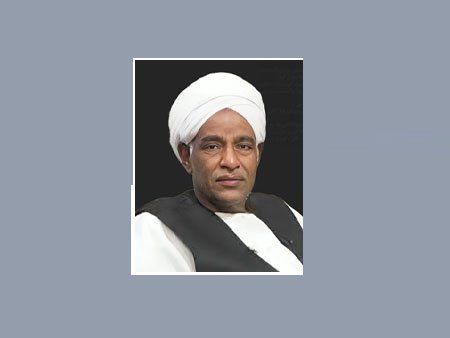
Mahjoub Fadl Badri
We have lived to see a time in which what is right has become condemned, while what is wrong is celebrated—may Allah protect us. The Prophet (peace and blessings be upon him) spoke truthfully when he said:
“There will come upon the people years of deception, in which the liar will be believed, the truthful person will be disbelieved, the treacherous will be trusted, the trustworthy will be accused of treachery, and the Ruwaybidah will speak…”
As we witnessed only yesterday, social media erupted over a juristic opinion that could easily have been challenged by those who disagreed with it through scholarly argument or by presenting a stronger legal opinion. Instead, we saw the very opposite of the familiar saying that “a difference of opinion should not destroy mutual respect.” Supporters of the Taqaddum coalition—together with those whom the author refers to as “the devils”—sought instead to demonise the scholar who expressed the opinion.
Indeed, I would not be surprised if, as part of what the author sees as the ongoing campaign against Islam and the so-called Kizan (Islamists), someone were to translate the title of Al-Arba’in Al-Nawawiyyah (The Forty Hadith of Imam Al-Nawawi) as though it referred to forty nuclear missiles possessed by Sudan, before publishing a report under the headline:
“Sudan possesses forty nuclear missiles!”
Nor, in the author’s view, would there be any shortage of people prepared to believe such a claim, just as many accepted the allegations concerning chemical weapons.
The respected scholar, the eminent and trusted Dr Mohammed Al-Amin Ismail, recently became the target of what the author describes as an unjust and malicious campaign after stating that the Sudanese people themselves had initiated the current war because they had rebelled against Allah and openly committed sins.
Consistent with his noble character and exemplary conduct, the Sheikh chose not to respond.
The responsibility therefore fell, in the author’s words, upon the Balabisa—”and I count myself among them”—to confront those he describes as “the devils”: people who, in his view, are impossible to satisfy and who resent truth itself. They subjected the Sheikh to abuse and ridicule until, according to the author, one individual claimed to have conducted a public opinion survey allegedly demonstrating that one of the country’s female social-media celebrities enjoyed greater public esteem than Dr Mohammed Al-Amin Ismail.
The author argues that this claim is itself absurd. He likens it to the well-known Sudanese joke in which one intoxicated man asks another:
“Which is sweeter—sugar, or faster—the horse?”
The equally intoxicated reply comes:
“Further than Gedaref!”
In the author’s view, such reasoning demonstrates a failure to understand the Qur’anic verse:
“Say: The impure and the pure are not equal, even though the abundance of the impure may impress you.” (Qur’an 5:100)
He contends that it is impossible to engage such people through reasoned argument, and equally pointless to ask who exactly participated in this supposed survey.
According to the author, their sole objective is to attack the respected Sheikh and portray him as one of the Kizan. He argues that all such critics suffer from what he calls “Kizanophobia”—a hostility towards Islamists—which he condemns in strongly religious terms.
He further asserts that supporters of the Taqaddum movement are unique in that, in his opinion, they never allow an opportunity to oppose virtue to pass.
Many people whom the author describes as possessing sound moral instincts have attributed the causes of Sudan’s war to what they regard as the previous government’s defiance of Allah, His Messenger, and the Holy Qur’an. As one example, he cites the conversion of the premises of the Qur’an Society into a centre for LGBT activities because such activities constituted human rights.
In the author’s view, this represented a deliberate attack upon everything associated with Islam.
He describes this as only one example among many.
Between collaboration and outright treason, he argues, there exists little more than cosmetic distinction.
The public, he continues, failed to protest this action. They neither blocked the streets—as they had done over matters he regards as far less significant—nor burned tyres, nor expressed righteous anger for the sake of Allah.
According to the author, this reflects the essence of the Sheikh’s remarks, which, he insists, went no further than making this observation.
Yet, he argues, the Sheikh was subjected to a fierce campaign intended to portray him as a villain while simultaneously presenting others in a far more favourable light.
Those same individuals, the author contends, continue to raise the slogan of “Freedom, Peace and Justice,” yet their actions contradict those ideals.
In his view, there is no genuine freedom of opinion or respect for opposing viewpoints; no peace except that imposed through the guns of armed militias; and no justice without truth, just as there can be no peace without justice.
Instead, he argues, they seek to impose what he characterises as “the laws of their devils”—or what he calls “the black hand”: hidden forces operating behind the scenes.
According to the author, they justify their positions through what they describe as scientific methods, such as opinion surveys.
He dismisses such surveys as little more than a manipulated instrument, whose conclusions are directly proportional to the cleverness of those who deploy them and the gullibility of those willing to believe them.
The author concludes with the following supplication:
“O Allah, do not take us to task for what the foolish among us have done. Pardon us, forgive us, have mercy upon us, and return us to You in sincere repentance.”
Shortlink: https://sudanhorizon.com/?p=16347