

Rebuilding Sudan: From Dream to Implementation
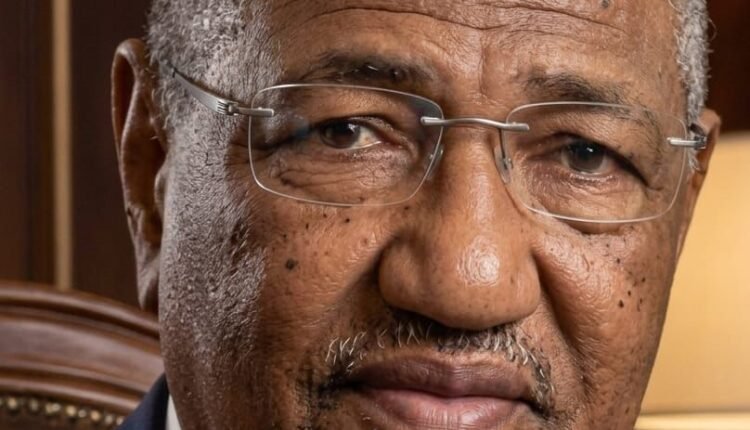
By Fouad Qabbani
The question occupying the minds of all Sudanese people today is: How can we rebuild Sudan?
Sudan is a country endowed by God with resources and riches that many other nations lack. Yet the cycle of wars that has continued since the era of Muhammad Ali has obstructed its development, while those seeking to exploit the country have competed over its wealth, its people, and its land.
At that time, gold and money lay at the heart of such ambitions. Today, however, global interests have expanded to include copper, uranium, silica, precious minerals, water, and land—all resources with which Sudan is abundantly endowed. This has intensified international competition and multiplied the rival blocs and alliances seeking influence over the country.
Today, after the state has made progress on several fronts, the next stage requires political courage equal to the courage displayed on the battlefield. The Chairman of the Sovereignty Council, Lieutenant General Abdel Fattah al-Burhan, should call for a peace of the brave and open direct dialogue with those who support and fuel the war, to establish a practical mechanism to stop the bloodshed. The continuation of the war means the continued bleeding of the nation and the depletion of its resources.
The reconstruction of Sudan must be founded upon a clear vision and a comprehensive strategic plan. This should begin with the establishment of a Ministry of Strategic Planning, reporting directly to the Presidency, which would collect the studies, research, proposals, and articles already produced on Sudan’s reconstruction and transform them into practical, implementable programmes.
Infrastructure must be placed at the top of the list of priorities, particularly roads and transport. Sudan’s development has been held back largely by the weakness of its road network and its dependence on single-carriageway roads that are incapable of meeting the demands of modern development.
The railway network should also be modernised by adding a second track to the principal routes. This would improve the movement of trains, reduce transport costs, and connect production areas more effectively with ports and markets.
In the aviation sector, Sudan should enter into a genuine partnership with a specialised international company to modernise Sudan Airways and restore its regional and international role.
In the electricity sector, Sudan must make greater use of solar power and other renewable energy sources. Hydroelectric generation should also be developed by improving and expanding its productive capacity to meet the electricity needs of industry and everyday life.
Agriculture, the driving force of the Sudanese economy, requires serious investment and strategic partnerships with friendly and neighbouring countries, particularly Egypt and China. These partnerships should focus on modern agriculture, agro-processing, and livestock production in order to achieve food security and increase exports.
In the mining sector, opportunities should be opened to international companies according to transparent and equitable principles. Competition should be based on the quality of the offers submitted and the level of returns they provide, in a manner that serves Sudan’s interests and safeguards its resources.
Human beings, however, remain the foundation of all progress. No country can advance or achieve stability while its people suffer from inadequate education and remain unable to keep pace with scientific and technological development. Reforming education and investing in human development must therefore rank among the state’s highest priorities.
Above all, we need to return to a system of sound values and moral principles, to our authentic heritage, and to the teachings of our noble faith. In doing so, we may restore a society founded upon honesty, justice, and benevolence. When people are upright, nations prosper; and it is through work, knowledge, and sincerity that Sudan will be rebuilt.
Rebuilding Sudan is not merely a government project. It is a national undertaking, a responsibility shared by the people, and a trust placed upon us all. By making proper use of our resources, uniting our will, and working with sincerity, Sudan will, God willing, once again become a beacon of production, an oasis of stability, and a model of a state whose people built its future with their own hands.
So stand together and straighten your ranks—may God have mercy upon you.
Shortlink: https://sudanhorizon.com/?p=16219