

Hamad bin Khalifa: Novel “Al-Mu’tasim” Who Protected Lives and Honor in Darfur
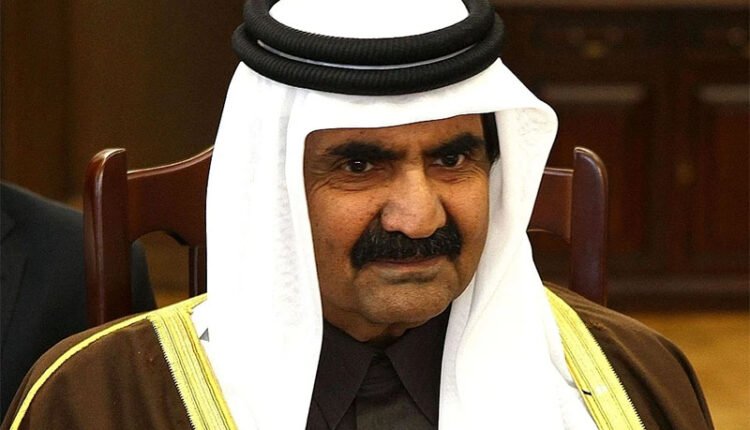
Investigator – Agencies
In Sudan’s River Nile State, the model village of “Rifqa” displays its beauty to the world, delighting onlookers with its yellow walls, its magnificent mosque topped by a green dome, and a minaret that reaches for the sky.
From afar, one would have no doubt that the villagers are wealthy or at least well-off. However, the reality is quite different; they are all orphans whom Qatar sheltered after war claimed their families and left them destitute.
Rifqa is just one of 75 model villages built by Qatar in recent years, fulfilling the pledge made by the Father Emir, the late Sheikh Hamad bin Khalifa Al Thani, to help the people of Darfur and Sudan in general live in dignity and security.
The late Emir, who passed away on Sunday at the age of 74, declared on that momentous day that “the time has come for Darfur and its people to enjoy stability after so much suffering, and to be able to return to their homes and resume their normal lives with the basic necessities for a dignified existence.”
Engagement, Pressure, and Achievement:
This statement was made in Doha during the announcement of the Darfur Peace Agreement, which followed 30 months of negotiations mediated by Qatar. Qatar dedicated its political and financial resources to overcoming all obstacles to achieving peace.
Qatar became involved in the Darfur crisis in 2008 after numerous reports of bloodshed and atrocities in this Arab Muslim region, which was once the center of a powerful sultanate that provided the Kaaba’s covering annually.
According to UN figures, the war in Darfur resulted in 300,000 deaths between 2003 and 2013, and displaced millions from their homes and villages.
Because blood had been shed, families severed, and sanctities violated, strenuous efforts were needed to bring the warring parties closer together: the government with its army and tribes, and the armed rebel movements supported by some neighboring countries.
For more than two years, Qatari diplomats shuttled between Arab, African, and Western capitals, exerting all means of political pressure on the parties to the conflict and compelling them to reach a peace agreement that would end the suffering of millions displaced in search of safety.
Doha became a destination for all components of the military and political landscape in Sudan, and the parties were convinced of its role as a serious mediator capable of achieving peace, redressing grievances, healing wounds, and rebuilding the country.
These efforts bore fruit in April 2013 when Sheikh Hamad bin Khalifa, then the Emir of Qatar, announced to the parties and regional partners the Doha Agreement for Peace in Darfur.
Security, Housing, and Education:
Peace required development to sustain it. Qatar provided $500 million to build houses, schools, markets, and mosques, creating the conditions necessary for security and stability.
During one phase of reconstruction, Sudan signed an agreement with the Qatar Fund for Development to construct 10 model villages in Darfur at a cost of $70 million.
In a previous phase, model service complexes were built in the five Darfur states at a cost of $32 million.
Following this, development projects and model villages continued to be established throughout Darfur to address grievances, heal wounds, and meet the requirements for security and stability.
In a third phase, Qatar funded 12 short-term projects at a cost of $88.5 million. These projects aimed to build confidence in a future based on peace and stability, reduce reliance on humanitarian aid, and provide real alternatives for young people and women by offering education and livelihood opportunities to prevent a return to conflict.
At the time, Musa Mohamed Ahmed, the former Sudanese president’s assistant, stated that Qatar’s establishment of model villages aimed to contribute directly to peacebuilding and achieving security and stability after the decline of fighting and violence.
The Good Deeds:
Though the Emir has departed this world, he has left behind in Sudan a lasting legacy, profound wisdom, and an enduring legacy. Millions of people pray for God’s mercy and forgiveness upon him.
These sentiments were embodied by Sudanese elites in their comments on the passing of the Father Emir. Sudanese Foreign Minister Mohi El-Din Salem spoke of the Father Emir’s role in achieving stability in Darfur through his efforts in ensuring the success of the Doha Agreement and its impact on resolving Sudan’s problems.
In a eulogy broadcast to the media, Mohi El-Din said, “Were it not for Qatar, we would not have achieved the stability that Darfur enjoyed for years before the cursed war” that erupted again a few years ago.
Doha did not stop there. “The Qataris strive with us in every way, big and small, to heal our wounds and guide us with wisdom so that we may restore stability to our country.”
Mustafa Osman Ismail, a former Sudanese foreign minister, praised the late Emir’s legacy, considering his passing a loss for the Arab region due to his political and humanitarian contributions and development projects that solidified Qatar’s regional and international standing.
Ismail testified to what he knew, telling Al Jazeera that the late Emir was a statesman with a strategic vision in politics, economics, and foreign relations. He defended the causes he believed in and played a role in supporting peace efforts, economic cooperation, and humanitarian work in several Arab countries.
Naturally, the people of Darfur mourned the loss of Al-Mu’tasim, who had come to their aid from afar. The governor of the region, Minni Arko Minawi, wrote: “The deceased dedicated his life to serving his nation and left behind a lasting legacy in the fields of giving and humanitarian work.” The message of condolence read: “The name of the State of Qatar is linked in the hearts of the Sudanese people—especially the people of Darfur—with noble and unforgettable stances, embodied in its sincere support during the most difficult times through the establishment of hospitals, schools, and health centers, and the provision of relief and aid to those affected. It was a pillar of support for our people when crises intensified.”
(Source: Al Jazeera Net)
Shortlink: https://sudanhorizon.com/?p=15942