

Sudanese Memory: No Cause for Surprise—This Was Ismail Al-Azhari
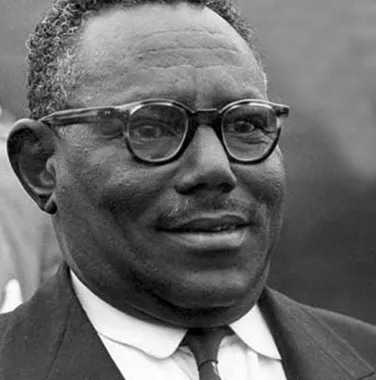
Mohamed Elsheikh Hussein
The phrase “No cause for surprise—this was Ismail Al-Azhari” captures an important aspect of the life and character of Sudanese leader Ismail Al-Azhari, the first Prime Minister of independent Sudan, who served from 1954 to 1956.
These words, coined by the pioneering educator and reformer Babiker Badri, offer a concise yet powerful reflection of Al-Azhari’s remarkable character and the esteem in which he was held throughout Sudanese society.
The story behind the phrase dates back to the period following the signing of the Anglo-Egyptian Agreement on Sudan.
The agreement, signed on 13 February 1953, paved the way for Sudan’s first parliamentary elections, in which the National Unionist Party, led by Ismail Al-Azhari, won 30 of the 97 parliamentary seats.
On 9 January 1954, Al-Azhari formed Sudan’s first national government—the first Sudanese administration to govern the country since the beginning of Anglo-Egyptian colonial rule in 1898.
One revealing glimpse into Al-Azhari’s character emerged during the historic parliamentary session at which he was elected Prime Minister. The account was recorded by Abdul Rahman Ahmed Mahdi, who later served as Al-Azhari’s chief of staff during his tenure as Chairman of the Sovereignty Council following the October 1964 Revolution. In his book, Stories of Ismail Al-Azhari: The Leader and the Man, he recounts an anecdote narrated by Professor Yousif Badri, who regarded Al-Azhari as the embodiment of a true statesman.
According to Abdul Rahman Ahmed Mahdi, Professor Yousif Badri recalled that his father, Sheikh Babiker Badri, attended the historic parliamentary session to witness Al-Azhari’s election as Prime Minister after the National Unionist Party secured a parliamentary majority.
Naturally, Al-Azhari was at the height of his joy on that occasion, as the moment represented the culmination of years of political struggle.
Professor Badri continued that, as Al-Azhari was making his way into Parliament, he noticed Sheikh Babiker Badri approaching the building, leaning on his walking stick. Instead of continuing towards the chamber, Al-Azhari walked over to him, took him by the hand, and personally escorted him to his seat inside the hall.
A correspondent from The Times witnessed the scene, photographed it, and later published the image with a commentary highlighting how, at such a defining moment in his political career, Sudan’s incoming Prime Minister chose to devote his attention to one of the nation’s great educators.
When Professor Yousif Badri showed his father the photograph and the accompanying article, Sheikh Babiker Badri simply remarked:
“No cause for surprise—this was Ismail Al-Azhari.”
This simple but profound observation provides an excellent introduction to the life and legacy of Ismail Al-Azhari—the leader and the man. Histories of Sudan, whether written by Sudanese or foreign authors, often fail—whether inadvertently or otherwise—to do justice to Al-Azhari’s personal qualities and his conduct in public office.
Those who knew him closely, however, believed that as Head of Government he set an exceptional example, not only for Sudan but for the wider region and beyond—an example worthy of being remembered and studied as a model of principled public leadership.
Ismail Al-Azhari was born in 1900 and died on 26 August 1969. He remains one of the most prominent figures in Sudan’s modern political history.
He began his career as a schoolteacher, educating generations of Sudanese students before entering politics. He became Sudan’s first Prime Minister, serving from 1954 to 1956, and had the historic honour of raising the Sudanese flag on 1 January 1956, marking the country’s independence.
Later, he served as Chairman of the Sovereignty Council—effectively Sudan’s Head of State—from 1965 until he was overthrown in the military coup led by Colonel Jaafar Mohamed Nimeiri on 25 May 1969.
Shortlink: https://sudanhorizon.com/?p=15503