

In Response to Ambassador Murawih’s Article: “Is The Fragmentation of the RSF the Safest Solution?”
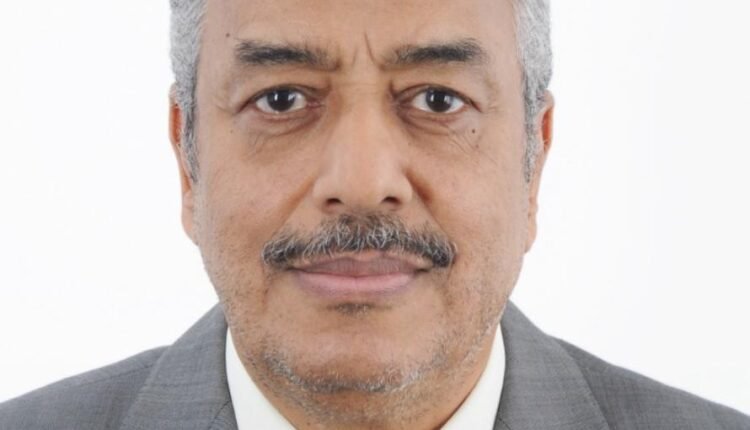
Dr Ismail Sati
In his insightful two-part article entitled “The Fragmentation of the Rapid Support Forces: Is It the Safest Solution?”, Ambassador Al-Obeid Ahmed Marrouh offered a coherent and profound reading of the Rapid Support Forces (RSF) phenomenon: its origins, composition, and the transformations that carried it from a force created within a specific domestic military context into a political, military and social phenomenon that has transcended Sudan’s borders and become a cross-border threat throughout the Sahel-Sahara region.
One of the article’s greatest strengths, in my view, is that it avoided the trap of oversimplification. It did not present the RSF merely as an armed rebellion or a power dispute. Rather, it examined it as a complex phenomenon with roots in Sudanese history, extending across geography, and with tribal, political, and economic linkages that reach far beyond Sudan into its wider regional environment. This is an important—indeed indispensable—approach.
Yet the article also raises another question, one that may now be even more pressing at this stage of the war: what if some actors, inside or outside Sudan, begin to imagine that separating Darfur or transforming it into an independent entity could provide a way out of the crisis?
In my view, this is one of the most dangerous political illusions that this war could generate.
Darfur is not a piece of land that can simply be detached from Sudan, after which stability will somehow emerge automatically. Nor is it a political issue that can be resolved by drawing a line on a map or imposing a temporary military reality.
By virtue of its geography, history, and demographic composition, Darfur is neither isolated from Sudan nor detached from the wider Sahel-Sahara region. It is organically connected to Chad, the Central African Republic, Libya and Niger. It is a crossroads where interests, tribes, economies, migration routes, trade networks and smuggling corridors intersect in ways that make any instability there highly likely to spread throughout the region.
For that reason, anyone who believes that the emergence of a separate entity in Darfur under the present circumstances would produce stability is reading the situation in an extremely simplistic manner.
The real question is not whether Darfur can be politically separated. The more important question is: what would emerge on the ground in Darfur if the authority of the Sudanese state were dismantled there?
Would a stable state arise, equipped with functioning institutions, secure borders and a viable economy?
Or would we instead be faced with an open space in which armed groups move freely, cross-border loyalties compete for influence, and economies based on weapons trafficking, smuggling, recruitment and disorder flourish?
In my assessment, the latter scenario is, regrettably, the more likely.
If Darfur were to leave the framework of the Sudanese state under the pressure of arms and chaos, it would not simply become a stable new state. Rather, it could become a sharp thorn in the side of all neighbouring countries.
At that point, the consequences of the crisis would no longer remain within Sudan’s borders. Instability in this belt would not stop at national frontiers. It would spread through tribal networks, markets, arms flows, displacement movements and shifting alliances, reproducing itself across the region.
Any political, military, or financial support extended to the RSF by regional or international actors, on the assumption that it constitutes a useful pressure card or a means of securing influence within Sudan, is, in reality, a short-sighted calculation.
From a strategic perspective, it is a flawed wager.
Those who rely on a cross-border militia to weaken the national state may eventually discover that they have not created a balance of power; rather, they have opened a door that may prove impossible to close.
The experiences of neighbouring regions—and indeed of more distant ones—remain vivid reminders of this reality.
This is why the point raised by Ambassador Al-Obeid Marrouh regarding the efforts of Sudanese state institutions, including the security and intelligence services, to expose the dangers posed by the RSF is so important—not merely for Sudan, but for the wider region.
In my view, Sudanese diplomacy, through its institutions and state apparatus, should take this argument a step further.
It is no longer sufficient to address the international community solely from the standpoint of political legitimacy. Nor is it enough to present the matter simply as an internal conflict between a state and insurgents.
The issue should be framed as a direct question of regional stability.
The message to neighbouring countries should be unequivocal: supporting the internationally recognised Sudanese state is not a matter of taking sides in a domestic political dispute. It is a direct investment in regional security and stability.
Weakening Sudan’s central state, tolerating militia projects, or betting on the imposition of armed realities in Darfur will not produce lasting peace. On the contrary, it risks opening the entire region to a new wave of instability and disorder.
Sudan today is not merely defending its territorial unity or its political borders. At this sensitive historical moment, it is also defending the broader equation of regional stability.
If Darfur achieves stability within a strong and just Sudanese state, it can become a bridge for integration and cooperation between Sudan and its western neighbours.
If, however, it is left to chaos, or treated as a territory open to partition and bargaining, it will not evolve into a stable new state. Rather, it risks becoming an open centre of instability capable of exporting disorder throughout the region.
At this point, the issue transcends day-to-day politics. It becomes a question about the future of the state, the region and generations to come.
For this reason, the debate opened by Ambassador Al-Obeid Marrouh should not stop at describing the RSF phenomenon or analysing its structure, important though that is.
It must extend to a larger question:
How can Sudan protect itself from projects of fragmentation?
And how can it persuade the region that its true interest lies not in managing instability inside Sudan, but in supporting the Sudanese state until it fully regains its strength and capacity?
The cost of supporting the state, whatever it may be, remains far lower than the cost of total collapse.
This is the message that Sudanese diplomacy should be delivering today with confidence and clarity:
Sudan is not asking its neighbours for temporary political support. It is presenting them with a strategic reality that is impossible to ignore:
Either there is a stable and united Sudanese state, or there will be an open-ended regional crisis whose consequences will not stop at Sudan’s borders—and from whose repercussions no one will be spared.
Shortlink: https://sudanhorizon.com/?p=14386