

We Bear Witness That Al-Burhan…
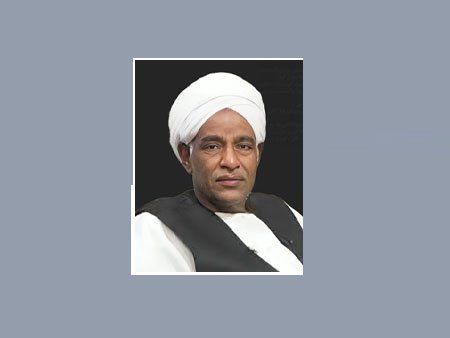
Mahjoub Fadle Badri
The following may surprise many friends, relatives, and colleagues — particularly those in the media — but I have never met General Abdel Fattah al-Burhan in my life to this day. Not at the General Command headquarters, nor at the Guest House, nor at the Presidential Palace, nor even at any social occasion, whether joyful or mournful.
I begin with this clarification because I wish to testify that General al-Burhan is a man who stepped forward when others hesitated, stood firm when many faltered, and remained resolute when others lowered their heads.
It was he who entered the lion’s den at dawn to inform President al-Bashir of the decision taken by the Security Committee — despite not being a member of that committee himself. I once asked General Awad Ibn Auf, at the residence of Ambassador Abdel Mahmoud, after the change of power, why he had not personally informed al-Bashir of the committee’s decision, given that he was both the First Vice-President and Chairman of the Security Committee. He replied verbatim: “The President was like live fire — anyone who came near him would be burned.”
That answer alone stands as testimony to al-Burhan’s courage and boldness, regardless of whether one agrees or disagrees with the committee’s decision itself.
This is one point among others, including the commendation in Awad Ibn Auf’s second statement, in which he appointed Lieutenant General Abdel Fattah al-Burhan Abdelrahman as Chairman of the Transitional Military Council in his place.
Al-Burhan assumed leadership while Sudan was passing through circumstances that can scarcely be described as anything less than catastrophic. Yet he did not hesitate to take the measures he deemed necessary to safeguard the country’s borders against the ambitions of opportunists, the schemes of conspirators, and foreign interventions from every corner of the globe.
Despite his limited political experience, he managed to navigate numerous traps laid before him under various banners and slogans — until war finally erupted at a time when the army itself was not fully prepared for it.
At that moment, his leadership on the battlefield became apparent, beginning with his direct involvement in the Battle of the Guest House, where the Presidential Guard displayed extraordinary courage and sacrifice. The entire force was martyred, and the final words of the commander of the Presidential Guard to his men were: “We leave you in God’s care… Protect the Commander.”
These are words al-Burhan will never forget for the rest of his life, for he owes his survival to those martyrs.
We also testify to al-Burhan’s composure and courage during the days when Hemedti appeared on television, threatening him with surrender or death, while Abdel Rahim Dagalo mocked him publicly, at times claiming that al-Burhan was trapped in a basement beneath the General Command and that “we are guarding him there.”
Then came the moment that astonished everyone: al-Burhan appeared at dawn one day in Karari — among the strongholds of the army — casually speaking with a soldier who stared at him in disbelief. Al-Burhan jokingly told him: “Take a good look!” before sitting on a plastic chair and drinking a single cup of coffee from a tea vendor.
The Commander-in-Chief had successfully broken the siege surrounding the General Command through a fully fledged military operation, from planning to execution. His exit was not the result of a deal or mediation. The operation later known as “The Return of the Rhinoceros” will remain one of the defining lessons of what supporters call the “War of Dignity,” a war whose chapters are not yet fully closed.
Perhaps it was this daring operation — paid for in blood by army soldiers — that earned al-Burhan the nickname “The Kahin” among some supporters, while driving Abdel Rahim Dagalo into furious disbelief, repeatedly claiming that al-Burhan had escaped disguised in sandals and flown out in a small aircraft. Ironically, even the enemy’s words became a reluctant testimony to al-Burhan’s audacity and ingenuity.
Throughout the war, al-Burhan paid little attention to criticism regarding battlefield management. The military leadership assessed that the army’s priority lay in preserving its most strategic positions and units, such as the Armoured Corps and the Signals Corps, both of which endured intense attacks. Army soldiers held their ground firmly in the midst of battle, offering martyr after martyr until they succeeded in expelling the militia from the capital, Al-Jazirah, Jabel Moya, and numerous other locations.
Even amid the war, al-Burhan did not neglect the routine institutional procedures that normally continue during peacetime. As Commander-in-Chief of the Sudanese Armed Forces, he approved what are known as the army’s “four T-lists”: appointments, promotions, transfers, and retirements. Among those retired were officers who had become celebrated figures during the battles, prompting widespread criticism and attacks on social media. Yet he did not reverse his decisions, acting in accordance with the military leadership’s assessments. Eventually, the uproar subsided — and perhaps one of a commander’s greatest qualities is precisely this: not looking backwards, but moving forward according to military regulations rather than emotional pressures.
Among the many examples of al-Burhan’s courage was the assassination attempt in Jebeit, where a drone targeted him while he stood on a platform presiding over the graduation ceremony of a new class of officers.
Equally striking was his composure in the face of personal tragedy. When his son died in a traffic accident in Turkey, he travelled, buried his son, and returned as though nothing had happened.
All these moments — together with his visible interaction with ordinary people in the streets, his willingness to eat and drink among the public without elaborate security barriers or excessive personal protection — helped him earn a place in the hearts of many Sudanese.
Through his simplicity and courage, al-Burhan has built a relationship of trust with broad segments of the public, whose support for him appears to grow wherever he goes. The slogan “One Army, One People” has become a chant repeated everywhere.
His opponents may continue spreading rumours that he seeks negotiations with the militia or its supporters, or that he has welcomed former militia leaders and even honoured some of them with gifts. Yet supporters argue that such actions fall within the tradition of winning hearts and reconciling people — a principle with precedent in Islamic tradition. Abu al-Darda once said: “We smile in the faces of some people while our hearts curse them.” The meaning here is diplomacy, gentle speech, and good conduct aimed at warding off harm and securing the greater public good.
According to his supporters, al-Burhan’s leadership preserved Sudan from collapse during what they view as an existential war. Whether through strategic deception or military calculation, they believe he will never compromise the country’s security, the safety of its people, or the sacrifices of its army.
This, then, is my testimony for God’s sake alone. I seek neither reward nor gratitude from it. Al-Burhan himself does not need such testimony — whether from those who attack him out of hostility or from those who affectionately nickname him “The Kahin,” whether he travels, stays, speaks, eats, or drinks.
And God has His own wisdom in the affairs of His creation.
Shortlink: https://sudanhorizon.com/?p=13966