

At the Time of Examination, One is Either Honoured or Humiliated
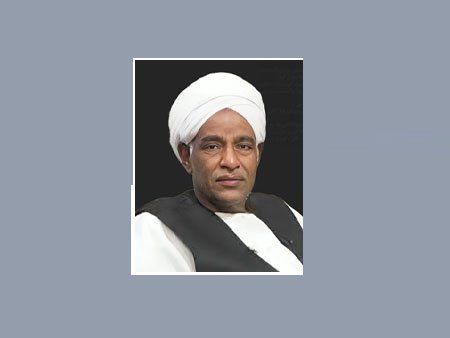
Mahjoub Fadl Badri
A profound piece of wisdom and a solemn phrase that echoes in the ears of students at all stages—“At the time of examination, one is either honoured or humiliated”—until one eventually realises that life, in all its shifting turns, is itself a test.
“Every soul shall taste death, and you will only be given your full recompense on the Day of Resurrection. So whoever is kept away from the Fire and admitted to Paradise has truly succeeded. And the life of this world is nothing but the enjoyment of delusion.”
(Qur’an)
In our student days, the necessities of life were far simpler. They did not carry the complexity that our children must now confront. Education was stable and uninterrupted from the beginning of the academic year to its end. Nothing disturbed its rhythm—neither curricula, nor academic stages, nor textbooks, nor seating arrangements, nor school uniforms, nor teachers, nor timetables.
Sporting, cultural, and social activities in all schools were an integral part of the educational process, even with the most modest resources. Security was never a concern; it was simply taken for granted. Examinations required no more than a single policeman, armed with an old rifle, guarding the exam centre—a mere symbol of authority. We did not appreciate the blessing of security until we lost it. Today, in some parts of our country, holding examinations requires full military convoys.
All these thoughts crossed my mind as I watched my daughter, Maryam, preparing to sit for her primary school certificate examinations—the gateway to secondary education.
Maryam completed her entire primary education in Egypt, away from her homeland. This means she has not experienced the reality of our country, which differs profoundly from the conditions her peers there have known—especially before the “War of Dignity” and the immense hardship and suffering into which students and their families have been thrust.
May God deal with the Dagalo militia—the enemies of humanity. They are either criminals or ignorant, spiteful individuals who have systematically destroyed educational institutions under the pretext of “seeking democracy,” as they claim, without understanding.
A salute to our army, to the supporting forces, to our leadership, and to all those who sacrificed their lives for our country—just as the words of the national anthem declare:
“We are the soldiers of God, the soldiers of the homeland.
If the call to sacrifice is heard, we shall not betray.
We defy death in times of hardship,
We purchase glory at the highest price.
This land is ours—may our Sudan live, a beacon among nations.”
Our nation lives by these words; they are not mere slogans, but a way of life we are destined to embody.
Maryam longs deeply to return to Sudan. It is a dream that never leaves her thoughts. She repeats day and night:
“O Lord, let us go back to Sudan—I miss our home.”
My deepest thanks and appreciation go to those responsible for education in our country, who burn like candles to light the way for future generations under conditions that are, by any measure, extraordinarily difficult.
We pray for Maryam and her classmates, wishing them success. And we repeat the saying:
“At the time of examination, one is honoured or humiliated.”
We ask God to honour her with success.
This is also an occasion to extend greetings to the distinguished Mr Hussein Khojali and to congratulate him on regaining his sight after a severe ordeal.
I recall his congratulations when God blessed me with a daughter, and I named her Maryam. With joy mixed with astonishment, he said:
“A gift in old age is a blessing from the unseen.”
And here she is, Hussein—Maryam—stepping confidently into the intermediate stage. God willing, she will return to her homeland to continue her secondary education.
Wishing you all a blessed year.
Shortlink: https://sudanhorizon.com/?p=13237