

Educating Daughters, Elevating Nations: An Islamic Imperative Misunderstood
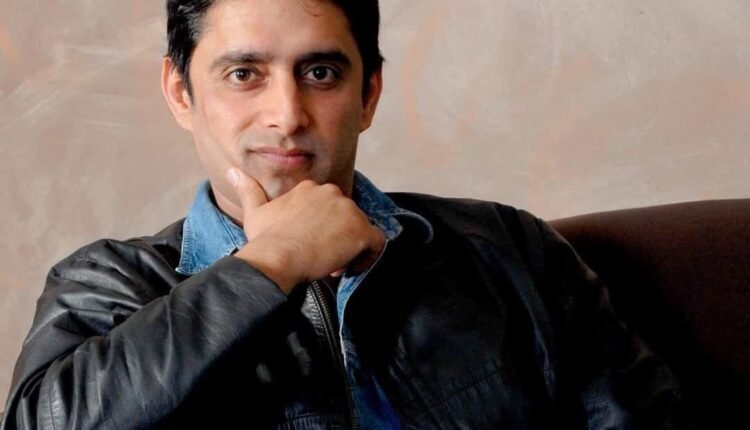
By: Salim Mohamed Badat **
In many parts of the Indo-Pak subcontinent, a troubling contradiction persists. Communities that proudly identify as Muslim, whose faith begins with the command “Read”, often deny their daughters the very tool that uplifts civilizations: education.
This is not a failure of Islam. It is a failure of understanding Islam, clouded by culture, fear, and inherited misconceptions.
Too often, young girls are withdrawn from school under the mistaken belief that modesty requires ignorance, or that domestic roles negate intellectual development. But this narrative is neither rooted in the Quran nor the Prophetic tradition. It is, instead, a distortion, one that quietly suffocates generations of potential.
The First Command: Read.
Islam did not begin with ritual, it began with knowledge. The first revelation to the Prophet Muhammad (saw) was:
“Read in the name of your Lord who created.” (Quran 96:1)
This command was not gendered. It was not exclusive. It was a universal call to awaken the intellect, to seek understanding, and to engage with the world through knowledge.
Allah further elevates the people of knowledge: “Are those who know equal to those who do not know?” (Quran 39:9)
And:
“Allah will raise those who have believed among you and those who were given knowledge, by degrees.” (Quran 58:11)
Nowhere does the Quran restrict this elevation to men alone. The pursuit of knowledge is a shared obligation, spiritual, intellectual, and societal.
The Prophetic Legacy: Knowledge for All.
Prophet Muhammad (saw) explicitly stated: “Seeking knowledge is obligatory upon every Muslim.”
The word Muslim here includes both male and female. Early Muslim society did not debate whether women should be educated, it produced women who became teachers, jurists, and scholars.
Consider Fatima al-Fihri, who established the University of Al-Qarawiyyin in Fez, Morocco, recognized as the oldest continuously operating university in the world. Her vision was not limited by gender; it shaped global intellectual history.
Or Rabia al-Adawiyya, whose spiritual insight and scholarship influenced generations of scholars and seekers.
These women were not exceptions, they were products of a civilization that understood that knowledge is not the privilege of men, but the right of every believer.
Culture vs. Religion: A Dangerous Confusion.
In the Indo-Pak subcontinent, cultural practices have, over time, been dressed in religious language. Families withdraw daughters from school at puberty, fearing social scrutiny, misinterpreting modesty, or believing that education is unnecessary for a future confined to the home.
But the injustice does not end there.
Over and above denying them education, we compound the harm by forcing these same daughters into marriages they do not want. Girls who are still children, who have not yet discovered who they are, who have barely begun to understand their own thoughts, their own hopes, their own place in the world, are suddenly told that their life now belongs to someone else.
There is a quiet tragedy in this.
A girl who once laughed freely begins to fall silent. A child who once dreamed begins to shrink those dreams into something small enough to survive.
Her books are closed, not because she has finished learning, but because her story is being rewritten without her consent.
And perhaps what makes this even more painful is that, in so many cases, these very girls are the bright sparks in our schools. They are often the ones who excel, who grasp concepts quickly, who show discipline, curiosity, and intellectual promise.
Yet it is precisely these minds, full of potential, that are pulled out, dimmed, and redirected away from growth.
This is not just a social issue, it is the breaking of a human being. Her heart learns early what it means to be unheard.
Her spirit is burdened before it has had the chance to grow strong.
Her future, once open and full of possibility, is narrowed into a path she did not choose. And the most painful part is this: it is often done in the name of care, of protection, even of religion.
But there is another argument often presented to justify this reality.
Some claim that high schools and universities are not suitable environments for girls, pointing to intermixing, moral dangers, and the vices present in modern institutions. This may sound like concern. But if we examine it honestly, it exposes a deeper inconsistency.
We have had generations, decades upon decades, to prepare alternatives. If intermixing was truly the concern, where are the fully developed girls high schools?
Where are the women-only universities, the medical schools, the technikons, the institutions staffed by qualified female lecturers?
Why did we not build them? Why did we not invest, organise, and prioritise the creation of safe, dignified environments for our daughters to learn?
The answer is uncomfortable: because, in many cases, there was no real intention to educate them at all. If the will existed, the institutions would exist.
The irony is striking. When our mothers, wives, and daughters fall ill, we urgently seek female doctors. We express discomfort, even outrage, at the idea of male practitioners attending to them. Yet at the same time, we participate in a system that actively prevents our girls from ever becoming those very doctors.
We demand the outcome, but we deny the process.
This is not protection. It is contradiction.
And alongside this contradiction, the deeper injustice continues. There is nothing protective about taking away a child’s voice. There is nothing righteous about silencing her will.
When a girl is denied education and then forced into marriage, we are not simply limiting her opportunities, we are reshaping her entire existence under pressure, molding her into acceptance before she has even had the chance to understand resistance.
Silence becomes her language.
Endurance becomes her only option.
This is a deep and layered injustice, one that deserves its own discussion, but it cannot be ignored here. Because the two are inseparable. When you deny her education, you weaken her ability to question. When you weaken her voice, you make it easier to override her choice.
And then culture steps in, not as guidance, but as force.
Let us ask honestly: where does Allah command this? The truth is uncomfortable, what is often presented as “Islamic” is, in many cases, cultural insecurity masquerading as piety.
Clipping Wings Before Flight.
When a girl is denied education, we do not simply limit her career prospects, we diminish her entire existence and shatter her dreams. We silence her voice. We make her dependent in a world where knowledge is power.
The False Dichotomy: Home vs. Education
There is a misleading narrative that educating women somehow undermines their role in the home. This is a false dichotomy.
Islam does not force women into careers, nor does it forbid them. It honors their role within the family, but it does not demand ignorance as a prerequisite for that role.
What is lost by educating a daughter?
Does knowledge make her less capable of being a mother? Or does it make her more aware, more articulate, more nurturing, and more effective?
Education does not erase femininity, it refines it.
A Return to True Islam.
If we are sincere in our desire to follow Islam, then we must separate revelation from tradition, from culture. The early Muslim world thrived because it embraced knowledge, across genders, races, and regions. Libraries flourished. Universities were established. Women taught men, and shaped intellectual discourse.
We must ask ourselves:
Are we following the Prophet (saw), or the customs of our ancestors?
Conclusion: Restoring What Was Lost
Denying education to girls is not an act of piety, it is an act of injustice. Forcing them into marriages they are not ready for only deepens that oppression.
It is clipping the wings of a child before she has even learned to fly. It is not just the loss of opportunity, it is the quiet breaking of a heart, the silencing of a voice, the dimming of a soul before it has had the chance to shine.
It is the extinguishing of brilliance, the quiet erasure of minds that could have illuminated families, communities, and entire nations.
It is burying potential, not in the sand as in pre-Islamic ignorance, but in the silence of missed opportunity. If we truly wish to revive the ummah, we must begin with knowledge. Educate your daughters. Protect their dignity by empowering them, not by silencing them. Revive the legacy of women like Fatima al-Fihri.
Because when you educate a woman, you do not uplift one life, you transform generations
**Salim Mohamed Badat
Writer exploring the intersection of faith , politics and justice
Shortlink: https://sudanhorizon.com/?p=13166