

The Drama of Tales of Region X: Art as Resistance, Heroism, and a Chisel for Shaping Truth
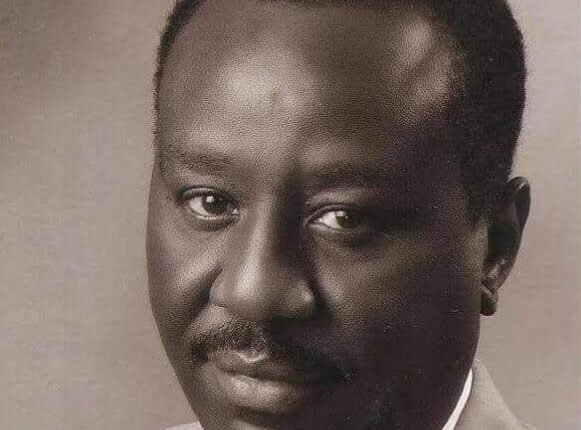
Dr Fadlallah Ahmed Abdallah
1
One of the clearest expressions of the relationship between art and resistance comes from the South African creative artist Thami Mnyele, who said:
“A work of art must complement the process of creating shelter for my family or liberating my country. That is culture.”
Before him, the Chinese communist leader Mao Zedong moved in the same direction as he did when he said:
“Literature and art must become an effective part of our revolutionary machine, a powerful weapon with which we unite and educate our people, attack and destroy the enemy, and help our people fight the enemy with one heart and one will.”
Some may see such a call as a direct affront to the beauty of art.
But Gilles Deleuze goes beyond such narrowly aesthetic frameworks, saying:
“Art, in its total conception, goes beyond the limits of beauty as commonly understood as an activity belonging to the artist alone. Rather, it affirms the paradoxes and contradictions of life and transforms them into an artistic and aesthetic phenomenon worthy of being lived. Within this strategy, it invents and carves out a constellation of concepts directed against the will to negation: desire, joy, dance, laughter. Art makes life possible—indeed, worthy of being lived.”
Its function, in purpose and aim, parallels that of science and philosophy. It is a creative human activity, born and nurtured within humankind’s philosophy and its attitudes towards the world around it.
Art was born from the first human being’s use of stone as a means of documenting victories upon the walls of caves.
From the darkness of those caves, art emerged into bright light. From the deceptions of hunting expeditions, it moved to the poems of resistance. It walked beside people through all the pathways of their lives, sharing with them the laws of growth and development, of triumph and disappointment, until it stood tall and became one of the constants of existence.
Art—whether written, visual, or auditory—is one of the moulds of delight, wonder, and the warding off of evil. It took its first steps away from the desires of tyrants and wrongdoers, committing itself instead to the causes of humanity. In doing so, it liberated humanity and was itself liberated.
Serious art is that which takes ideas as a bridge to emotional, human, and social truths.
And the artist is a profound reader of the emotions of his social environment. He makes the audience feel that the artistic achievement before them is a magnificent portrayal of their life through art—a revelation first of their own self as human beings: a self in all its ambiguity, complexity, virtues, faults, contradictions, and beauty.
It is also a revelation of national identity—an identity that resists all forces of erasure and obliteration. It is a symbolic battlefield, a means of defiance, and an instrument for defeating death and nothingness.
In that sense, the Iliad and the Odyssey shone forth in human existence: epic poetic dramas portraying the feats and heroism of the ancient Greeks and their firm struggle against the threats of death and annihilation.
Human societies, past and present alike, in times of severe affliction, have always had among them writers and artists who gave of their talents and creative tools as fighters in their own right.
For them, artistic and creative labour becomes as though it were the only means by which their homelands may emerge triumphant and upright from the furnace of calamity.
2
It is from this radiant essence of humanity in art, resisting the evils that destroy virtue, that the director and artist Abubakr Al-Sheikh has earned his place on Sudan’s roll of national honour, committed to art as a human project. He has carried it beyond the narrow confines of guns and artillery in war, turning it into a chisel for shaping truth and a bullet in the enemy’s throat.
Abubakr Al-Sheikh is a director of remarkable talent. In his broader vision, he focuses on two things.
First, he works to connect contemporary Sudanese societies to the national spirit and its heritage—that is, to link their precious value-based legacy with their present awakening and renewal.
I count myself among those critics who have always admired in Abubakr Al-Sheikh his carrying of the torch of national belonging at this stage in our country’s history. In his dramatic works, I have always appreciated the spirit of renewal and realism.
The second matter I wish to point to is his skilful care in shaping the meanings of spoken, visual, and auditory elements across all his works. These always come in forms suited to audiences of all levels of understanding, distinguished by ease of language and simplicity of form and significance. He offers people vivid pictures of life—and even goes beyond that, seeking to develop and elevate it, responding to events constructively and effectively.
I have already pointed out in more than one article on Abubakr Al-Sheikh’s personal and artistic journey that he entered the profession early and proved immense creative ability first in acting, then in theatrical direction. He crowned his stage experience with the play “The Regime Wants”, a popular production whose scenic composition he rendered with simplicity and a deliberate avoidance of obscurity and inaccessible symbolism.
Other theatrical achievements of political content had preceded this:
A Government at Auction
I Want a People
A Very Honest President
In another artistic field, Abubakr Al-Sheikh mastered directing television dramas. Through persistence, he elevated his experience in Sudanese Tales from the slope of the conventional and familiar in techniques and image composition to another height altogether, excelling in the foundations of visual construction and in a subtle care for detail and the richness of its semiotic meanings.
When Sudanese Tales was written by Qusai Al-Samani, Abdel Nasser Al-Tayef, Ashraf Bashir, and others, Abubakr Al-Sheikh brought those stories on paper to life rather than leaving them as static narratives. The characters’ voices rose not through shouting but through the elevation of situation and meaning.
Abubakr Al-Sheikh believed that art is not absurdity, nor mere entertainment, but responsibility. He never seemed to know fear. At some of the most dangerous turning points in Sudan’s history, he stood at the front, advancing with the spirit of art rather than retreating into illusory ideas that only feed delusion in cultural and artistic spaces.
This confirms for me a fixed conviction: if a director does not believe he can go beyond prevailing concepts and ordinary practices, then it would be better for him to leave the sphere of creativity altogether and not attempt production in the first place. Humility is not the intimate companion of the true creative artist. Art is, after all, a form of steadfastness, a call to truth and sincerity, and a path whose least difficult stretches are full of thorns.
3
We know well the battles of the War of Dignity that we are still enduring and fighting in faith. So what new thing has Abubakr Al-Sheikh said in Tales of Region X?
By what imaginative power did he move beyond events that are inseparable from our daily lives?
Did he manage to cast a strong light on corners of stories that are themselves drops of our blood and riddles made of our torn limbs?
And then, how did he succeed in removing the veils from the meaning of heroism—heroism as we understand it in the War of Dignity being a reflection of the Sudanese people’s own heroism in their courageous support for their national army?
Most critics put such anticipatory questions before any dramatic creator who seeks, for example, to support the war effort, or this revolutionary direction, or that one.
And the question is always: What will he do?
These questions often contain within themselves their ready-made answers:
That he will simply deal with current events and comment on them, and thus we will be faced with a record of events that the viewer himself has already lived through.
This assumes that revolutions and wars need time before they may be commented upon or reflected upon, and the usual wager is that drama made directly in the midst of battle is an experiment that has largely failed. That is, of course, except patriotic songs, because of music’s effect on the senses, and likewise lyrical poetry because of its rhythmic celebration.
Yet at the same time, voices rise asking about the role of literature and the arts in life. Wars, revolutions, and crises that societies pass through are a practical test of their function and importance. Are they merely social ornamentation, or are they a necessity of life?
It is among the accepted truths of knowledge—as we have already indicated—that literature and the arts, since their origin, have been acts of resistance, because they embody humanity’s struggle with circumstances in all their forms, whether imagined or real.
The scholar Mohammed Fouad Rashwan has argued that the use of art in resistance is neither a new invention nor peculiar to any one era or people. If we trace literary آثار across time and place since the birth of literary arts, we find many forms and genres in which literature has been employed in resistance. This indicates a close bond between creativity and human material and spiritual needs.
As for resistance through art, it depends on four elements: the nature of the artist, his individuality, culture, psychology, and willingness to sacrifice for the cause of resistance, and the degree of his faith in it; the nature of the object of resistance itself—whether struggle against colonialism, occupation, or corruption, with the important distinction between the creator’s struggle through art and his struggle on the battlefield; the nature of the art form itself—for what poetry can do in resistance differs from what can be done by story, essay, or song, and each art form is employed according to its particular nature; and finally, the purpose for which that resistance is undertaken.
There is a great difference between resistance aimed at expelling a coloniser or occupier and resistance against corruption or against flawed political conditions. No authentic and serious artistic achievement is devoid of some form of resistance.
On this basis, this article seeks to discuss the overall vision of director Abubakr Al-Sheikh, uncovering some of the obscurities in certain aspects of his creative, dramatic television work in the serialised episodes of Tales of Region X, which were broadcast on Al-Zarqaa Channel on the first day of Ramadan, corresponding to 18 February 2026, across twenty consecutive episodes.
4
The drama of Tales of Region X, put differently in light of the questions posed above, is it a creative achievement that belongs within the sphere of resistance art?
There are three dimensions in which Abubakr Al-Sheikh distinguished himself in these stories.
The first is the social dimension, the second the human dimension, and the third the national dimension.
These three dimensions are the essence of the literature and art of resistance, and we see them shine through in Tales of Region X. Abubakr Al-Sheikh, with notable mastery, avoided the pitfalls of slogan-shouting or of direct reportage that fails to stir the emotions. He took his vision far beyond the sphere of “occasion art”, whose validity ends when the occasion itself passes. He genuinely presented a model of resistant creativity.
All the titles that emerged as major symbolic signs across the serialised episodes of Tales of Region X, despite the variety and differences in subject matter, shared equally in the core of resistance creativity, with its care for the human, social, and national dimensions that inspire faith in the nation.
With his dazzling creative imagination, Abubakr Al-Sheikh managed to command the full array of artistic elements that produce the dramatic work. He harnessed the capacities of the actors, cameramen, technicians, set designers, visual effects creators, and sound specialists—embracing them all, despite the diversity of their talents and the intersections between them, and making of them a single braid. With fine skill he raised the level of harmony and consistency among them, stimulating the loci of their intelligence, and thus produced the tales of the region in all their glowing human meanings rooted in national identity.
It is worth noting that one of the strongest sources of delight and artistic success in the series is the element of dialogue. In Tales of Region X, dialogue fulfilled its function brilliantly: in its vivid portrayal of stories, characters, and atmosphere. Through dialogue, psychological depth expanded, the dramatic event advanced, the plot developed, and the characters’ ideas, emotions, and dimensions were revealed.
Dialogue also exposed the relationships among the characters within the structure of the dramatic event.
On that basis, one can say that Tales of Region X gave tremendous energy in expanding the Sudanese people’s imagination and inflaming it with the values of sacrifice and redemption. It also granted them another power: that of reimagining society itself and its history as a glorious nation with a living history and a magnificent civilisation that produced symbols who became beacons in human history.
That is the important role played by Abubakr Al-Sheikh in presenting a model of resistant creativity that contributes to shaping national identity, the foundation for confronting the enemy.
He affirmed that art is a necessary means of creating a collective understanding of history, one that helps root the nation’s historical identity and enables it to view itself in its historical being—in its three dimensions: past, present, and future. This is what grants every act of resistance and every sacrifice a noble meaning that transcends the present moment and links it to the ancestors’ past and the children’s future.
Through his directorial vision in Tales of Region X, Abubakr Al-Sheikh revealed the importance and value of the performing arts as a necessary imaginative tool for creating a resistant national identity—something that dry intellectual discourse cannot shape or produce as effectively as the performing arts can.
5
If heroism is what the artist دائماً seeks to reveal to the people, then the television dramatic work Tales of Region X distinguished itself in unveiling the meaning of heroism in more than one direction.
Before explaining the matter, it is fitting first to cast some general light on the essence of heroism or the hero—that human being who struggles for elevation and liberation. People are naturally disposed towards freedom and release, as Mohammed Al-Mahdi Al-Majdhoub expressed.
Such a human being is always worthy of love. That is why people search for his like in stories. Greek fingers fashioned statues of him. Even the Arabs of the Jahiliyyah worshipped idols, it was said, because they were images of righteous people from earlier times whose likenesses the people sought in stone. And if people fail to express themselves through images, they turn to creating myths to satisfy a human need. In Sudan, too, we have many stories of horsemen and saints in whose hands wonders were said to occur.
In Arabic creative heritage, heroism is a movement that never ceases, for war itself turned upon it.
Heroism in Arab culture is clearly formed by manliness, courage, eloquence, and a commitment to human ends. It stands on the side of truth.
Based on that, and returning to our central question:
How did the director succeed in removing the veils from the meaning of heroism?
Heroism, as we see it in the War of Dignity, is itself a reflection of the Sudanese people’s heroism in their brave support of their national army.
Yet, despite the above, it is even more fitting to say—and this emerges from the deeper level of this creative effort—that the most radiant hero here is the director himself.
In the history of old Arabic literature, heroism is imagined as creators’ authentic partners of the people themselves. The finest poems about heroism in Arab culture were spoken by heroic poets who carried both sword and pen. The writer or poet hero is the one most capable of expressing the meanings of heroism—“Only he who suffers longing knows longing.”
In this way, the old Arabic poetic tradition preserved for Arab peoples their unity in feeling and their unity in purpose.
Following that same pattern, Abubakr Al-Sheikh bore the burden of talent with his sparkling dramatic symbolism and his fervour for life. His directorial vision became an expression of his remarkable courage, embodied in his steadfast standing with the country, the army, and the people.
If heroism in the old Arabic lexicon meant the courage of heart and body in battle—and that meaning remains alive in the minds and imagination of ordinary people, as Mohammed Al-Mahdi Al-Majdhoub observed—then the meaning of heroism can develop as societies develop and as their view of human conduct changes. Today, for example, we no longer attach great weight to the leaders of modern wars, because war has forever lost its vivid colours, splendour, ancient glamour, and noble traditions from the days when battle was heart against heart and sword against sword.
Abubakr Al-Sheikh reached the highest heights of the meaning of heroism and the hero, as it has evolved in our present time. He was daring in presenting a dramatic image with intellectual content, laying out his noble موقف towards characters, events, and conflict, and offering the people a poetic television dramatic epic. It was as though it were an exercise for surging spiritual energy, driving them to affirm collective identity and shared feeling.
It was a performance that presented a crowded spectacle of characters, with resonant voices speaking to the audience with inherited wisdom and noble ethics.
The hero in Tales of Region X is the director himself—through his elevation, his yearning towards perfection, his unique spiritual power, and his courage in clarifying his own vision in the battles of the War of Dignity, as well as his stubborn resistance to the disguises of Satan, who always finds in creators fertile soil for planting the gravest sin.
Shortlink: https://sudanhorizon.com/?p=12475