

War and Designation: Will the Dismantling of Sudan Begin Through Sanctions?
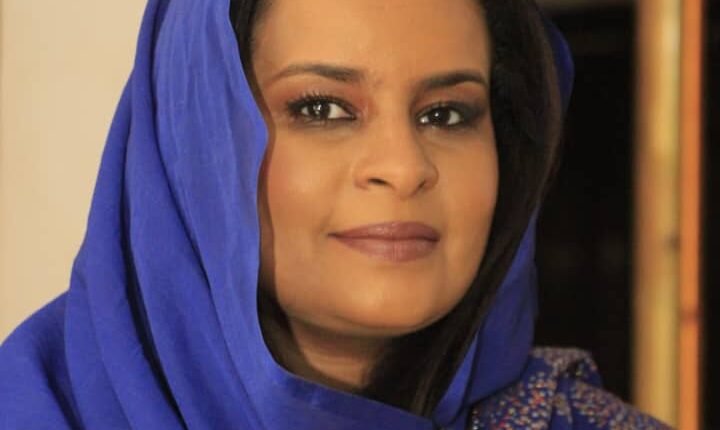
Dr Mayada Siwar Al-Dahab
Recent United States sanctions designating the Sudanese Islamic Movement as a terrorist organisation raise profound questions about the objectivity of international policy towards the crisis in Sudan and its possible consequences, as well as about the true objectives the United States, in particular, seeks to achieve.
At a time when Sudanese—both officially and among the public—have been calling for the Rapid Support Forces (RSF) militia to be designated as a terrorist organisation, Washington has instead issued decisions targeting domestic actors who, according to this view, are defending the state and society against RSF aggression. This contradiction raises a fundamental question:
What justification exists for accusing national actors who are performing their role in a conflict targeting the state and society, while overlooking another party widely accused of committing grave violations amounting to war crimes?
Numerous international reports issued by humanitarian and human rights organisations have documented a series of systematic violations attributed to RSF forces, including mass killings, ethnic cleansing, sexual violence, and forced displacement. These practices are no longer a matter of dispute; they have been widely documented and are well known to the international community and its human rights institutions.
Reframing the Nature of the Conflict
These American decisions appear to intersect with broader political and regional dynamics seeking to redefine the conflict in Sudan as an ideological struggle rather than a confrontation between a state and an armed militia.
Such a shift in the description of the war carries serious political implications. It may grant the militia indirect political cover and transform the conflict from a confrontation with an armed militia into an internal ideological dispute. In the same context, these decisions risk reinforcing the narrative promoted by the militia’s political allies that the Sudanese military establishment is under the dominance of Islamists.
Once such a narrative becomes entrenched internationally, it may become easier to justify political pressure to reintroduce the militia into the political equation under the banner of “political balance.”
The danger of this approach lies in transferring the war from its political and military framework into a sharply ideological one. Such tendencies not only alter the nature of the conflict but may also generate international pressures that obstruct military progress towards liberating the country and defeating the militia.
Pressures for a Political Settlement
These decisions may also carry complex consequences. They could intensify international pressure to impose a political settlement that reintegrates the militia and its allies into the political landscape, despite the widespread popular rejection of their return following the grave violations committed during the conflict.
In this context, the American approach to the Sudanese crisis raises questions about its underlying motivations. While official discourse presents political and diplomatic pressure as a means to encourage negotiation and end the war, such pressure may in practice lead to a very different outcome.
International experience suggests that “imposed settlements” often lead to fragmentation, as seen in South Sudan’s secession. The question therefore, remains: is the real objective to end the war through a comprehensive national settlement that preserves the unity of the state, or might these pressures pave the way for a new reality in which the scenario of partition re-emerges?
Diplomatic and Economic Consequences
These decisions could also affect Sudan’s diplomatic relations, economic activity, and international cooperation.
At a time when the country requires the greatest possible support to rebuild state institutions and restore stability, such measures impose high economic costs. The mere inclusion of Sudanese actors on terrorism lists serves as a negative signal to international financial institutions and investors. It may prompt global banks to tighten restrictions on financial transfers and banking transactions related to Sudan.
This could result in greater economic isolation and further deterioration of living conditions for Sudanese citizens.
The Legal Dimension and Secondary Sanctions
Even more serious is the international legal dimension of such designations. The effects of these decisions do not end with direct sanctions; they extend to what are known as secondary sanctions.
This means that any company, bank, or international institution dealing with the designated parties could itself become subject to sanctions. In global economic practice, this often results in what is called “precautionary isolation”, whereby international institutions avoid engaging with a country in order to minimise legal risk.
As a consequence, Sudan could face financial isolation and greater difficulty integrating into the global economic system.
Political and Social Implications
Although the decisions appear political in substance, they are framed in broad legal language with unclear standards and highly interpretable mechanisms. Such an ambiguous framework opens the door to the selective use of terrorist designations within political conflicts.
The danger here extends to the potential deepening of divisions within Sudanese society and the fragmentation of its social fabric, thereby obstructing genuine efforts towards reconciliation or national settlement.
Islamism in Sudan, the author argues, is not a single entity that can be reduced to one organisation, but rather a broad and deeply rooted current embedded within Sudanese society. Treating it through the lens of terrorist designation may therefore further complicate the political landscape and intensify hate speech, violence and counter-violence, expanding the scope of political and armed conflicts.
Such developments would undermine stability and development efforts and obstruct initiatives aimed at strengthening national unity and rebuilding the social fabric.
Instead of functioning as a tool to pressure actors towards peace, sanctions could become an additional factor prolonging the conflict and deepening its complexities, provoking reactions that exacerbate divisions rather than resolve them.
Rather than encouraging national consensus, this step could undermine prospects for building an inclusive national project and drafting a constitution that commands the agreement of all Sudanese in order to construct a state that accommodates everyone.
Conclusion
Ultimately, any international approach to the Sudanese crisis that fails to take into account its internal complexities and does not clearly distinguish between the state and armed militias may end up prolonging the conflict rather than helping to resolve it—and may even place the unity of Sudan’s territory at risk.
Shortlink: https://sudanhorizon.com/?p=12102