

Social Justice: The Missing Imperative – A Path to Peace and Reconstruction (2/3)
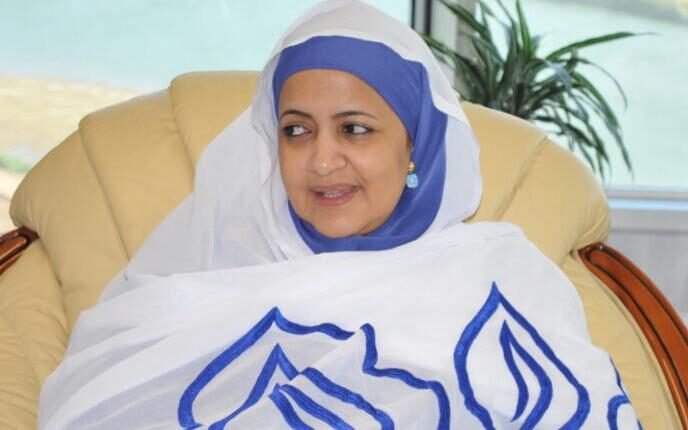
Heba Mahmoud Sadiq Fareed
This article proceeds from the reality of Sudan’s deep crisis and argues that any attempt at reconstruction cannot succeed if confined to physical rebuilding or political settlements alone. Rather, it requires a comprehensive re-foundation of the state based on justice. As outlined in Part One, justice is not a by-product of stability, but a precondition for it. Sustainable peace cannot be built within a structure that entrenches exclusion and inequality—whether economic, social, political, or epistemic.
Accordingly, social justice is presented here not as an outcome, but as the true entry point to peace and stability. Its historical absence—rooted in the colonial legacy and reproduced through successive national governments—has entrenched marginalisation and inequality, leaving the state fragile and prone to recurring cycles of conflict.
Part One concluded that justice is not a political option but an existential requirement for state survival. Its absence lies at the core of Sudan’s crisis and continues to fuel conflict. Despite repeated national efforts and the persistent presence of justice in political discourse since independence, the real challenge remains: moving from justice as an idea to justice as a practical project. This second part therefore focuses on translating that theoretical framework into public policies, strategic plans, and actionable mechanisms.
Social Justice as a Multi-Dimensional Concept
The article advances an expanded understanding of social justice as an integrated value-based and institutional system, moving beyond the narrow view that reduces it to welfare programmes or redistribution.
Social justice is, in essence, a new social contract that reorganises the roles of the state, market, and society to ensure equitable access to wealth and opportunity. It encompasses several interlinked dimensions:
Planning dimension: embedding justice at the core of national development strategies (short-, medium-, and long-term).
Human dimension: combating discrimination and safeguarding human dignity.
Economic dimension: ensuring fair access to resources and essential services.
Institutional dimension: building effective and accountable institutions capable of delivering justice in practice.
Developmental dimension: expanding people’s capabilities and opportunities.
Ethical dimension: grounded in integrity, transparency, accountability, and the rule of law.
Thus, social justice becomes a comprehensive national project, not merely a safety net or redistribution mechanism, but a reconfiguration of the state itself.
Toward a National Policy Framework for Social Justice
Achieving sustainable social justice requires a binding national policy framework—one that transforms justice from rhetoric into a guiding principle for decision-making across sectors, insulated from political fluctuations.
This framework should be built on core principles:
Equality of rights and equal opportunity
Respect for cultural, social, and religious diversity
Fair distribution of national wealth and resources
Positive discrimination for marginalised regions and groups
Community participation and accountability in public resource management
Toward More Equitable Economic Policies
1. Fiscal Policy Reform
Reforming fiscal policy is central to restoring balance and achieving economic justice:
Equitable resource allocation to reduce regional disparities
Progressive taxation places a greater burden on higher-income groups
Tax exemptions for SMEs and entrepreneurship initiatives
Investment incentives aligned with balanced development goals
Reducing reliance on regressive indirect taxes
Redirecting public spending toward justice-enhancing sectors
Significant increases in education and healthcare funding
Transparent trade and investment policies, including local content requirements
2. Monetary Policy for Inclusive Growth
Monetary policy must balance stability with growth and equity:
Redirect credit toward productive sectors (agriculture, industry)
Stabilise exchange rates to protect purchasing power
Align monetary policy with development objectives
Strengthen banking oversight to prevent the concentration of financing
Expand financing for value-added sectors
Support SMEs, youth, women, and entrepreneurs through affordable credit
Promote financial inclusion, especially in marginalised regions
Cultural and Social Justice: Recognising Diversity
Social justice cannot be achieved without acknowledging and respecting Sudan’s cultural, linguistic, ethnic, and religious diversity.
Cultural exclusion is one of the deepest forms of marginalisation, as it erodes belonging and equality. Addressing it requires:
Official recognition of diversity in laws and public policy
Inclusive representation in media and education
Curriculum reform reflecting all societal components
Support for local cultural and creative industries
Combating hate speech and stereotypes
Protecting cultural heritage and traditional knowledge
Equitable distribution of cultural institutions
Building a shared national identity based on citizenship and mutual recognition
Conclusion of Part Two
Social justice cannot be reduced to limited support programmes or fragmented interventions. It is directly tied to:
The nature of public policies
How resources are managed
How priorities are set
How opportunities are distributed across citizens, regions, and groups
It is not an automatic outcome of economic growth, but the result of conscious political and institutional choices aimed at reducing inequality and strengthening social cohesion.
Part Three will examine the structural obstacles and systemic challenges that hinder the transition toward a more just and inclusive model, offering deeper insight into the barriers shaping Sudan’s policy landscape and reform prospects.
Strategic insight:
This piece aligns closely with broader reform debates you’ve been working on—particularly the shift from “state of extraction” to “state of production” and the need to anchor economic recovery in institutional justice, not just macroeconomic adjustment.
Shortlink: https://sudanhorizon.com/?p=13442