

Searching for a Corner in a Round Room
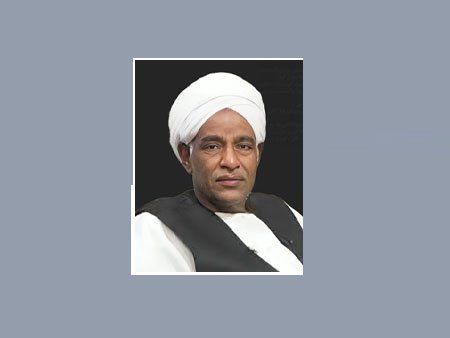
Mahjoub Fadel Badri
A man said to his companion while discussing matters with him: What is your position on the war of America and Israel against Iran?
Before he answered, a stream of thoughts passed through his mind. He tried to consider every premise that might lead him to the correct conclusion. Yet the more he turned the ideas over in his head, the more confusion he felt.
He was a Muslim, and it would therefore seem natural for him to stand with fellow Muslims.
He was an Arab, and thus Israel and its ally, the United States, would naturally be seen as adversaries of the Arabs and of Muslims.
He was a Sunni, who regarded the Shiʿa—with what he considered their doctrinal deviations—as Rawafid, opponents of the Sunnis who criticise the senior Companions and the Mothers of the Believers, may God be pleased with them.
As a Sudanese, he also felt a strong bond with the peoples of the Arab Gulf—linked by history, language, lineage, and religion.
He was also someone who supported the army of his country, which he believed was fighting an existential war for Sudan’s land and people. In his view, the United Arab Emirates had been fuelling this war by supporting the militia of the Dagalo family with weapons, ammunition, mercenaries, money, and media influence, while at the same time attempting—without shame, in his eyes—to present itself as a neutral mediator seeking negotiations to end the war.
Under such circumstances, it would seem natural for him to feel a certain satisfaction if the UAE suffered harm from Iran, which occupies Emirati islands—Lesser Tunb, Greater Tunb, and Abu Musa. Instead of working to recover those islands from Iran, he thought, the UAE had turned its military efforts towards Yemen, Libya, Somalia, and Sudan, while simultaneously opening its territory to Iranian investors—an ironic contradiction in his eyes.
Yet on the other hand, he deeply valued the support that Saudi Arabia, the land of the Two Holy Mosques, had shown to Sudan during what he called the War of Dignity. He recalled how the Saudi Crown Prince himself travelled to the United States to explain the situation to President Donald Trump, who pledged to use his influence to help end the war.
Logically, he felt he should stand with Iran, the party under attack. But Iran itself, he reflected, had threatened the territories of Gulf states—including Saudi Arabia, Qatar, Bahrain, and Kuwait—because of American military bases located there, even if those bases had not launched attacks on Iran.
Among those states was the UAE, which he viewed—both officially and popularly in Sudan—as an aggressor.
At the same time, he believed that Israel sought to expand its state “from the Euphrates to the Nile” and was leading this war across the entire region. In his view, its declared aim was to eliminate Islam altogether, making no distinction between Shiʿa and Sunnis, nor between Arabs and Persians. In this hostility, he believed, the United States and Israel were aligned. The recent attack on Iran seemed to him another example of this.
After wrestling with these conflicting thoughts for some time, the man finally emerged from his inner labyrinth—the confusion that had silenced him.
“These are trials like the dark patches of night,” he said quietly.
After a moment of silence, he continued:
“If America and Israel win this war, both Arab identity and Islam may lose their place in the world. If Iran wins, the result may be the expansion of the Shiʿa crescent, which rejects what is Sunni and what is Arab. And if the region falls into a state of neither war nor peace, the miserable condition of the region will continue.
“In that case Israel will emerge as a dominant power, capable of attacking any country it chooses. It will consolidate its occupation of all Palestinian land—including Jerusalem, Gaza, and the West Bank—while extending its influence over Lebanon and Jordan, and encouraging minority tensions that fragment Arab and Islamic states such as Egypt and Turkey. And naturally, Sudan would also be within its field of vision.”
As for the economic cost to the world—and Sudan would be no exception—it hardly needed explanation, particularly in relation to oil, energy, wheat, and weapons supplies. Even if some believed that attacks on the UAE might restrain its support for militias with money and weapons, Sudan itself might also suffer if its own sources of military supply were disrupted, as many countries would become preoccupied with this war.
His companion, however, seemed unsatisfied with these answers.
“It sounds as though you are looking for a needle in a haystack,” he said. “Or searching for a black cat in a dark room.”
The man replied:
“It is worse than that. The needle is indeed there—but you cannot see it. The cat is there as well. After much effort you might eventually find the needle, and perhaps catch the cat after a long time.
“But let me ask you something: can you find a corner in a perfectly round room?”
Then he concluded:
“These are human calculations. But God is the One who directs all affairs from heaven to earth.”
Shortlink: https://sudanhorizon.com/?p=11945