

Social Justice: The Missing Obligation: The Path to Peace and Reconstruction (1-3)
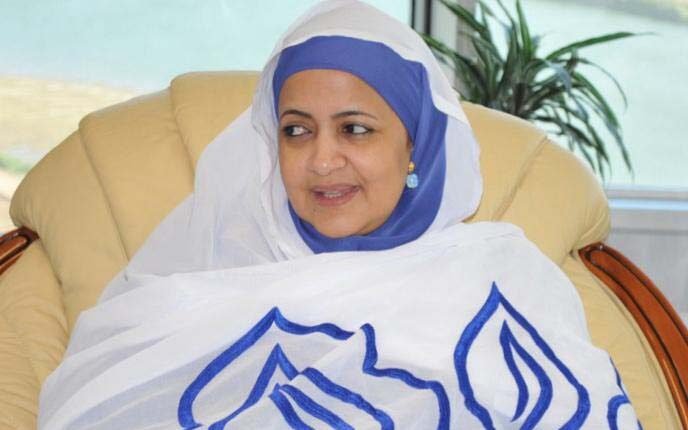
By: Heba Mahmood Sadiq Fareed
1. Introduction: The Pangs of War and the Need for a Major Reassessment
Sudan is currently passing through the most difficult turning point in its modern history. The ongoing war, sparked by the Rapid Support Forces’ rebellion, has caused unprecedented destruction to state institutions and infrastructure, and has fundamentally undermined social peace. This war, coupled with blatant and continuous foreign interventions that have fueled the conflict and complicated the paths to a solution, has revealed the depth of the structural crisis afflicting the Sudanese state. Despite the immense scale of the devastation and human suffering, thinking of “reconstruction” in its purely material sense is inadequate. Instead, we are compelled to wage an intellectual and national battle to rebuild the state on new foundations that guarantee its sovereignty and independence of decision-making.
This war has exposed the fragility of inherited structures and proven that half-measures are no longer viable. Therefore, it has become imperative for us to critically and courageously review our political, administrative, economic, and cultural history. This review is not an intellectual luxury, but a serious attempt to learn from our bitter national experiences and understand how internal dysfunctions intersected with external agendas that turned Sudan into an arena for this devastating war. Learning from the past and drawing inspiration from our failures and successes is the only way to chart a better future, one based on a solid social contract that guarantees sustainable peace and fulfills the aspirations of the Sudanese people for freedom, justice, national sovereignty, and a dignified life.
2. Justice as an inlet for Rebuilding the State:
In moments of great historical transformation, the question is not limited to how to rebuild what has been destroyed, but extends to how to prevent a recurrence of collapse. Sudan stands today at this critical juncture, where its crisis is no longer merely a political or military conflict, but rather an expression of a deep structural flaw in the nature and trajectory of the state.
Despite the varying causes and motivations behind armed conflicts and the clear role of external intervention, the unequal distribution of services, the lack of balanced development, and the concentration of wealth and power in the hands of a few remain the fuels that feed these conflicts. Various experiences have demonstrated that a state not founded on justice, regardless of its good intentions or resources, remains fragile and susceptible to disintegration and collapse.
Justice is not a consequence of stability, but rather a prerequisite for it. Lasting peace cannot be built within a structure that perpetuates exclusion and economic, social, and political inequality. When a state is founded in this way, it fails to produce genuine stability and instead reproduces recurring cycles of violence, transforming crisis into a persistent pattern rather than a fleeting exception.
Therefore, there is a pressing need to redefine the concept of the “nation-state” in Sudan, not merely as a centralized administrative entity, but as a comprehensive framework that guarantees:
– Equality of rights.
– Balanced development.
– Justice in the distribution of opportunities and resources.
– Recognition of cultural and social diversity.
The concept of social justice, in its essence, is not limited to addressing the manifestations of poverty and marginalization. Rather, it extends to dismantling the structural frameworks that prevent individuals from realizing their full potential, whether these obstacles are economic, political, or cultural. In this sense, justice is an ongoing process of restructuring society and redistributing opportunities to ensure equitable participation in wealth, power, and knowledge.
The issue of redistributing opportunities is more fundamental and impactful here because it touches the core of the relationship between the government and society within a single state. It aims to build an enabling environment that allows every individual to contribute to and benefit from the returns of development. One of the most prominent problems in the modern Sudanese experience is the sharp separation between the political, economic, and social spheres. This has led to treating justice as a purely social or charitable matter, rather than a central issue in building the state and its institutions.
This fragmentation in awareness and policies has deprived justice of its structural dimension, keeping it on the margins of public discourse without it becoming a governing framework for formulating public policies. Global experiences indicate that the countries that have achieved stable levels of peace and development are those that have integrated the concept of justice into the core of their economic, political, and social policies. Justice is not a moral luxury; it is a prerequisite for stability and development. Wherever justice is absent, conflicts proliferate and the legitimacy of the state erodes, because citizens feel disconnected from the system of governance that is supposed to represent them.
From this perspective, this article seeks to offer a different reading of the Sudanese crisis, starting with a fundamental question that should be central to all future thinking: Can sustainable peace be built in the absence of comprehensive justice?
3. Social Justice Between the Legacy of Colonialism and the Reproduction of Exclusion.
In the Sudanese context, the absence of justice was not a temporary flaw or a result of post-independence failures, but rather a structural characteristic inherent in the state’s formation since the colonial era, and it has persisted despite the efforts made by national governments. In my view, the roots of this crisis lie in the structure of the colonial state, which was designed to extend control and exploit resources, not to achieve development and the well-being of citizens. It entrenched excessive centralization and produced a profound imbalance in the distribution of power and wealth. This raises a fundamental question: Why have national governments failed to break free from this colonial legacy?
After independence, despite the rise of nationalist rhetoric calling for liberation and justice, national governments failed to dismantle this legacy. Instead, they reproduced it through policies that perpetuated the concentration of power and resources. This was clearly manifested in certain fiscal, monetary, and other policies, as well as in patterns of public spending, particularly the weak investment in education, health, and other basic services, coupled with their poor geographical distribution. These services were concentrated in major cities, while the peripheries continued to suffer from a severe lack of services and infrastructure. This was accompanied by a form of exclusionary security, as elites from all parts of Sudan monopolized many of the opportunities and benefits of development. Thus, political and social exclusion became linked to developmental and service-related exclusion, deepening social disparities and entrenching the sense of inequality.
4. Towards a New Social Contract:
This article addresses the concept of justice not as a gift or favor, but as an integrated system encompassing civil, legal, economic, social, and cultural dimensions, etc. The core idea is that any economic growth that does not fully utilize its available resources, especially human resources, remains incomplete, ineffective, and incapable of achieving genuine and comprehensive development. Furthermore, economic growth that is not felt by the middle and lower classes inevitably leads to the erosion of social and civil peace. Therefore, achieving peace in Sudan cannot be realized if reconstruction arrangements are limited to political settlements or power-sharing arrangements; rather, it requires a comprehensive re-establishment of the social contract on the foundation of justice.
Economic and social justice should form the cornerstone of the legitimacy of the modern state and a crucial factor in its stability. It is not merely a moral value or a deferred political goal, but rather an existential condition for the state’s survival and cohesion. Allah the Almighty says: “Indeed, God commands you to render trusts to their rightful owners, and when you judge between people, judge with justice” (An-Nisa: 58) :
﴿إِنَّ اللَّهَ يَأْمُرُكُمْ أَنْ تُؤَدُّوا الْأَمَانَاتِ إِلَى أَهْلِهَا وَإِذَا حَكَمْتُم بَيْنَ النَّاسِ أَنْ تَحْكُمُوا بِالْعَدْلِ﴾ (النساء: 58)..
Peace that is not based on economic, social, and cultural equity remains fragile and susceptible to collapse because it addresses the symptoms without confronting the root causes of the crisis. Therefore, this article calls for the establishment of a new social contract that redefines the relationship between the government and society on the basis of justice, as the true gateway to stability, peace, and development. This article, in its three parts, redefines social justice as a multidimensional system that transcends the narrow concept of economic distribution, encompassing all aspects of life. The dimensions of this system include:
– The developmental planning dimension: formulating long-term policies and strategies that address justice as a central issue.
– The human dimension: combating all forms of discrimination and racism, and establishing the principle of human dignity for all.
– The distributional dimension: achieving a fair distribution of services, resources, and wealth to reduce social disparities.
– The institutional dimension: building institutions that guarantee comprehensive and effective political representation reflecting the diversity of society.
– The developmental dimension: empowering individuals to develop their capabilities and expand their opportunities for education, work, and a dignified life.
– The ethical dimension: establishing the values of fairness, transparency, and accountability as cornerstones of good governance. Research and analysis confirm that economic growth in Sudan, even during periods of relative prosperity, has been exclusionary, failing to translate into tangible improvements for the majority of citizens and contributing to the erosion of the middle class and exacerbated social tensions. Therefore, any serious project for achieving peace and reconstruction necessitates a redefinition of the relationship between growth and justice, redirecting growth to serve the goals of equity and expanded opportunities, rather than remaining an end in itself. Furthermore, reconstruction plans and efforts must focus on forging a new social contract and not be reduced solely to rebuilding infrastructure. In my view, social justice is a comprehensive, multidimensional, and structural national system based on reshaping economic, political, social, and cultural structures. It goes beyond simply distributing material resources; it dismantles the structures of exclusion, ensuring the equitable distribution of resources, power, and knowledge. It empowers individuals to acquire the fundamental capabilities that guarantee their freedom and effective participation in development, power, wealth, and knowledge. This occurs within an institutional framework that adopts equity as the governing principle of public policies and ensures that development is directed toward the most vulnerable groups and regions, transforming social diversity into a pillar for sustainable peace, development, and national sovereignty.
5. Justice Between Thought and Economic Modeling:
Social justice is one of the most complex and intertwined concepts in human thought, where political philosophy intersects with economics and ethics. It cannot be reduced to income distribution equations or growth indicators alone. The measurement of growth has evolved from relying on gross national income to calculating per capita income, i.e., dividing the GDP by the population. However, this indicator has been criticized because it does not necessarily reflect the proportion of individuals benefiting from the returns of growth.
Later, human development indicators were added as a more comprehensive attempt to measure justice and well-being. These indicators resulted from the contributions of prominent thinkers such as Mahbub ul Haq and Amartya Sen, and they sought to integrate other dimensions into the measurement of growth, such as education, health, and standard of living. A number of thinkers have contributed integrated visions of the concept of social justice, combining the ethical dimension with institutional and economic analysis. This allows for a deeper understanding of the issue of justice, especially in complex contexts like Sudan.
Dr. Sayyid Qutb: Social Justice in Islam
My first encounter with the issue of justice and its importance was during my early secondary school years, which marked an early turning point in my intellectual awareness. It sparked my deep interest and solidified my conviction that social justice is a fundamental and comprehensive issue in the Islamic worldview. The book *Social Justice in Islam* had the most significant impact on shaping this conviction, as it provided me with an early understanding of justice as an integrated system that transcends the economic dimension to encompass broader ethical and social dimensions.
In his book *Social Justice in Islam* (1949), Sayyid Qutb argues that the issue of justice should be a comprehensive civilizational system based on a balance between the individual and the community, and that it establishes social solidarity.
It regulates inequality within ethical boundaries that preserve social cohesion. Qutb emphasizes that social justice must be a central issue in the state, and that any imbalance in this system inevitably leads to social and political disintegration, even if high growth rates are achieved.
B. Dr. Muhammad Baqir al-Sadr: Justice as an Alternative to Prevailing Economic Models
Muhammad Baqir al-Sadr makes a significant contribution to the debate on justice by proposing an economic model that transcends the dichotomy between capitalism and socialism. In his book (Our Economy – 1961), al-Sadr offers a twofold critique of the two prevailing models. He argues that capitalism, despite its productive efficiency, leads to the concentration of wealth and the widening of social disparities, while socialism, despite its pursuit of equality, fails to maintain incentives and economic efficiency. In contrast, al-Sadr proposes an alternative vision based on achieving a balance between economic efficiency and social justice through the “mixed ownership” model, which combines private and public ownership within a regulated framework governed by clear ethical principles. In his view, the problem does not lie in the means of production themselves, but rather in the value system that governs their use. This approach stems from a central idea: that economics cannot be a neutral, isolated science, but rather is part of a broader social system. Al-Sadr rejects reducing justice to market mechanisms or state intervention alone, emphasizing that achieving justice requires a value framework that regulates the relationship between the individual and society, prevents exploitation, and simultaneously promotes social responsibility.
The importance of this perspective is highlighted in contexts seeking alternative development models, such as the Sudanese case, where simply importing ready-made economic policies is insufficient. There is a pressing need to create a model that balances efficiency and equity, grounded in a national cultural and social framework. Here, al-Sadr’s thought offers an inspiring horizon for rethinking the roles of government and the market, transforming the economy into an instrument for achieving justice, transcending its role as merely a means of maximizing profits or controlling distribution. Therefore, Muhammad Baqir al-Sadr’s contribution is not limited to critiquing traditional models; it extends to presenting a comprehensive vision that establishes justice as a governing principle of the economy, not a mere incidental consequence.
C. Dr. John Rawls: Towards a Just Design for the State
John Rawls’s thought is among the most important contemporary philosophical contributions. He emphasized the importance of justice as an organized institutional framework, not merely a set of moral values. In his book, *A Theory of Justice* (1971), Rawls proposes the concept of “justice as fairness,” through which he seeks to construct a normative model for distributing rights and resources within society on fair and stable foundations. This model rests on two fundamental principles: the first is guaranteeing equal basic freedoms for all individuals, such as freedom of work, expression, political participation, and other liberties, while ensuring the rule of law. The second principle concerns regulating social and economic inequalities so that they are justified only if they lead to improving the conditions of the less fortunate, which is known as the “difference principle.” Thus, Rawls does not reject inequality per se, but stipulates that it must be just, meaning that it must serve the common good, be based on equitable access to opportunities, and not perpetuate privileges.
Rawls bases these principles on a hypothetical concept known as the “Original Position,” where he imagines individuals agreeing on rules and principles of justice from behind a “veil of ignorance”—that is, without the influence of their social or economic positions or personal abilities. This abstraction theoretically ensures that the agreed-upon rules are neutral and fair. The importance of this approach lies in its ability to elevate justice from the level of slogans to the level of institutionalization, where justice becomes a standard for formulating public policies, plans, and laws, and a foundation for building institutions, not merely a subsequent goal. In Rawls’s view, justice is achieved when political, economic, social, and cultural structures are built in a way that guarantees equal opportunities and prevents the concentration of power and wealth in the hands of a few.
In the Sudanese context, the importance of applying such a framework is highlighted during the state-building phase, where the necessity arises to reformulate policies and plans and design institutions on foundations that ensure equity and sustainability. The concept of the “veil of ignorance” represents an intellectual tool for rethinking the distribution of power between the central government and the regions, moving beyond narrow interests. Meanwhile, the “differentiation principle” provides a foundation for guiding economic policies toward serving less developed regions and groups. Drawing inspiration from Rawls’s thought does not stop at adopting an abstract theoretical model; rather, it primarily aims to re-examine a fundamental question: How can the entire state system be rebuilt on a foundation of equity? This is a crucial question, indispensable to any national project seeking to establish a new social contract that places justice at the heart of Sudan’s future.
D. Dr. Amartya Sen: Towards an Ethical Economics for Human Well-being
Amartya Sen’s thought represents a qualitative shift in the understanding of justice, as he reformulated its indicators outside the confines of traditional economic measures. In his book *Ethics and Economics* (1987), he emphasizes that economics cannot be separated from ethics if it aims to achieve human well-being. He calls for a redefinition of economics itself as an ethical science, not merely a mathematical system, asserting that “economics is not just numbers and variables; it is fundamentally concerned with w
Shortlink: https://sudanhorizon.com/?p=13145