

Holes in the Fabric of Democracy in Sudan
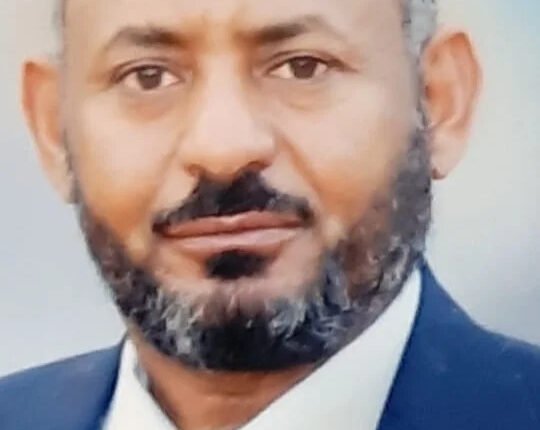
Al-Rafi‘ Bashir Al-Shafi‘
In my view, a large segment of the Sudanese people has been misled by Western models of democracy in their various forms. I consider democracy to be merely a “style of governance” that is unsuitable for Sudan unless it is “Sudanised” — filtered of the negative elements of Western culture and infused with Sudanese values rooted in religion, ethics and Islamic moral traditions, without extremism, ascetic rigidity or doctrinal division.
This would require revisiting Western democracy, reconnecting it to what we see as its Islamic origins, and equipping it with the demands of modernity and the achievements of human knowledge, while ensuring that its reference framework remains aligned with religious principles. It also requires stripping it of Western secular meanings that do not reflect our faith or values, while preserving the positive aspects of a Sudanised democracy — justice, consultation (shura), protection of rights, oversight, transparency and accountability — as practised in advanced systems.
Such a transformation demands serious study of Western democratic foundations, discerning what may be adapted to our context, and safeguarding this Sudanised model through moral strength, faith, patriotism and by addressing the flaws that have characterised Sudan’s democratic practice since independence.
Any shift towards a Sudanised democracy must also recognise the national role of the armed forces. The army is an inseparable part of the people and central to safeguarding the nation. The notion that “civilian” democracy must exclude or oppose the military is, in my view, misguided. In every political system worldwide, the military forms part of the state’s structure and contributes to stability and national continuity.
Democracy in Sudan has often been selective and poorly institutionalised. Its practice has frequently been marked by political conflict, weak adherence to constitutionalism, and insufficient respect for the rule of law. Without oversight and accountability, democratic practice can degenerate into new forms of authoritarianism, partisan factionalism, tribalism, favouritism and corruption. Majority rule alone, particularly when manipulated, does not guarantee justice or national cohesion.
We have witnessed Western democracies in which majority rule prevails without necessarily ensuring equitable governance or comprehensive national inclusion. Such experiences have, at times, produced regional marginalisation and political exclusion — outcomes inconsistent with our values and aspirations for national unity.
What Sudan requires is not a replication of earlier democratic forms, but a re-engineered governance model that addresses past shortcomings. A democracy based solely on numerical majority, allowing governments to reshape laws at will and override constitutional principles, is neither sustainable nor beneficial.
Even in established democracies, the erosion of political conscience and the influence of powerful lobbies reveal systemic weaknesses. If Western democracy itself requires reform and ethical renewal, it cannot simply be transplanted into our context without adaptation.
The necessary transformation — shaped by current security, social, economic and political realities — calls for the serious exploration of a governance formula suited to Sudan’s unique character and needs.
Shortlink: https://sudanhorizon.com/?p=11807