

Towards a New Sudan: Perspectives on Building a Developmental State and a Productive Economy (6)
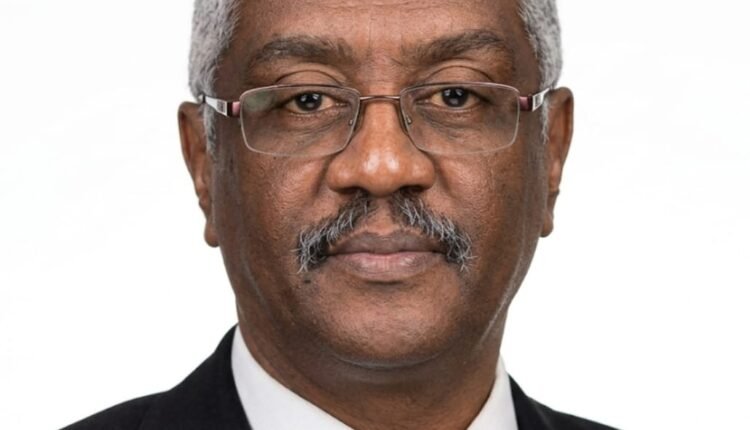
Numan Yousif Mohamed
For decades, Sudan has been described as the “food basket of the world”. Although this phrase conveys a degree of optimism, it also reveals a profound misunderstanding of the nature of modern economic development.
Countries do not become powerful simply because they produce food. They become powerful because they produce knowledge, technology, manufactured goods, services, and brands that give that food its true economic value.
Sudan’s problem has never been a lack of resources, but rather the way in which those resources have been managed. Agriculture has been treated as an isolated sector, while industry has been viewed as a separate one. Yet international experience has shown that economic transformation begins when the two are integrated into a production system.
Agriculture without industry sells the future at the price of raw materials.
Industry without agriculture imports what could be produced domestically.
The integration of the two forms the true engine of sustainable development.
From Exporting Resources to Exporting Added Value
The era in which countries competed merely to produce the largest quantity of raw materials is over. Today, competition revolves around one fundamental question:
How much value is added before a product reaches the consumer?
This is the gap that Sudan must address in the post-war period.
Cotton should not be regarded merely as a traditional agricultural crop, but as the starting point for textile manufacturing, clothing production, design, and global marketing.
Sesame should not be seen simply as a raw export commodity, but as the foundation of advanced food, pharmaceutical, and cosmetic industries.
Gum arabic should not be treated as an ordinary raw material, but as a strategic input for high-value pharmaceutical and chemical industries.
Livestock should not be reduced to animals driven across national borders. It should be developed as an integrated industry beginning with animal feed, veterinary services, modern abattoirs, cold-chain systems, leather processing, and dairy production, and culminating in internationally competitive brands.
Every natural resource in Sudan must therefore be reconsidered within a value chain, rather than merely as a raw material.
This is the fundamental difference between a rentier economy and a productive economy. The former merely extracts and sells resources, while the latter retains the greatest possible share of their value within the national economy.
From a Seasonal Economy to an Economy of Integrated Production Systems
The experience of emerging economies has demonstrated that genuine economic transformation begins when the state moves beyond supporting primary production and instead develops the industries connected to it.
This transformation can be expressed through the following framework:
Agriculture: the starting point.
Industry: the multiplier of value.
Logistics: the gateway to markets.
Finance: the guarantor of sustainability.
Digital transformation: the driver of efficiency.
Scientific research: the source of competitiveness.
The most important transformation Sudan requires is therefore a shift from a seasonal economy to an economy of integrated production systems.
Such an economy does not wait until harvest time before considering marketing. Nor does it wait for production to increase before searching for finance. Instead, it begins with the market, designs production around market demand, and builds every link in the value chain from the outset.
Re-engineering Sudan’s Economic Geography
This transformation requires the state to reorder its priorities by establishing specialised development hubs based on genuine comparative advantages.
These could include:
regions specialising in food processing;
regions leading textile production;
regions specialising in livestock-related industries; and
regions focused on mineral-processing and other extractive industries.
Under this model, Sudan’s geography would be transformed into an integrated production network.
This would reduce migration towards the capital and create regional centres of growth capable of distributing employment and investment opportunities more fairly and inclusively.
A Revolution in Human Capital and Scientific Research
This model cannot succeed without a genuine revolution in education and training.
A productive economy does not depend on conventional labour alone. It requires specialised skills, including agricultural engineers, food-processing experts, logistics professionals, software developers, quality-control specialists, and brand designers.
Factories can be imported, but minds must be developed through education, training, and continuous practical experience.
Scientific research must also leave the shelves of universities and become an active part of the production cycle. Universities, farms, factories, and banks must operate as part of a single integrated system rather than as separate islands.
Small and medium-sized enterprises are equally important. They form the living fabric connecting primary production with industry, trade, and exports. They must therefore become a central component of the national strategy for finance and training.
The Role of the Developmental State
In the new economy, the state must redefine its role.
Its task is not to manage factories directly, but to build the institutional and regulatory environment that makes establishing and operating factories easier, more profitable, and more sustainable.
Nor is its task to purchase crops. Rather, it should regulate markets to ensure a fair price for farmers, high-quality products for consumers, and stable returns for investors.
A genuine developmental state creates the conditions for more efficient production of goods.
Conclusion: An Opportunity at the Heart of the Crisis
The war has presented Sudan with a harsh but rare opportunity to redefine the meaning of wealth.
Wealth is not merely what is extracted from the land. It is the value, knowledge, and employment opportunities that remain within the economy.
The road towards a productive economy does not begin with increased output alone. It begins with maximising added value.
Only then will Sudan cease to be a country dependent on exporting raw resources and become a leading export-oriented state, competing through the capabilities of its people and the value it creates before relying on its natural resources.
This is where genuine economic transformation begins.
“The future is not inherited; it is built.”
Former banker and institutional development consultant
Shortlink: https://sudanhorizon.com/?p=16288